A car inverter can power a CPAP machine if its AC output matches the machine’s requirements and the vehicle can supply power safely. Check the CPAP manual for wattage, waveform, and humidifier needs; a cigarette-lighter socket may not support an all-night load.
- Match inverter output to the CPAP’s stated running and startup needs.
- Use a pure sine wave inverter unless the CPAP maker approves another waveform.
- Heated humidifiers and heated hoses can raise power use substantially.
- Do not assume a vehicle battery can run a CPAP all night without starting problems.
- Never run an engine in an enclosed or partly enclosed space to power medical equipment.
Can a car inverter power a CPAP machine overnight?
Often, yes, but the word “can” does not mean every car, inverter, or CPAP setup will work overnight. The CPAP needs compatible AC power, and the inverter needs a suitable DC connection. The vehicle battery must also supply that energy without becoming too weak to start the vehicle.
Runtime depends on the CPAP model, pressure settings, humidifier and heated-hose use, inverter efficiency, battery condition, and temperature. A small inverter rating alone cannot predict how long a car battery will last. Check the machine’s manual and the inverter manual, then plan for a separate power source if the setup must run through the night.
Check CPAP power requirements before choosing an inverter
Find the CPAP’s input requirements in its manual, on its power supply, or on its label. The machine may use AC power through a power brick, or it may accept DC power through a manufacturer-approved adapter. Those options are not interchangeable unless the manufacturer says they are.
Running watts and startup demand
Inverter ratings describe how much AC power the inverter can supply. Its continuous rating matters for the machine’s ongoing load. Its surge rating covers brief demand peaks, but a high surge number does not make an inverter suitable if its continuous rating is too low.
Use the CPAP’s stated electrical requirements rather than guessing from the size of its power brick. If the manual gives amps and volts, watts can be estimated by multiplying them, but AC power supplies can have power-factor and startup effects. When specifications are unclear, ask the CPAP maker or a qualified technician to interpret them.
Pure sine wave output
Many CPAP makers recommend or require pure sine wave AC power. A modified sine wave inverter may cause a power supply to buzz, run hot, shut down, or behave unpredictably. Compatibility varies by CPAP and power supply, so follow the machine’s instructions rather than assuming that any inverter with the right wattage will work.
For more on matching inverter output to an electrical load, see CarTechTalk’s guide to matching a power inverter to a setup. That guide covers general inverter sizing, while the CPAP manual remains the authority for medical-device requirements.
How humidifiers and heated hoses change power use
A CPAP’s blower is only part of its electrical load. A heated humidifier or heated hose can add demand, and the amount can change with settings and room conditions. The machine may also use more power during some operating conditions than a simple low-power estimate suggests.
Check the manual for power use with the accessories you plan to run. If the manufacturer gives separate figures for humidifier or heated-hose use, size the inverter for the intended configuration. Turning off heat may reduce demand, but do so only if that setup is comfortable and allowed by your care plan. Do not change prescribed therapy settings to make an electrical setup work.
A DC adapter made for the exact CPAP model may avoid some inverter conversion losses. It is not a universal substitute: connector, voltage, polarity, and supported machine model must match. Use only the adapter and power method approved for that machine.
Can a car outlet supply enough power?
Not always. A dashboard 12-volt outlet has a vehicle-specific current limit, and its fuse and wiring set practical boundaries. An inverter’s advertised output may exceed what that outlet can provide. The outlet can trip a fuse, overheat, or fail to power the load if the combined demand is too high.
Check the owner’s manual for the outlet’s rating and whether it stays powered with the ignition off. Do not replace a fuse with a higher-rated one to stop it from blowing. A larger inverter may need a direct battery connection with correctly sized cables and overcurrent protection, installed according to its instructions. Incorrect wiring can cause fire or damage.
Vehicle model year and configuration matter. Some outlets switch off with the ignition; others remain live. Hybrid and electric vehicles can have different low-voltage battery and accessory-power behavior, so do not assume that traction-battery capacity makes an outlet safe for an overnight load.
Estimate runtime without risking a no-start
There is no reliable universal runtime for a CPAP connected to a car battery. Battery capacity, age, temperature, state of charge, inverter losses, CPAP settings, and other vehicle loads all affect the result. A battery can still power lights or electronics after it has lost enough reserve to start the engine.
Do not rely on the engine idling as an overnight charging plan. Alternator output and charging behavior vary by vehicle, and idling can create carbon monoxide. Never operate a vehicle in a garage, carport, or other enclosed or partly enclosed area. Even outdoors, follow vehicle instructions and avoid leaving a running vehicle unattended.
For overnight therapy away from an outlet, consider a CPAP-compatible battery or another power source approved for the machine. Check its usable capacity with the planned humidifier settings and its permitted charging method. An inverter connected to a separate battery can still have conversion losses and connection limits.
Practical compatibility checklist
- Read the CPAP manual. Identify allowed input voltage, AC or DC options, waveform requirements, and power use with accessories.
- Check the inverter. Confirm compatible AC voltage and frequency, pure sine wave output if required, and adequate continuous capacity.
- Check the vehicle connection. Compare the inverter’s DC input demand with the outlet rating or the inverter’s approved battery-wiring instructions.
- Account for overnight use. Include humidifier and heated-hose use, battery condition, and the need to start the vehicle afterward.
- Test only in a safe setting. Follow both manuals, keep cables clear of heat and moving parts, and stop if the inverter, plug, or wiring becomes hot or acts abnormally.
Common mistakes
- Buying by peak watts alone: The continuous rating must support the CPAP’s normal load.
- Assuming every waveform works: Follow the CPAP maker’s waveform instructions.
- Ignoring heated accessories: A setup that powers the blower may still be undersized with heat enabled.
- Using any available DC adapter: Similar-looking plugs can have different voltage or polarity.
- Leaving the vehicle battery unprotected: CPAP operation can leave too little charge for starting, even if the machine keeps running.
- Running the engine in a garage: Exhaust can cause fatal carbon monoxide exposure.
When to get professional help
Ask the CPAP manufacturer or equipment provider when the manual does not clearly state inverter compatibility, waveform, or accessory power use. A respiratory care professional can address therapy settings; do not change prescribed settings to reduce electrical demand.
Ask an automotive electrician to assess a direct battery connection, added outlet, or repeated fuse failure. Stop using the setup if wiring gets hot, insulation is damaged, a fuse repeatedly opens, or the inverter shuts down. A fuse failure signals a problem to diagnose, not a reason to install a larger fuse.
Gear that can help
If you need power inverters for this job, these picks already appear in our power inverters guides. Check the full guide for fit and who should skip each one.

Pros
- Pure sine wave output is specified for devices requiring careful protection
- Offers both AC outlets and USB charging ports
- Includes a built-in 40-amp fuse and multiple protection functions
- The listing identifies compatibility with Tesla and other new energy vehicles
Cons
- Continuous output is limited to 300W, with 700W available only as peak power
- The listing lists the input range as 12-17V in the title and 11-17V in the feature copy
Specifications
| Color | Black |
|---|---|
| Size | 300W Pure Sine Wave Power Inverter |
| Dimensions | 8.1 x 5.3 x 2.6 inches |
| Weight | 1.4 pounds |
| Product Group | Automotive Parts and Accessories |
| Binding | Electronics |
Best For / Avoid If
Best for buyers prioritizing
- Pure sine wave output is specified for devices requiring careful protection
- Offers both AC outlets and USB charging ports
- Includes a built-in 40-amp fuse and multiple protection functions
Consider another option if
- Continuous output is limited to 300W, with 700W available only as peak power
- The listing lists the input range as 12-17V in the title and 11-17V in the feature copy

Pros
- Pure sine wave output is specified for devices requiring careful protection.
- Offers both AC outlets and USB charging connections.
- Includes multiple stated electrical and thermal protection features.
- The listing states compatibility with Tesla and other new-energy vehicles.
Cons
- The listing covered gives conflicting USB-C PD maximums of 20W and 30W.
Specifications
| Color | Black + Red |
|---|---|
| Dimensions | 7 x 5 x 2 Inches |
| Product Group | Automotive Parts and Accessories |
| Binding | Electronics |
Best For / Avoid If
Best for buyers prioritizing
- Pure sine wave output is specified for devices requiring careful protection.
- Offers both AC outlets and USB charging connections.
- Includes multiple stated electrical and thermal protection features.
Consider another option if
- The listing covered gives conflicting USB-C PD maximums of 20W and 30W.

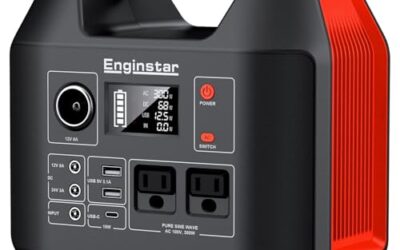
Pros
- Two AC outlets and two USB ports provide multiple charging options
- 300W continuous output supports larger devices such as laptops and tablets
- Built-in 40-amp fuse and multiple listed protection features
- Compact, iPhone-sized design with a 32-inch vehicle power cable
Cons
- Continuous output is limited to 300W; 700W is listed as instantaneous power
- Vehicle compatibility is specified for 11-17V input, with no broader vehicle list provided
Specifications
| Color | Red |
|---|---|
| Size | 1 - Power Inverter |
| Dimensions | 4.8 x 3.1 x 1.9 Inches |
| Weight | 0.9 Pounds |
| Product Group | Automotive Parts and Accessories |
| Binding | Electronics |
Best For / Avoid If
Best for buyers prioritizing
- Two AC outlets and two USB ports provide multiple charging options
- 300W continuous output supports larger devices such as laptops and tablets
- Built-in 40-amp fuse and multiple listed protection features
Consider another option if
- Continuous output is limited to 300W; 700W is listed as instantaneous power
- Vehicle compatibility is specified for 11-17V input, with no broader vehicle list provided
FAQ
Will a 12-volt car outlet run a CPAP?
It may, if the outlet rating supports the inverter’s DC demand and the CPAP load. Check the vehicle manual, inverter instructions, and CPAP requirements. Some outlets switch off with the ignition.
Can I use a modified sine wave inverter?
Only if the CPAP maker approves it for your machine and power supply. Many devices call for pure sine wave output, so do not assume modified sine wave compatibility.
Should I turn off the humidifier?
Turning off heated accessories can lower electrical demand, but comfort and care needs differ. Follow your machine instructions and care plan; do not alter prescribed therapy to suit an inverter.
Can I leave my car running all night?
Do not run an engine in an enclosed or partly enclosed area. Idling is not a dependable overnight power plan, and vehicle charging behavior varies. Consider a CPAP-compatible battery instead.
Is a direct CPAP battery better than an inverter?
A compatible DC adapter or CPAP battery may avoid some inverter conversion losses, but model compatibility and capacity still matter. Use only power equipment approved for your CPAP.