Yes, you can charge an EV outdoors in rain if the vehicle and charging equipment are approved for outdoor use and are in good condition. Rain alone usually does not stop charging, but flooding, damaged equipment, or water inside electrical connections can make charging unsafe.
- Use a charger and cable rated for the outdoor location, and follow their manuals.
- Keep plugs and charging ports free of standing water, dirt, and damage.
- Do not charge through floodwater or use equipment with cracked housings, exposed wires, or damaged seals.
- Vehicle model year, connector type, charger rating, and regional standards affect compatibility.
Can you charge an EV outdoors in rain safely?
For most EVs and outdoor-rated charging equipment, ordinary rain is an expected operating condition. The charging connector and vehicle inlet are built to manage typical outdoor exposure when properly connected. Exact limits differ by vehicle, charger, and cable, so use the instructions for your specific equipment.
That does not mean every wet charging setup is safe. Heavy runoff, standing water, flooding, physical damage, or a loose connection can create risks. A public charger’s outdoor location does not prove that a damaged cable or flooded stall is safe to use.
Charging equipment controls power flow and checks the connection before and during charging. The vehicle and charging equipment must communicate correctly before power reaches the vehicle. If the system detects a fault, it may refuse to start or stop charging. Do not bypass a warning or try to defeat a safety feature.
What rain does and does not mean for charging
Rain on the outside of a connected charging handle is different from water trapped inside electrical contacts. A properly fitted connector is intended to protect its contacts during normal use, but contamination, damage, or poor seating can compromise that protection.
Rain also does not make every outlet suitable for EV charging. Level 1 charging uses a household outlet and portable charging equipment; Level 2 charging uses higher-power equipment. The outlet, circuit, charger, and installation must all be suitable for the load and location. An outdoor extension cord is not a substitute for an approved charging setup.
DC fast chargers are also commonly installed outdoors, but the same checks apply: use intact equipment, connect as instructed, and avoid water accumulation. Charging speed or connector standards do not make flooded or damaged equipment safe.
| Condition | What to do | Reason |
|---|---|---|
| Ordinary rain, intact outdoor-rated equipment | Follow the vehicle and charger instructions; connect normally. | Equipment approved for outdoor use can be used in its stated conditions. |
| Water pooled around the charger or vehicle inlet | Do not connect or handle equipment in standing water. | Flooding can expose electrical parts and create hazards beyond normal rain exposure. |
| Cracked handle, frayed cable, loose inlet, or burn marks | Stop using that equipment and report it or arrange inspection. | Damage can defeat insulation, seals, or connection safeguards. |
| Charger refuses to start or reports a fault | Check visible conditions and the manual; do not override the fault. | The warning may indicate a connection, equipment, or vehicle problem. |
| Thunderstorm with nearby lightning | Do not handle the charging equipment during active lightning; follow site and equipment instructions. | Lightning presents a separate electrical and personal safety risk. |
Checks before plugging in during rain
- Check the location. Make sure the charging point is not flooded and water is not flowing over the outlet, charger, or cable connection. Do not stand in water while handling charging equipment.
- Inspect the cable and handle. Look for cuts, crushed sections, exposed conductors, cracked housings, bent contacts, or loose parts. Do not use damaged equipment.
- Look at the vehicle inlet. Check for debris, visible damage, or water pooled in the opening. Follow the vehicle manual for any cleaning or drying instructions. Do not insert tools or improvise a repair.
- Confirm the equipment fits your vehicle. Connector type and charging capability vary by vehicle model year and market. Some vehicles use J1772 or CCS connectors; others use NACS. An adapter may be needed, and not every adapter supports every vehicle or charger. Follow the vehicle maker’s guidance for approved combinations.
- Connect as directed. Keep the connector seated as the manual describes. Do not force it or use a loose fit. Watch for an error message or unexpected interruption.
- Stop if anything seems wrong. Disconnect only as the equipment and vehicle instructions allow. Report a faulty public charger to its operator. For home equipment, contact a qualified electrician or the charger maker when the fault concerns installation or the charging unit.
Does the answer change for home, public, or portable charging?
Home charging
A permanently installed outdoor charger should be suitable for its installation location. The electrical circuit and installation matter as much as the charging unit. Do not assume an indoor charger can be mounted outside, or that a weather cover makes an unsuitable installation safe. If you are planning a home setup, the U.S. Department of Energy’s home charging overview explains common charging arrangements and installation considerations.
Portable Level 1 equipment may be used outdoors only within the limits in its instructions. Household receptacles differ in condition and suitability, and vehicle charging can place a sustained load on a circuit. Avoid damaged outlets, improvised adapters, and extension cords unless the equipment maker explicitly allows that setup.
Public charging
Public charging stations are often exposed to weather, but inspect the connector and cable before use. Do not use a unit with visible damage, a wet or flooded base, or a connector that will not seat properly. Use the station’s support process to report problems rather than attempting a repair.
For a broader look at home charging options, see CarTechTalk’s EV charger guide for home setups. Charger selection still depends on vehicle compatibility, electrical capacity, installation, and where the unit will be used.
Portable charging from an outlet
A portable charger does not make every outdoor outlet appropriate for EV charging. Check the unit’s allowed environments and outlet requirements. If an outlet or plug becomes unusually hot, smells burned, sparks, or repeatedly trips a circuit, stop using it and seek qualified help. Do not keep resetting a breaker without finding the cause.
Common mistakes
- Assuming rain is the only concern. Floodwater, runoff, damaged insulation, and poor connections can pose greater risks than ordinary rain.
- Using an indoor-rated unit outdoors. Weather exposure limits depend on the equipment and installation, not on whether the plug happens to fit.
- Forcing a connector or adapter. Connector shape, vehicle model year, charging standard, and adapter approval all matter. A physical fit alone does not prove compatibility.
- Covering a charger with an improvised bag or tarp. A cover can trap heat, obstruct ventilation, or interfere with the connector. Use only protection permitted by the equipment instructions.
- Ignoring a charging fault because it is raining. Weather may be involved, but a fault can also indicate a vehicle or charger problem. Follow the error instructions and report recurring faults.
- Unplugging by pulling the cable. Use the vehicle or charger release method. Pulling the cable can damage the connector or equipment.
When to get professional help
Stop charging and seek qualified help if you see exposed wires, melting, burn marks, repeated circuit trips, a damaged vehicle inlet, or a persistent charging fault. Do not touch equipment that is submerged, sparking, smoking, or giving off a burning smell. Move away and contact emergency services if there is an immediate hazard.
For a home charger that trips a breaker or shows recurring electrical faults, contact a qualified electrician familiar with EV charging installations. For a vehicle-side warning or inlet damage, contact the automaker or a qualified EV service facility. A reset or cleared warning does not prove the underlying fault is repaired.
Gear that can help
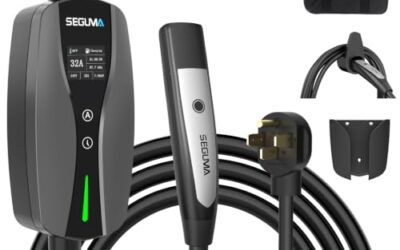
If you need EV chargers for this job, these picks already appear in our EV chargers guides. Check the full guide for fit and who should skip each one.

Pros
- Supports SAE-J1772 electric vehicles and plug-in hybrids
- Offers adjustable charging current for different charging requirements
- Includes a long 25-foot cable and delay timer
- Provides multiple listed electrical safety protections
Cons
- Tesla adapter is sold separately
- The product is recommended for use only in a dry environment with a properly grounded outlet
Specifications
| Size | 25FT |
|---|---|
| Product Group | Automotive Parts and Accessories |
Best For / Avoid If
Best for buyers prioritizing
- Supports SAE-J1772 electric vehicles and plug-in hybrids
- Offers adjustable charging current for different charging requirements
- Includes a long 25-foot cable and delay timer
Consider another option if
- Tesla adapter is sold separately
- The product is recommended for use only in a dry environment with a properly grounded outlet

Pros
- Supports charging up to 40A and 9.6 kW
- Long 25-foot cable provides extended reach
- Compatible with listed PHEV and BEV models using a J1772 connection
- IP67 rating and stated operating temperature range support outdoor use
Cons
- Requires a 240V NEMA 14-50 outlet
- Tesla vehicles require a separate NACS adapter
Specifications
| Color | Black |
|---|---|
| Size | 40A 25FT |
| Dimensions | 144 x 134 x 47 Inches |
| Weight | 13.2 Pounds |
| Product Group | Automotive Parts and Accessories |
| Binding | Automotive |
Best For / Avoid If
Best for buyers prioritizing
- Supports charging up to 40A and 9.6 kW
- Long 25-foot cable provides extended reach
- Compatible with listed PHEV and BEV models using a J1772 connection
Consider another option if
- Requires a 240V NEMA 14-50 outlet
- Tesla vehicles require a separate NACS adapter

Pros
- Supports multiple current settings: 10A, 16A, 20A, 24A, 32A, and 40A
- Compatible with EVs and hybrids that use a standard J1772 connector
- Lists protection against leakage, grounding issues, overvoltage, undervoltage, overcurrent, overcharging, overheating, and short circuits
- Automatically shuts off when the vehicle is fully charged, according to the listing
Cons
- A J1772-to-Tesla adapter is required for Tesla vehicles and is not included
- The listing does not identify a specific vehicle make or model compatibility list
Specifications
| Color | Black |
|---|---|
| Size | 40A ev charger |
| Product Group | Automotive Parts and Accessories |
Best For / Avoid If
Best for buyers prioritizing
- Supports multiple current settings: 10A, 16A, 20A, 24A, 32A, and 40A
- Compatible with EVs and hybrids that use a standard J1772 connector
- Lists protection against leakage, grounding issues, overvoltage, undervoltage, overcurrent, overcharging, overheating, and short circuits
Consider another option if
- A J1772-to-Tesla adapter is required for Tesla vehicles and is not included
- The listing does not identify a specific vehicle make or model compatibility list
FAQ
Can I leave my EV plugged in overnight in the rain?
Usually, if the vehicle and charging equipment are approved for the outdoor conditions, undamaged, and connected as instructed. Do not leave a setup in standing water or ignore an active fault.
Can I plug in a charger while it is raining?
Follow the charger and vehicle manuals. Keep the plug and inlet free of pooled water, inspect for damage, and do not handle equipment while standing in water or during nearby lightning.
Can I charge my EV in a thunderstorm?
Ordinary rain and lightning are different hazards. Avoid handling charging equipment during active lightning, and follow the charger and vehicle instructions for severe weather.
Can I use an extension cord for outdoor EV charging?
Do not assume an extension cord is suitable. Use one only if the portable charger maker explicitly permits the cord and specifies the required type and conditions. Otherwise, plug in as instructed or use a properly installed charging point.
Does every EV charger work with every vehicle in the rain?
No. Weather suitability does not resolve connector or charging compatibility. Vehicle model year, connector standard, charger capability, adapter approval, and regional configuration can affect whether a charger works.
Sources and further reading
- Charging Electric Vehicles at Home (Alternative Fuels Data Center): Overview of home charging options and installation considerations.
- Procurement and Installation for EV Charging Infrastructure (Alternative Fuels Data Center): Information on planning and installing EV charging infrastructure.