How hot weather affects EV charging speed depends on battery temperature, charger limits, and the vehicle’s cooling system. Heat can cause a vehicle to reduce charging power, but hot air alone does not guarantee a slowdown; battery temperature and charging conditions matter too.
Key takeaways
- Fast charging can slow when a battery gets too hot and its controls reduce power.
- Heat may also affect charging equipment or its surroundings, but vehicle and charger limits vary.
- A lower charging rate can be normal, especially after driving or during a long DC fast-charge session.
- Compare the display with the vehicle’s usual behavior under similar conditions before treating a slowdown as a fault.
- Follow the vehicle and charger instructions. Do not open or handle electrical equipment that is hot, damaged, or showing a warning.
Why can hot weather slow EV charging?
An EV battery works within temperature limits set by its manufacturer. In hot conditions, the battery management system can reduce charging power to limit battery heating. This protective control may lower the rate shown on the dashboard or charging station.
Charging also creates heat inside the battery. During DC fast charging, the battery can warm as it accepts energy, and a hot starting temperature may leave less room for that added heat. The vehicle may then limit power sooner or reduce it during the session.
Battery temperature is not the same as outdoor temperature. A car parked in sun, one that has just completed a long drive, and one parked in shade can start charging under different conditions, even in the same weather. Battery cooling design, software, state of charge, and recent driving can also affect the result.
How hot weather affects EV charging speed by charging type
| Charging setup | Possible effect of heat | What to check |
|---|---|---|
| DC fast charging | Vehicle may reduce power to manage battery temperature, particularly during a sustained session. | Vehicle charging display, station display, battery temperature guidance, and any warning messages. |
| Level 2 AC charging | Charging may continue at the onboard charger’s allowed rate, but vehicle controls or equipment conditions can limit it. | Vehicle settings, charge schedule, EVSE status, and circuit or equipment warnings. |
| Level 1 AC charging | Low charging power can make added range appear especially slow; heat does not necessarily change the outlet’s rated supply. | Vehicle status, charging cord indicators, and outlet or circuit warnings. |
These are general patterns, not guarantees. Exact charging behavior depends on vehicle model year, battery design, software, charger output, and electrical supply. A station’s advertised maximum is not a promise that every vehicle will charge at that rate.
What else can limit charging on a hot day?
Battery state of charge
Many EVs reduce charging power as the battery approaches its upper charge limit. That taper can happen in cool weather too. A session that starts quickly and slows later does not, by itself, point to overheating.
Battery conditioning and recent driving
Some vehicles manage battery temperature before or during charging. Navigation to a compatible fast charger may trigger battery conditioning on certain models, but feature availability and operation vary by model year, software, route, and settings. Check the owner’s manual for the vehicle’s specific behavior.
Recent highway driving, repeated fast charging, or sitting in direct sun can affect starting battery temperature. A brief stop in shade will not necessarily cool a large battery pack quickly.
Charger output and site conditions
The vehicle and charger negotiate a charging rate. The car cannot draw more than its own limits, and a station cannot deliver beyond its available output. Shared equipment, station faults, or site power limits may also affect the session. Heat-related station limits depend on equipment design and operating conditions, so the vehicle’s battery is not the only possible cause.
Cabin cooling and other electrical loads
Air conditioning may use power while the vehicle is plugged in. How that affects the displayed charging rate depends on the vehicle, charging mode, and system design. Do not assume cabin cooling is the reason for a substantial or persistent drop without checking the vehicle’s charging information.
How to check a charging slowdown safely
- Read the displays. Compare the vehicle’s charging rate with the station’s reading. Note warning messages and whether the rate changes over time.
- Check the session context. Record whether the battery was already warm from driving, whether the car sat in sun, the approximate state of charge, and whether the slowdown began immediately or later.
- Compare like with like. A useful comparison uses the same vehicle and charging type at a similar state of charge and under similar conditions. Different vehicles or stations may not be comparable.
- Check settings and instructions. Review scheduled charging, charge limits, battery-conditioning settings, and the vehicle manual. Check the charger’s screen or app for a fault message.
- Try another compatible station if practical. If conditions and state of charge are similar but one station performs differently, station equipment may be involved. This comparison cannot prove the cause on its own.
- Stop if there are warning signs. Do not continue using equipment that is damaged, unusually hot to the touch, emitting smoke or odor, or displaying a serious fault. Follow the vehicle or station instructions and contact the operator or qualified service provider.
What drivers can do in hot weather
Use the vehicle’s navigation or charging preparation feature when the owner’s manual says it supports battery conditioning for the selected charger. Arriving with a battery at a suitable temperature can help the vehicle accept power within its limits, but no setting guarantees a particular rate.
Whenever practical, park in shade before charging and avoid leaving the vehicle at a high state of charge in extreme heat for longer than needed. Follow the battery-care guidance for the specific vehicle; recommended storage and charge limits are not identical across models.
For home charging, keep charging equipment installed and used as its instructions require. Do not cover charging equipment or block its ventilation to shield it from sun. If the EVSE or connector shows damage, a fault indicator, or signs of overheating, stop using it and contact a qualified electrician or equipment provider as appropriate.
For a broader explanation of home charging arrangements, see the Department of Energy’s Charging Electric Vehicles at Home. CarTechTalk’s EV Charging & Automotive Power section covers related charging and vehicle-power topics.
Common mistakes
- Blaming outdoor temperature alone. Battery temperature, charge level, recent driving, and vehicle controls all matter.
- Comparing different charging conditions. Different state of charge, station output, or battery temperature can change the rate.
- Expecting the station’s maximum rate. A charger’s rated output does not override vehicle limits or guarantee that output throughout a session.
- Treating every slowdown as a fault. A rate that tapers later in a session can be normal. Persistent poor charging across suitable conditions deserves further diagnosis.
- Ignoring warnings or hot, damaged equipment. A charging-rate concern is different from a safety warning. Follow the warning instructions and stop use when required.
When to get professional help
Contact the automaker’s service department if the vehicle repeatedly charges unusually slowly across compatible stations and conditions, especially if it displays a battery, charging, or thermal-system warning. Share the model year, software version if available, station type, state of charge, ambient conditions, charging rate, and warning text. Those details can help separate normal power management from a vehicle fault.
For a home charging unit that repeatedly faults, has a damaged cable, or shows signs of overheating, stop using it and contact the equipment provider or a qualified electrician. Do not open the EVSE, connector, vehicle charge port, or high-voltage battery system.
Gear that can help
If you need EV chargers for this job, these picks already appear in our EV chargers guides. Check the full guide for fit and who should skip each one.

Pros
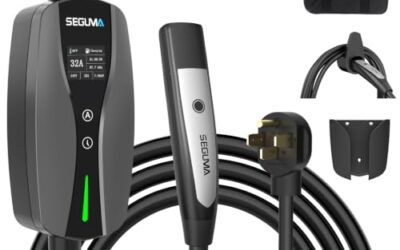
- Dual-voltage operation supports both 120V and 240V outlets
- Long 25-foot cable can reach vehicles in garages, driveways, and outdoor parking areas
- Adjustable current settings help match charging and electrical requirements
- Compatible with most North American J1772 EVs and PHEVs
Cons
- Tesla and other NACS-equipped vehicles require a compatible J1772 adapter
- The maximum 32A and 7.68kW charging specification applies to 240V NEMA 14-50 operation
- Charging controls use onboard buttons, with no Wi-Fi or mobile app specified
Specifications
| Color | black |
|---|---|
| Size | 32A |
| Weight | 10.3 Pounds |
| Product Group | Automotive Parts and Accessories |
| Binding | Tools & Home Improvement |
Best For / Avoid If
Best for buyers prioritizing
- Dual-voltage operation supports both 120V and 240V outlets
- Long 25-foot cable can reach vehicles in garages, driveways, and outdoor parking areas
- Adjustable current settings help match charging and electrical requirements
Consider another option if
- Tesla and other NACS-equipped vehicles require a compatible J1772 adapter
- The maximum 32A and 7.68kW charging specification applies to 240V NEMA 14-50 operation
- Charging controls use onboard buttons, with no Wi-Fi or mobile app specified

Pros
- Supports both Level 1 and Level 2 charging
- Includes connections for compatible 120V and 240V outlets
- Provides adjustable current and delayed-charging controls
- Offers J1772 compatibility for listed BEV and PHEV applications
- Includes ETL certification, FCC listing, and a stated two-year warranty
Cons
- Not compatible with Tesla vehicles or NACS connectors
Specifications
| Color | BLACK |
|---|---|
| Size | BLACK,SAE,J1772 |
| Dimensions | 2.2 x 3.03 x 9.17 inches |
| Weight | 7.7 Pounds |
| Product Group | Automotive Parts and Accessories |
Best For / Avoid If
Best for buyers prioritizing
- Supports both Level 1 and Level 2 charging
- Includes connections for compatible 120V and 240V outlets
- Provides adjustable current and delayed-charging controls
Consider another option if
- Not compatible with Tesla vehicles or NACS connectors

Pros
- Supports SAE-J1772 electric vehicles and plug-in hybrids
- Offers adjustable charging current for different charging requirements
- Includes a long 25-foot cable and delay timer
- Provides multiple listed electrical safety protections
Cons
- Tesla adapter is sold separately
- The product is recommended for use only in a dry environment with a properly grounded outlet
Specifications
| Size | 25FT |
|---|---|
| Product Group | Automotive Parts and Accessories |
Best For / Avoid If
Best for buyers prioritizing
- Supports SAE-J1772 electric vehicles and plug-in hybrids
- Offers adjustable charging current for different charging requirements
- Includes a long 25-foot cable and delay timer
Consider another option if
- Tesla adapter is sold separately
- The product is recommended for use only in a dry environment with a properly grounded outlet
If you are still comparing options, see How Cold Weather Affects EV Charging Speed, How to Protect an Outdoor EV Charger From Weather and How To Read An EV Charging Session Receipt.
FAQ
Does hot weather always make an EV charge more slowly?
No. Outdoor heat alone does not determine charging speed. Battery temperature, state of charge, vehicle limits, charger output, and equipment condition all affect the rate.
Can I use DC fast charging in extreme heat?
Use compatible equipment and follow the vehicle’s instructions. The vehicle may limit power to manage battery temperature. Stop and seek help if the car or charger shows a serious warning or signs of damage.
Why does charging start fast, then slow down?
Power can taper as battery state of charge rises, or as temperature management changes during the session. The exact pattern varies by vehicle and charging conditions.
Will running air conditioning stop my EV from charging?
Not necessarily. The effect depends on vehicle design and charging conditions. Check the vehicle’s display and manual rather than assuming cabin cooling explains a charging slowdown.
Sources and further reading
- Charging Electric Vehicles at Home (Alternative Fuels Data Center): Overview of home EV charging arrangements and equipment.