
How to read a car battery date code depends on the battery brand, because manufacturers use different code formats and locations. Find the code on the case or label, then use that brand’s decoding guide to identify the production date; do not assume one letter-and-number system applies to every battery.
Key takeaways
- A date code usually indicates when a battery was made, not when it was sold or installed.
- Codes may appear on a label or be stamped into the case, and their formats vary by brand and product line.
- A code that looks like a month and year is not enough to confirm the date unless you know the manufacturer’s format.
- Battery age is only one clue. It does not measure charge, capacity, or ability to start a vehicle.
- Check the code with the battery maker or seller if its format is unclear, damaged, or incomplete.
How to read a car battery date code
Use this sequence to identify the code without guessing. You do not need to disconnect the battery to read a visible label. Keep tools and metal objects away from the terminals.
- Identify the battery brand and product line. Read the label on the battery case. The brand matters because codes are not standardized across all automotive batteries.
- Look for a date mark. Check the top, sides, and label for a short stamped or printed sequence. It may be separate from the model, serial, or warranty information.
- Record the code exactly. Note letters, numbers, spaces, and their order. A smudged character or missing first digit can change the interpretation.
- Find the maker’s decoding information. Use brand-specific guidance, or ask the manufacturer or retailer to interpret the code. Avoid applying a decoding chart from another brand.
- Compare the decoded date with other records. A service receipt or installation label can help establish when the battery entered the vehicle. A factory date code alone does not show when it was installed.
- Assess battery condition separately. If you are checking a no-start issue or planning a replacement, use an appropriate battery test and consider the vehicle’s symptoms. The date code cannot diagnose the cause.
Where is the date code on a car battery?
The code may be printed on the main label or marked directly on the battery case. Its location can differ between brands and battery lines, even when batteries look similar. Inspect visible surfaces with good light, but do not pry off a label or scrape the case to uncover a mark.
Some batteries also carry serial or tracking codes that contain manufacturing information. These can resemble date codes, but appearance alone does not establish what each character means. If the battery has several codes and no clear date label, provide the brand and full code to the manufacturer or seller.
Why battery date codes are not universal
There is no single decoding rule that reliably covers every car battery. One maker may use a date-like sequence, while another may encode production details in a longer serial number. A code can also vary by product line, production site, or period. Those differences limit what you can conclude from a generic chart found online.
For example, a mark that appears to contain a month letter and a year digit might fit one maker’s system. The same characters could mean something else on another battery. Treat any example as a format illustration, not a decoding rule, unless the battery maker confirms it applies to that exact brand and line.
Battery Council International offers general information on lead-acid batteries, but a general industry resource is not a substitute for a specific manufacturer’s code key. See Battery Council International for background on automotive batteries.
What the date code can and cannot tell you
| Question | What the code can tell you | What it cannot tell you by itself |
|---|---|---|
| When was the battery made? | Potentially, once the correct brand-specific format is decoded. | A reliable date if the format or code is uncertain. |
| When was it installed? | Usually nothing conclusive. | The installation date; a receipt or service record is more useful. |
| Is it charged? | Nothing about its current charge. | Whether it can start the vehicle today. |
| Is it healthy? | Age can provide context when considering battery service. | Remaining capacity, internal condition, or the cause of a starting problem. |
| Is it the right battery for my vehicle? | Nothing definitive about fitment. | Correct group size, terminal layout, chemistry, capacity, or vehicle-specific requirements. |
Age can help explain why a battery is being inspected or replaced, but it is not a pass-or-fail test. A newer battery can be discharged or damaged. An older battery can still start a car, though its condition and suitability require separate assessment.
Battery date code versus installation date
A production code refers to manufacturing, if the maker’s format confirms that interpretation. A retailer may hold a battery before sale, and a vehicle owner may install it later. That means the battery’s age since manufacture can differ from its time in service.
Look for a dated sales receipt, service invoice, or clearly marked installation note when you need the in-service date. Do not treat a handwritten mark as proof unless you know who added it and what it records. If records are unavailable, state the limits: the manufacturing date may be estimated, while the installation date remains unknown.
How date codes help with battery charging and testing
A date code can provide context before a battery check, but it does not tell you which charger setting to use. Battery chemistry, voltage, vehicle requirements, and charger instructions matter. A vehicle may use a conventional flooded lead-acid battery, AGM battery, or another type, and the correct charging approach depends on the battery and equipment.
Read the battery label and the charger manual before connecting a charger. Follow the vehicle manual too, especially if the vehicle has battery monitoring or manufacturer-specific charging instructions. For broader charger selection questions, see our NOCO GENIUS vs. Battery Tender charger comparison and guide to battery chargers for cold weather.
If the car has repeated starting trouble, a date code cannot distinguish a weak battery from a charging-system fault, poor terminal connection, parasitic draw, or another problem. A suitable battery test can check battery condition, while diagnosis of the vehicle may require additional checks.
Common mistakes
- Using a generic decoding chart. A chart for another brand can produce a confident but wrong date.
- Assuming the date is the installation date. Production, sale, and installation are separate events.
- Reading a serial number as a date. Some serials contain coded information, but only the maker’s rules establish what it means.
- Judging battery health by age alone. The code does not report charge, capacity, or test results.
- Confusing battery age with vehicle model year. The vehicle’s model year does not decode the battery mark or establish when that battery was fitted.
- Ignoring battery type and vehicle requirements. A date code does not confirm that a battery or charger matches the vehicle.
When to get professional help
Ask a battery retailer, manufacturer, or qualified technician to interpret a code if it is hard to read, lacks an obvious format, or could affect a warranty or replacement decision. Share the brand, product-line name, and exact code. A clear photo of the label may help, provided it does not require touching terminals or moving cables.
Get the vehicle checked if it repeatedly needs a jump-start, struggles to crank, or shows a battery or charging warning. Stop and seek qualified help if the battery case is swollen, cracked, leaking, unusually hot, or has a strong sulfur-like odor. Do not charge or handle a visibly damaged battery; follow the vehicle and battery maker’s safety instructions.
Gear that can help
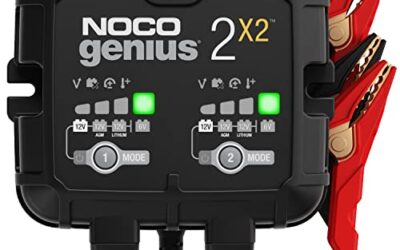
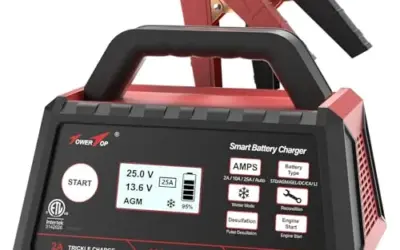
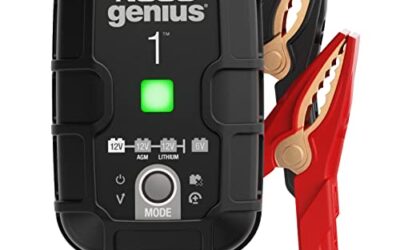
If you need battery chargers and maintainers or battery testers for this job, these picks already appear in our battery chargers and maintainers guides. Check the full guide for fit and who should skip each one.

Pros
- Combines charging, maintenance, trickle charging, and desulfation functions
- Supports several 12V lead-acid battery types, including AGM and gel cell
- Requires no manual desulfation operation
- Includes multiple safety protections and a programmed 24-hour timer
Cons
- Compatibility is limited in the listing to 12V lead-acid battery types
- The listing does not include a detailed specifications list
Best For / Avoid If
Best for buyers prioritizing
- Combines charging, maintenance, trickle charging, and desulfation functions
- Supports several 12V lead-acid battery types, including AGM and gel cell
- Requires no manual desulfation operation
Consider another option if
- Compatibility is limited in the listing to 12V lead-acid battery types
- The listing does not include a detailed specifications list

Pros
- Supports both 6V and 12V battery systems
- Works with standard, AGM, and deep-cycle batteries
- Includes two quick-connect accessory options
- Combines charging, maintenance, and desulfation functions
Cons
- The 1.5A output is intended for charging and maintaining batteries rather than high-speed charging
- The listing does not include warranty information
Specifications
| Color | Black |
|---|---|
| Dimensions | 6.6 x 5 x 3.4 inches |
| Weight | 1.2 Pounds |
| Product Group | Automotive Parts and Accessories |
| Binding | Automotive |
Best For / Avoid If
Best for buyers prioritizing
- Supports both 6V and 12V battery systems
- Works with standard, AGM, and deep-cycle batteries
- Includes two quick-connect accessory options
Consider another option if
- The 1.5A output is intended for charging and maintaining batteries rather than high-speed charging
- The listing does not include warranty information

Pros
- Supports a broad 100-2000 CCA range for 12V lead-acid batteries
- Combines battery, cranking, and charging-system testing
- Displays battery and alternator output waveforms in real time
- Offers a color LCD and nine language options
Cons
- Compatibility is specified for 12V lead-acid batteries; other battery types are not listed
Specifications
| Color | Silver |
|---|---|
| Size | Compact |
| Dimensions | 5.905511805 x 0.9055118101 x 3.3464566895 Inches |
| Weight | 0.7495716908 Pounds |
| Product Group | Automotive Parts and Accessories |
| Binding | Misc. |
Best For / Avoid If
Best for buyers prioritizing
- Supports a broad 100-2000 CCA range for 12V lead-acid batteries
- Combines battery, cranking, and charging-system testing
- Displays battery and alternator output waveforms in real time
Consider another option if
- Compatibility is specified for 12V lead-acid batteries; other battery types are not listed
FAQ
Does every car battery have a readable date code?
No. Some batteries have an easy-to-spot date mark, while others use a serial or label format that needs brand-specific interpretation. A worn or hidden mark may also be difficult to read.
Can I tell battery age from the first letter or number?
Not reliably without the correct decoding instructions. Character order and meaning vary, so a first character that represents a month for one brand may not do so for another.
Does an old date code mean I need a new battery?
Not by itself. The code helps estimate manufacturing age when decoded correctly, but a battery test and the vehicle’s symptoms provide more useful evidence about present condition.
Can a charger read the battery date code?
Most chargers are used to charge batteries, not decode case markings. Some battery testers report condition-related results, but those results are separate from the manufacturing date code.
Where can I find the date if the label is unclear?
Check the battery maker’s support materials or ask its customer service team or the retailer. Provide the brand and complete code rather than relying on a chart for a different battery.