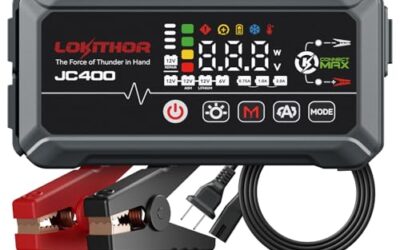
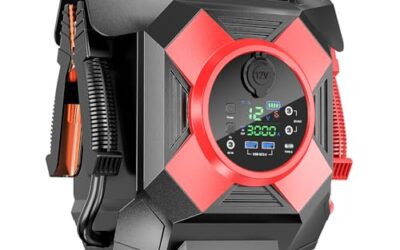
You can tell how to know when a jump starter needs replacing by checking for damage, charge loss, and repeated failure on a compatible vehicle. First rule out a discharged pack, damaged clamps, incorrect connections, and a vehicle battery or starting-system fault.
- Stop using a pack with a swollen case, burning smell, leaking material, unusual heat, or damaged wiring.
- Recharge and retest a sound unit according to its manual before calling it failed.
- A jump starter‘s voltage, clamp design, and starting capacity must suit the vehicle.
- A successful jump does not prove the vehicle battery is healthy, and one failed jump does not prove the pack is dead.
Replace or retire a jump starter when it shows physical battery damage, repeatedly fails to accept or hold a charge, or cannot deliver a jump after proper charging and safe setup. Do not keep testing a unit that is hot, swollen, leaking, or damaged. Contact the manufacturer or follow local battery-disposal guidance.
For a sound-looking unit, judge its performance only after checking the simple causes first. The pack may be empty, the charging cable may be faulty, or the vehicle may need more starting power than the pack can supply. A weak or defective vehicle battery can also make results inconsistent.
Check these signs before replacing a jump starter
| Sign | Possible cause | Next step |
|---|---|---|
| Swollen, cracked, melted, or leaking case | Battery or housing damage | Stop using and charging it. Arrange proper service or disposal. |
| Burning or chemical smell, or unusual heat | Electrical or battery fault | Disconnect only if safe. Keep away from ignition sources and stop use. |
| Pack will not charge | Bad cable, charger, port, or internal fault | Check the approved charging setup once. If failure persists, retire it. |
| Charge indicator drops quickly while stored | Self-discharge, aging, cold, or a charging issue | Charge as the manual directs, then check charge retention over a reasonable storage period. |
| Clamps are loose, corroded, frayed, or damaged | Connection fault or worn leads | Do not jump a vehicle until the manufacturer-approved cable assembly is repaired or replaced. |
| Repeated no-start on a compatible vehicle | Weak pack, poor connection, vehicle fault, or unsuitable conditions | Retest only after checking charge, setup, temperature limits, and vehicle requirements. |
Step-by-step: diagnose the jump starter safely
- Inspect the pack and cables. Look for swelling, cracks, corrosion, exposed wire, loose clamps, melted plastic, or fluid. Do not charge or use a damaged pack. Battery chemistry differs by model, so follow its safety instructions.
- Check the charge level. Read the indicator using the method in the manual. A displayed level can be an estimate, not proof that the pack can deliver starting current. Recharge the unit with its approved cable and power source.
- Check whether it holds charge. After charging, disconnect it and store it under the conditions in the manual. If the indicator falls quickly again, repeat only if the instructions call for it. Persistent charge loss points to a failing pack or charging system.
- Inspect the charging setup. Try the approved cable and a known-working power source. Check for a loose or dirty charging port without inserting metal tools. If the unit still will not charge, stop troubleshooting and seek manufacturer service or replacement.
- Confirm vehicle compatibility. Match the jump starter to the vehicle’s electrical system and the battery type and engine requirements. Many consumer packs are intended for 12-volt vehicles, but that does not make every pack suitable for every 12-volt vehicle. Follow both manuals.
- Connect exactly as instructed. Use the correct battery connection points and clamp order for the vehicle and pack. Keep clamps from touching each other. Do not bypass protection features or repeatedly crank the engine beyond the limits in the manuals.
- Separate pack failure from vehicle failure. If a charged, compatible pack fails once, inspect the connections and follow the vehicle’s jump-start procedure. If safe setup still produces no start, stop repeated attempts. A discharged or damaged vehicle battery, poor vehicle connections, starter fault, or other electrical issue may be responsible.
Why a jump starter may fail even when it is not worn out
Cold temperatures can reduce battery performance, including the performance of the vehicle battery and the jump starter. Check each unit’s operating-temperature limits. A pack stored outside its allowed range may need to return to a permitted temperature before use, but do not warm it with a heater or open flame.
Vehicle fit matters too. A small pack that can start some cars may not have enough output for a larger engine, a diesel, or a vehicle with a deeply discharged battery. The battery’s condition, engine, temperature, and vehicle design all affect the result. For larger vehicles, see our guide to high-discharge truck jump starters.
Modern vehicles may have specific jump points and procedures. Some use battery-management systems or batteries located away from the engine bay. Follow the vehicle manual rather than assuming the battery posts are the correct connection points. For vehicles kept in storage, our guide to jump starters for stored vehicles covers that use case.
Common mistakes
- Replacing the pack after one failed attempt. Low charge, poor clamp contact, cold, or an unsuitable vehicle can explain a failed jump. Check those causes first if the unit is undamaged.
- Trusting the charge indicator as a load test. A full indicator does not prove the pack can supply enough current to crank an engine.
- Assuming every 12-volt pack fits every 12-volt vehicle. Voltage is only one compatibility point. Starting capacity, connectors, battery location, and vehicle procedure also matter.
- Using a damaged cable because the pack still turns on. A working display cannot make a frayed lead or loose clamp safe.
- Charging by guesswork. Use the charging method and schedule in the unit’s manual. Do not substitute a charger unless the manufacturer permits it.
- Blaming the jump starter for a vehicle fault. If a suitable, charged pack cannot start the vehicle, the battery, cables, starter, or another system may need diagnosis.
When to get professional help
Stop and seek qualified help if the pack is swollen, leaking, unusually hot, or physically damaged. Do not open its case or attempt a cell replacement. Lithium-ion and other rechargeable packs can present fire or injury risks when damaged or handled incorrectly.
Ask a repair shop to test the vehicle battery and starting system if a compatible jump starter cannot start the vehicle after correct setup, or if the vehicle repeatedly needs boosts. A jump can get the engine running, but it does not repair a failing battery or charging system. If the vehicle starts and then stalls, or warning lights appear, use the vehicle manual and seek diagnosis rather than repeatedly boosting it.
If the jump starter is under warranty, contact its manufacturer before discarding it. For battery care and handling information, see Battery Council International. For more jump-starting context, browse CarTechTalk’s jump starter guides.
Gear that can help
If you need jump starters for this job, these picks already appear in our jump starters guides. Check the full guide for fit and who should skip each one.

Pros
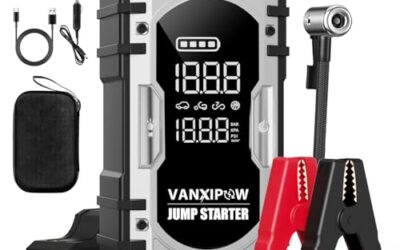
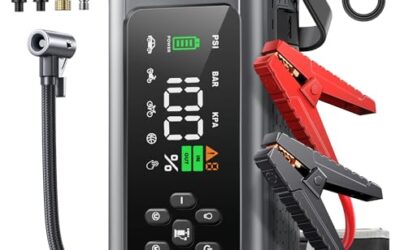
- Combines jump starting and cordless tire inflation in one portable unit
- Supports up to 150 PSI with automatic shut-off and selectable pressure units
- Includes five air nozzles and five inflation modes
- Provides stated support for more than 1,000 charge cycles
- Backed by an 18-month warranty
Cons
- The stated operating and storage temperature range is -4°F to 140°F, while charging is limited to 14°F to 113°F
- The unit should be recharged at least once every three months during long-term storage
Specifications
| Color | Red |
|---|---|
| Dimensions | 4.96 x 5.87 x 2.3 inches |
| Weight | 3.58 pounds |
| Product Group | Automotive Parts and Accessories |
Best For / Avoid If
Best for buyers prioritizing
- Combines jump starting and cordless tire inflation in one portable unit
- Supports up to 150 PSI with automatic shut-off and selectable pressure units
- Includes five air nozzles and five inflation modes
Consider another option if
- The stated operating and storage temperature range is -4°F to 140°F, while charging is limited to 14°F to 113°F
- The unit should be recharged at least once every three months during long-term storage

Pros
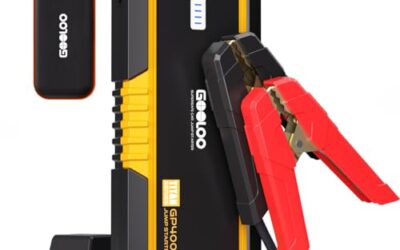
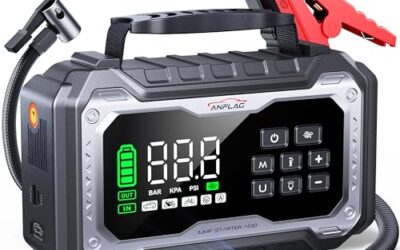
- High 1000-amp peak rating for a compact 2.5-pound jump starter
- Stated compatibility with 12V vehicles and engines up to 6.0L gas or 3.0L diesel
- Built-in spark-proof and reverse-polarity protection
- Adds power-bank and flashlight functionality for emergency use
Cons
- The stated engine compatibility is limited to up to 6.0L gas and 3.0L diesel
- The listed warranty period is one year
Specifications
| Color | Gray |
|---|---|
| Size | 1000 Amps |
| Dimensions | 6.5748031429 x 3.149606296 x 7.7165354252 Inches |
| Weight | 2.4 Pounds |
| Product Group | Automotive Parts and Accessories |
| Binding | Automotive |
Best For / Avoid If
Best for buyers prioritizing
- High 1000-amp peak rating for a compact 2.5-pound jump starter
- Stated compatibility with 12V vehicles and engines up to 6.0L gas or 3.0L diesel
- Built-in spark-proof and reverse-polarity protection
Consider another option if
- The stated engine compatibility is limited to up to 6.0L gas and 3.0L diesel
- The listed warranty period is one year

Pros
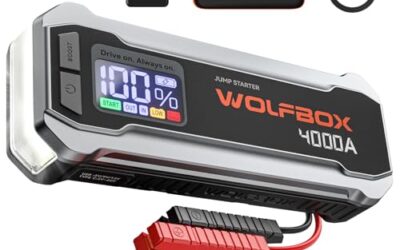
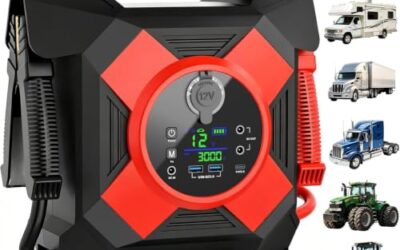
- High listed 7000A peak-current output
- Supports the stated range of gas and 12.0L diesel engines
- Includes forced-start functionality for fully drained batteries
- Combines jump-starting, USB charging, and emergency lighting in one portable unit
- Uses metal clamps and lists 14 safety protections
Cons
- The source data does not identify a separate wall charger or its specifications
Best For / Avoid If
Best for buyers prioritizing
- High listed 7000A peak-current output
- Supports the stated range of gas and 12.0L diesel engines
- Includes forced-start functionality for fully drained batteries
Consider another option if
- The source data does not identify a separate wall charger or its specifications
FAQ
How long should a jump starter last?
There is no dependable lifespan that applies to every model. Battery chemistry, storage temperature, charge habits, use, and the manufacturer’s care instructions affect service life. Replace it based on its condition and performance, not age alone.
Can I use a jump starter if its charge indicator shows full?
Only if the unit is undamaged and suitable for the vehicle. A full indicator does not confirm the pack can deliver enough starting current. Follow the unit and vehicle manuals.
Should I replace a jump starter that loses charge in storage?
First check the storage and recharge instructions. Some units need periodic charging. If a correctly charged unit loses its charge unusually quickly under permitted storage conditions, contact the manufacturer or replace it.
Can a jump starter damage my car?
Incorrect connections or use against the vehicle’s procedure can cause damage. Use a pack compatible with the vehicle, follow both manuals, and stop if you cannot identify the approved connection points.
Sources and further reading
- Battery Council International (Battery Council International): Find battery care, safety, and recycling information.