After a successful jump start, follow your vehicle and jump-starter manuals, then check for warning lights or other signs the battery is not charging. A jump gets the engine running; it does not confirm that the battery is healthy or that the charging system works.
- Disconnect the booster in the order stated in both manuals, with clamps clear of moving parts.
- Do not assume a short drive will fully recharge a deeply discharged battery.
- Arrange a battery and charging-system test if the battery is old, repeatedly goes flat, or the vehicle struggles to restart.
- Stop if you see smoke, sparks, leaking fluid, swelling, or damaged battery cables.
Once the engine runs, keep the vehicle in a safe, ventilated place and follow the jump-starter instructions for removing its clamps. The correct sequence can vary by vehicle and booster setup, so do not rely on a single sequence as universal. Avoid letting clamps touch each other or metal parts, and keep cables away from belts, fans, and other moving components.
If you used another vehicle, follow both vehicle manuals for disconnecting jumper cables. Some newer vehicles have designated jump points or restrictions on where cables connect. A battery may be in the trunk, under a seat, or behind a cover, while jump terminals sit elsewhere. Use the approved terminals rather than improvising a connection at the battery.
After removing the cables, check the instrument panel. A battery-shaped warning light that stays on while the engine runs can indicate a charging-system problem. Other alerts may appear after a low-voltage event. Record them, but do not treat a warning light or stored code as proof that a specific part has failed.
Can you drive after jump-starting a car?
Often, a vehicle can be driven after a jump start if it runs normally, has no serious warning signs, and its manual does not direct you to stop. Driving may let the charging system put some energy back into the battery, but it is not a dependable substitute for testing or charging a discharged battery with suitable equipment.
There is no universal drive time that restores every battery. Results depend on battery condition, state of charge, temperature, electrical loads, and the vehicle’s charging strategy. Some vehicles manage alternator output electronically, so a simple assumption that driving at a certain speed for a fixed number of minutes will recharge the battery can mislead.
Before setting off, consider whether you can reach a safe place if the engine stalls or fails to restart. Avoid unnecessary electrical loads, but do not switch off safety-critical equipment to conserve power. If the battery warning light remains on, the engine runs roughly, lights dim, or steering and other systems behave abnormally, stop somewhere safe and seek help instead of continuing a routine trip.
What to check after the engine starts
| What you notice | What it may mean | Practical next step |
|---|---|---|
| Engine starts and runs normally; no battery warning | The jump worked, but battery condition remains unknown. | Plan a battery test, especially after a repeat discharge or hard starting. |
| Battery warning light stays on | Charging system may not be maintaining battery voltage. | Stop safely and arrange prompt diagnosis; avoid relying on the vehicle for a long trip. |
| Engine starts, then stalls or will not restart | Battery may be weak, connections may be poor, or another fault may exist. | Do not keep repeating jump attempts. Request battery and vehicle checks. |
| Clicking, slow cranking, or dim lights return | Battery may lack charge or capacity; a connection or charging fault is also possible. | Have the battery, terminals, cables, and charging system assessed. |
| Smoke, unusual heat, swelling, leaking, or strong chemical odor | Possible battery damage or electrical hazard. | Turn off the vehicle if safe, move away, and call qualified roadside or repair help. |
Does a jump start recharge the battery?
A jump starter supplies enough electrical energy to help crank an engine. Once the engine runs, the vehicle’s charging system may recharge the battery, but the amount and rate depend on vehicle design and battery condition. A jump start itself does not prove the battery has regained enough charge for the next start.
A deeply discharged, aged, damaged, or cold battery may need a compatible battery charger, professional charging, or replacement after testing. Charging requirements vary by battery type and vehicle. Use equipment that matches the battery chemistry and voltage, and follow its instructions. Many vehicles use 12-volt systems, but do not assume that applies to every vehicle or jump point. Hybrid and electric vehicles can have separate procedures for their low-voltage batteries and high-voltage systems.
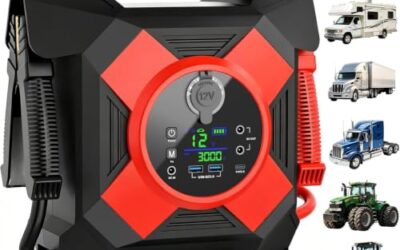
If you need equipment for a stored vehicle, our guide to jump starters for stored vehicles covers that use case. For larger gas or diesel vehicles, see our guide to truck battery jump starters. A booster’s voltage, connector arrangement, and stated vehicle coverage must match the intended use; do not infer compatibility from size alone.
Why did the battery go flat?
A dead battery has several possible causes. The vehicle may have been left with lights or accessories on, or it may have sat unused long enough for normal electrical draw to lower its charge. Cold weather can make starting harder. An aging battery, loose or corroded connections, a charging-system fault, or an electrical draw while parked can also be involved.
One successful jump cannot identify which cause applies. If the battery goes flat again soon, ask for a battery load or conductance test and charging-system checks. If those checks do not explain the discharge, a technician may test for excessive parked-vehicle electrical draw. The exact test method depends on vehicle design and should account for modules that remain active after shutdown.
Check the battery case and visible cables only if you can do so safely. Do not touch a cracked, swollen, leaking, or unusually hot battery. Corrosion, damaged insulation, loose connections, and battery location can make inspection or repair unsuitable for roadside work. Follow the vehicle manual and use qualified help where access is difficult.
Common mistakes after a jump start
- Assuming the battery is fixed: The engine running only confirms that it started. It does not show whether the battery can hold charge or whether the alternator and related system work.
- Switching the engine off immediately: A weak battery may not restart the vehicle. If you must stop, choose a safe location and account for the chance of needing another start or assistance.
- Relying on a fixed driving time: No single duration guarantees a full recharge across batteries and vehicles. Use a suitable charger or arrange testing when the battery was deeply discharged.
- Repeating jump attempts without checking symptoms: Repeated failure can point to a poor connection, an unsuitable booster, a battery fault, or another vehicle problem. Stop if cables heat, smoke appears, or the battery looks damaged.
- Ignoring the battery warning light: A running engine does not mean the charging system is supplying power. A persistent warning deserves prompt attention.
- Disconnecting by guesswork: Cable and booster removal instructions can differ. Use the manuals for the specific vehicle and equipment.
- Clearing warning codes to make them disappear: Erasing a code does not repair its cause. Record relevant warnings and have recurring or safety-related faults diagnosed.
When to get professional help
Call roadside assistance or a qualified repair shop if the vehicle will not start after a correct jump attempt, stalls after starting, or repeatedly needs a boost. Seek help promptly if the battery warning light stays on, electrical systems behave erratically, or you suspect a charging-system failure.
Do not continue handling a battery that is cracked, swollen, leaking, smoking, or unusually hot. Move away from the vehicle if there is a strong chemical odor or active smoke, and contact emergency services if the situation presents immediate danger. Do not open, charge, or jump-start a visibly damaged battery.
Ask the repair provider to distinguish among battery condition, charging performance, cable connections, and parked-vehicle electrical draw. A test result should be interpreted for the vehicle’s battery type and specifications. If the vehicle is under warranty or has a manufacturer-specific jump procedure, consult its manual or service provider before attempting further work.
Gear that can help
If you need jump starters for this job, these picks already appear in our jump starters guides. Check the full guide for fit and who should skip each one.

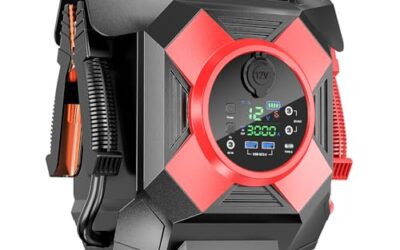
Pros
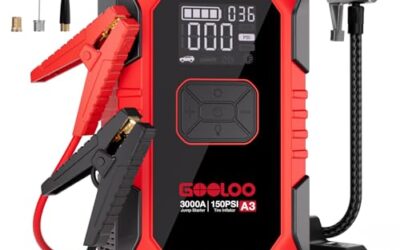
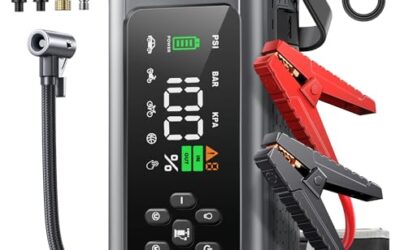
- Combines jump starting and cordless tire inflation in one portable unit
- Supports up to 150 PSI with automatic shut-off and selectable pressure units
- Includes five air nozzles and five inflation modes
- Provides stated support for more than 1,000 charge cycles
- Backed by an 18-month warranty
Cons
- The stated operating and storage temperature range is -4°F to 140°F, while charging is limited to 14°F to 113°F
- The unit should be recharged at least once every three months during long-term storage
Specifications
| Color | Red |
|---|---|
| Dimensions | 4.96 x 5.87 x 2.3 inches |
| Weight | 3.58 pounds |
| Product Group | Automotive Parts and Accessories |
Best For / Avoid If
Best for buyers prioritizing
- Combines jump starting and cordless tire inflation in one portable unit
- Supports up to 150 PSI with automatic shut-off and selectable pressure units
- Includes five air nozzles and five inflation modes
Consider another option if
- The stated operating and storage temperature range is -4°F to 140°F, while charging is limited to 14°F to 113°F
- The unit should be recharged at least once every three months during long-term storage

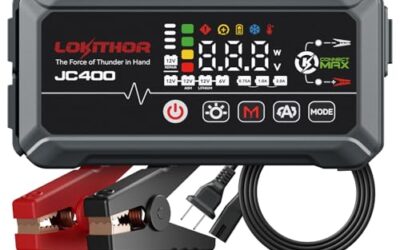
Pros
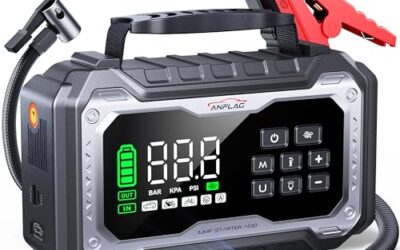
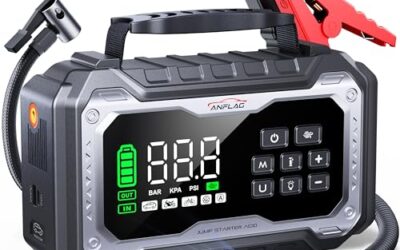
- High 1000-amp peak rating for a compact 2.5-pound jump starter
- Stated compatibility with 12V vehicles and engines up to 6.0L gas or 3.0L diesel
- Built-in spark-proof and reverse-polarity protection
- Adds power-bank and flashlight functionality for emergency use
Cons
- The stated engine compatibility is limited to up to 6.0L gas and 3.0L diesel
- The listed warranty period is one year
Specifications
| Color | Gray |
|---|---|
| Size | 1000 Amps |
| Dimensions | 6.5748031429 x 3.149606296 x 7.7165354252 Inches |
| Weight | 2.4 Pounds |
| Product Group | Automotive Parts and Accessories |
| Binding | Automotive |
Best For / Avoid If
Best for buyers prioritizing
- High 1000-amp peak rating for a compact 2.5-pound jump starter
- Stated compatibility with 12V vehicles and engines up to 6.0L gas or 3.0L diesel
- Built-in spark-proof and reverse-polarity protection
Consider another option if
- The stated engine compatibility is limited to up to 6.0L gas and 3.0L diesel
- The listed warranty period is one year
Frequently asked questions
Should I leave the car running after a jump start?
Follow the vehicle and booster manuals. If the vehicle runs normally and has no warning signs, keeping it running may allow some charging, but idling does not guarantee a full recharge. Do not leave it running in an enclosed space.
How long should I drive after a jump start?
There is no reliable universal time. Charging depends on battery condition, temperature, vehicle charging controls, and electrical demand. Arrange a battery test or use a compatible charger if the battery was deeply discharged or the problem returns.
Can I turn the car off after jump-starting it?
You can, but a weak or discharged battery may not restart it. If you need to stop, choose a safe place and consider arranging a battery test before relying on another start.
Why did my car need a jump if the battery is new?
A new battery can still discharge because of lights left on, long storage, a charging fault, poor connections, or an electrical draw while parked. Testing can separate these possibilities; age alone does not diagnose the cause.
Does a successful jump mean I need a new battery?
No. A jump start does not establish whether the battery needs replacement. Testing the battery and charging system can show whether the battery has failed or another fault caused the discharge.
Sources and further reading
- Battery Council International: General information about lead-acid batteries and battery care.