To choose the correct battery charger mode, match the charger to battery chemistry, voltage, and charging purpose before connecting power. A 12-volt lead-acid battery may need a different profile from an AGM, gel, or lithium battery, even when both serve similar vehicles.
Start with the battery label and vehicle manual. Then select the mode that matches battery type and voltage. Use repair, recondition, supply, or jump-start settings only when the manual supports that use.
Key takeaways
- Match charger voltage to battery voltage. A 12-volt setting does not fit a 24-volt battery.
- Match chemistry. Flooded lead-acid, AGM, gel, and lithium batteries use different charging behavior.
- Choose charging mode by task. Charging, maintaining, testing, and starting are separate jobs.
- Use lithium mode only with a battery that has a compatible battery management system.
- Stop if the battery swells, leaks, smells strongly, heats rapidly, or shows case damage.
What battery charger modes mean
Charger modes control voltage, current, timing, and charge stages. A normal charging mode restores energy to a battery. A maintenance mode supplies small amounts of current as needed while a vehicle sits. A repair mode may apply a controlled higher-voltage cycle or repeated pulses, depending on charger design.
Mode names vary by brand. One charger may call its setting AGM, while another may group AGM with snowflake or cold-weather charging. Read the charger manual instead of relying on icons alone.
Mode does not measure battery health by itself. A charger can fill a weak battery that soon loses charge. A battery tester or professional load test may be needed when starting problems continue.
Step 1: Identify battery voltage
Most passenger cars use 12-volt batteries. Some trucks, commercial vehicles, boats, equipment, and specialty systems use 24 volts. A 6-volt setting may apply to older vehicles, motorcycles, lawn equipment, or specific battery banks.
Battery voltage describes system class, not the exact voltage measured at rest. A charged 12-volt lead-acid battery can measure above 12 volts. Charging voltage rises higher during operation. Do not select a mode from a meter reading alone.
- Read the battery label for 6V, 12V, or 24V.
- Check the vehicle or equipment manual.
- Confirm that charger output matches battery-system voltage.
- Disconnect batteries from series or parallel banks when the charger manual requires it.
Series-connected batteries raise system voltage. Parallel-connected batteries increase capacity while keeping nominal voltage similar. Charger instructions may limit how banks can be charged.
Step 2: Identify battery chemistry
Battery chemistry sets charging limits. Look for terms such as flooded, wet cell, AGM, gel, VRLA, LiFePO4, or lithium iron phosphate on the case or label.
Flooded lead-acid
Flooded batteries contain liquid electrolyte and may have removable vent caps. They appear in many older vehicles, trucks, boats, and equipment. Use a standard lead-acid mode unless the battery maker specifies another profile.
Flooded batteries can release gas during charging. Charge in a ventilated area, keep sparks away, and follow instructions for checking electrolyte level. Do not open sealed batteries.
AGM batteries
AGM means absorbed glass mat. This valve-regulated lead-acid type holds electrolyte in glass separators. AGM batteries often support vehicles with start-stop systems, high electrical loads, or special installation needs.
Use AGM mode when the charger offers it and the battery label identifies AGM. AGM charging can use a different voltage profile from standard flooded charging. The wrong setting may reduce service life or leave the battery undercharged.
Gel batteries
Gel batteries use silica-thickened electrolyte. They need controlled charging voltage because excessive voltage can create permanent damage. Select gel mode only when the charger lists gel compatibility and the battery label confirms gel construction.
Do not assume AGM and gel settings are interchangeable. Both may be sealed lead-acid batteries, but their charging limits can differ.
Lithium batteries
Automotive lithium batteries often use lithium iron phosphate chemistry and an internal battery management system. Select lithium or LiFePO4 mode only when the battery maker approves that charger profile.
Some lithium batteries cannot accept charging below a certain temperature. A battery management system may block charging, but that protection does not make every charger safe. Lithium batteries also may need a charger with a compatible final-voltage profile and automatic shutoff behavior.
Do not use lead-acid repair or desulfation mode on a lithium battery unless the battery maker specifically permits it.
Step 3: Choose mode by charging purpose
| Purpose | Best mode | What it does | Watch for |
|---|---|---|---|
| Restore a low battery | Normal charge | Uses regular stages to return energy | Very low voltage may indicate a damaged battery |
| Keep a stored vehicle ready | Maintenance or float | Holds charge with small controlled output | Battery must remain connected only when approved |
| Charge AGM | AGM | Uses an AGM-specific lead-acid profile | Do not substitute gel mode without approval |
| Charge lithium | Lithium or LiFePO4 | Uses a lithium-compatible profile | Temperature and battery management limits still apply |
| Attempt recovery | Repair or recondition | Runs a special cycle on some lead-acid batteries | May not fix sulfation, an internal short, or a bad cell |
| Power vehicle electronics | Supply or support | Provides steadier power during service | Not every charger can safely power sensitive modules |
Normal charging mode
Use normal mode for routine charging when battery type matches the charger profile. This is the usual choice for a healthy battery that has discharged from lights, storage, or short trips.
Choose charging current based on battery capacity and charger instructions. Higher current may reduce charging time, but it can create more heat and may not suit small batteries. Motorcycle, powersports, and auxiliary batteries often need lower current than full-size automotive batteries.
Maintenance or float mode
Maintenance mode fits vehicles stored for weeks or months. It monitors battery voltage and adds current as needed. This helps offset small drains from alarms, computers, and other connected systems.
Maintenance mode is not a fast charger. Do not select it when a battery needs rapid recovery. Some vehicles should have the battery disconnected or charged through a specific connection point during long storage. Follow vehicle and charger instructions.
For storage planning, see CarTechTalk’s guide to the best battery maintainer for winter car storage.
Repair or recondition mode
Repair mode targets some lead-acid batteries with sulfation or long-term discharge. Results vary because sulfation can become permanent, and low voltage can also result from a shorted cell, corrosion, or physical damage.
Use repair mode with the battery maker’s approval. Remove the battery from the vehicle if the charger manual requires it. This mode may raise voltage above normal charging levels and can affect vehicle electronics.
Repair mode cannot restore a battery with a cracked case, severe corrosion, low electrolyte, or internal mechanical damage. It also does not repair a failed alternator or parasitic electrical drain.
Engine-start or boost mode
Engine-start mode supplies high current for a short period. It is not the same as a jump starter, and it may require a battery with enough remaining voltage for the charger to operate.
Follow the charger sequence and time limit. Connecting a charger in start mode for longer than allowed can overheat the unit, cables, or battery. Turn off vehicle loads before attempting a start.
Step 4: Check vehicle and connection limits
Battery mode is only one compatibility check. Vehicle model-year, charging system, battery location, and terminal access can change the correct connection method.
Modern vehicles may use battery sensors, energy management systems, or start-stop controls. Some require charging at designated posts instead of directly at the battery. The vehicle manual may also require a battery registration procedure after replacement. A charger cannot perform that procedure unless it specifically supports it.
Check connector type and polarity. Red normally connects to positive and black to negative or an approved chassis ground, but follow the charger and vehicle manuals. Reverse polarity protection may prevent damage, but it should not replace careful connection.
For a comparison of common charger families, read NOCO GENIUS versus Battery Tender. Cold-weather charging can require different thermal limits and profiles, covered in CarTechTalk’s guide to battery chargers for cold weather.
Safe charging checklist
- Inspect the case, terminals, cables, and charger leads.
- Stop if the battery leaks, bulges, cracks, freezes, or heats quickly.
- Place flooded batteries in a ventilated area away from sparks and flames.
- Turn the charger off before changing connections or mode.
- Connect polarity correctly and keep clamps stable.
- Set voltage and chemistry before starting the charge.
- Monitor the battery during the first part of charging.
- Disconnect power before removing clamps unless the manual states another sequence.
Do not charge a frozen lead-acid battery. Let it thaw safely and inspect it first. Do not charge a damaged lithium battery or one with a swollen case.
Common mistakes
Choosing mode from vehicle type alone
“Car mode” does not identify chemistry. A car may use flooded lead-acid, AGM, or lithium depending on model-year and factory equipment. Read the battery label.
Using repair mode for every weak battery
A weak battery may have a bad cell or a vehicle drain. Repair cycling cannot solve either fault. Test the battery and charging system if the problem returns.
Leaving normal charge mode connected for storage
Normal charging may continue until the charger reaches its control stage. Maintenance mode is intended for long-term connection when the charger and vehicle allow it.
Charging through an unsuitable accessory socket
Some 12-volt sockets lose power with the ignition off. Others cannot carry charging current through the vehicle wiring. Use approved terminals or a direct battery connection.
Assuming a full indicator proves battery health
A charger can show full after surface charge returns. The battery may still lack enough capacity to crank an engine. A load test gives a better view of starting ability.
When to get professional help
Get professional help when battery voltage remains abnormal after charging, the battery becomes hot, or the vehicle repeatedly goes flat. A technician can test battery capacity, alternator output, parasitic draw, cable voltage drop, and battery sensor operation.
Seek help for hybrid and electric vehicles. Their high-voltage systems differ from ordinary 12-volt accessory batteries. Do not connect a consumer charger to high-voltage traction battery equipment unless the vehicle maker specifies that procedure.
Gear that can help
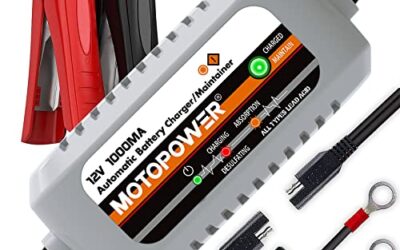
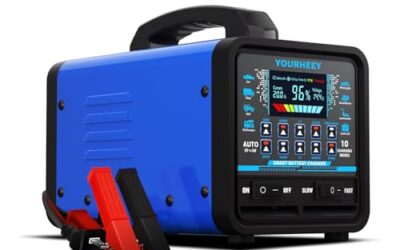
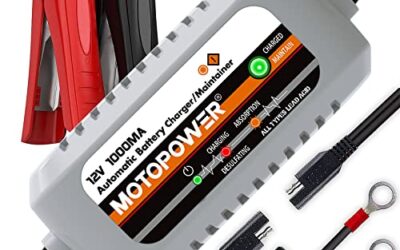
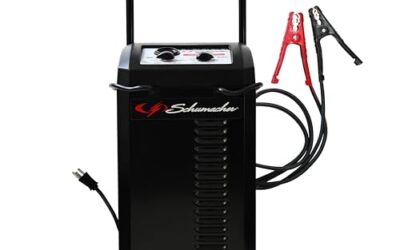
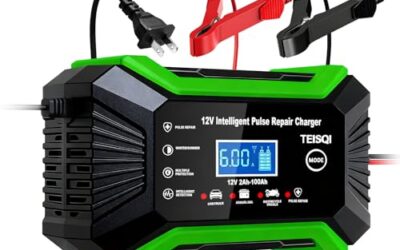
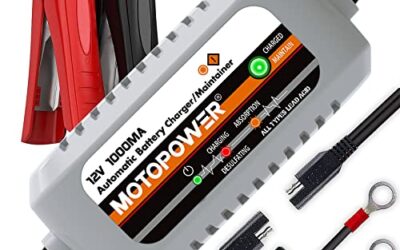
If you need battery chargers and maintainers or battery testers for this job, these picks already appear in our battery chargers and maintainers guides. Check the full guide for fit and who should skip each one.

Pros
- Adjustable charging current supports different charging needs
- Broad compatibility with listed 12V sealed lead-acid battery types
- Includes dedicated desulfation and repair functions
- Offers engine-start assistance and a winter charging mode
- ETL certification is listed in the listing
Cons
- The repair mode cannot repair completely drained batteries
- Only 12V battery applications are specified
Specifications
| Color | 25A |
|---|---|
| Dimensions | 7.68110235437 x 10.0393700685 x 4.9212598375 inches |
| Weight | 5.00008410216 Pounds |
| Product Group | Automotive Parts and Accessories |
| Binding | Electronics |
Best For / Avoid If
Best for buyers prioritizing
- Adjustable charging current supports different charging needs
- Broad compatibility with listed 12V sealed lead-acid battery types
- Includes dedicated desulfation and repair functions
Consider another option if
- The repair mode cannot repair completely drained batteries
- Only 12V battery applications are specified

Pros
- Supports multiple lead-acid battery types, including AGM, Gel, SLA, VRLA, flooded, maintenance-free, and deep-cycle batteries
- Designed for a wide range of vehicles and equipment, including cars, motorcycles, boats, ATVs, tractors, trucks, SUVs, RVs, and lawn mowers
- Includes both battery clamps and integrated eyelet terminals
- Provides automatic maintenance charging with overcharge protection
Cons
- The listing lists support for LiFePO4 batteries specifically, rather than all lithium-ion battery types
- The charger is specified for 6V and 12V batteries only
Specifications
| Color | Black |
|---|---|
| Size | 10A |
| Dimensions | 4.41 x 4.48 x 9.1 inches |
| Weight | 3.99 Pounds |
| Product Group | Automotive Parts and Accessories |
| Binding | Electronics |
Best For / Avoid If
Best for buyers prioritizing
- Supports multiple lead-acid battery types, including AGM, Gel, SLA, VRLA, flooded, maintenance-free, and deep-cycle batteries
- Designed for a wide range of vehicles and equipment, including cars, motorcycles, boats, ATVs, tractors, trucks, SUVs, RVs, and lawn mowers
- Includes both battery clamps and integrated eyelet terminals
Consider another option if
- The listing lists support for LiFePO4 batteries specifically, rather than all lithium-ion battery types
- The charger is specified for 6V and 12V batteries only

Pros
- Combines engine-code scanning with a built-in battery diagnostic feature
- Provides live data and freeze frame information for diagnostic reference
- Does not require batteries and uses plug-and-play operation
- Supports most 1996 and newer US cars and listed 2000 and newer EU and Asian vehicles
Cons
- Does not support new energy or hybrid vehicles
- Limited to engine fault codes and does not support ABS, SRS, or transmission systems
- Vehicle compatibility may vary because the source lists general model-year and protocol support rather than a specific vehicle list
Specifications
| Color | Orange |
|---|---|
| Dimensions | 2.95 x 0.9 x 5.35 inches |
| Weight | 0.4 pounds |
| Product Group | Automotive Parts and Accessories |
Best For / Avoid If
Best for buyers prioritizing
- Combines engine-code scanning with a built-in battery diagnostic feature
- Provides live data and freeze frame information for diagnostic reference
- Does not require batteries and uses plug-and-play operation
Consider another option if
- Does not support new energy or hybrid vehicles
- Limited to engine fault codes and does not support ABS, SRS, or transmission systems
- Vehicle compatibility may vary because the source lists general model-year and protocol support rather than a specific vehicle list
FAQ
Can I use standard mode on an AGM battery?
Sometimes, but AGM mode is the safer match when available. Check the battery and charger manuals because voltage limits vary.
Should I use repair mode on a new battery?
No. Use normal mode unless the battery maker gives a specific reason for repair cycling. Repair mode is not a routine first charge.
Can a battery charger test battery health?
Some chargers estimate condition, but a charge indicator does not prove capacity. Use a battery tester or professional load test for a stronger diagnosis.
What mode should I use for winter storage?
Use maintenance or float mode matched to battery chemistry and voltage. A cold garage may affect charging limits, especially for lithium batteries.
Can I charge a battery while it remains in the vehicle?
Often yes, but vehicle electronics, battery sensors, and connection points can change the procedure. Follow the vehicle and charger manuals.
Sources and further reading
- Battery Council International: Battery industry information and safety resources for lead-acid battery use.