A check engine light can turn off when an intermittent fault does not recur during later self-tests. Stored diagnostic information may remain even after the light goes out. Read the codes and consider the symptoms before concluding that the original problem has been repaired.
Key takeaways
- An intermittent sensor, loose fuel cap, wiring fault, or temporary misfire can trigger the light.
- The light often turns off after several successful self-checks.
- A stored or pending code can remain after the warning disappears.
- A flashing light needs prompt attention because an active misfire can damage the catalytic converter.
- Clearing codes does not repair the fault and can erase useful diagnostic data.
- Vehicle model year, emissions equipment, scan-tool coverage, and inspection rules affect what happens next.
Why does a check engine light turn off by itself?
Most vehicles run automated emissions and engine checks during normal driving. These checks are called monitors. They look at systems such as oxygen sensors, fuel mixture, evaporative emissions, exhaust treatment, engine misfire, and catalytic-converter performance.
When a monitor detects a fault, the powertrain control module can save a code and turn on the malfunction indicator lamp, commonly called the check engine light. If the same monitor later passes enough times, the module can turn the light off without a repair.
The exact number of successful trips varies by fault, vehicle software, and monitor. A short drive may not run every test. Cold starts, highway speeds, fuel level, engine temperature, and other conditions can affect monitor operation.
Common reasons
- Loose or damaged fuel cap: The evaporative emissions system can detect vapor leakage. A cap that seals on a later fill-up may stop the warning from returning.
- Temporary misfire: Moisture, poor fuel, ignition trouble, or a heavy load can cause a brief misfire. The light may go off after normal combustion returns.
- Intermittent sensor signal: A crankshaft, camshaft, oxygen, airflow, or pressure sensor can produce an abnormal reading only under certain conditions.
- Loose wiring or connector: Vibration, corrosion, heat, and movement can interrupt a circuit for a moment.
- Battery voltage event: Weak battery voltage or a recent jump-start can create unusual readings in some vehicles.
- Temporary operating condition: Extreme temperature, a long idle, towing, or unusual fuel vapor conditions can expose a fault that later disappears.
Does the car still have a problem when the light turns off?
Possibly. An extinguished light means the vehicle no longer sees the fault under recent test conditions. It does not prove that the original cause is gone.
The computer can store a confirmed code after the warning turns off. It may also retain a pending code when a monitor saw a fault but has not met the threshold needed to turn on the lamp. Freeze-frame data can show engine speed, temperature, load, and other conditions recorded when the code set.
Some faults occur only during rain, cold starts, hard acceleration, long climbs, or a specific fuel level. Normal driving may not recreate those conditions immediately. The warning can return later.
Scan the vehicle while the code remains available. A basic OBD2 scanner may read generic powertrain codes on many US-market vehicles built for OBD2 compliance, but manufacturer-specific systems often need better vehicle coverage. ABS, airbag, body, transmission, and advanced powertrain faults may require a scanner with enhanced diagnostics.
For more on data such as short-term and long-term fuel trim, see OBD2 scanners for live data and fuel trim. Advanced systems may need the coverage discussed in OBD2 scanners for advanced vehicle diagnostics.
What should you do after the check engine light goes off?
- Note what happened. Record the date, mileage, weather, fuel stop, engine behavior, and warning-light pattern. Note whether the light was steady or flashing.
- Check basic conditions. Inspect the fuel cap seal and tighten the cap according to the vehicle manual. Look for obvious loose intake hoses, damaged wiring, or disconnected connectors. Do not touch hot, moving, or high-voltage parts.
- Scan for codes. Read stored, pending, and permanent codes before clearing anything. Save the code numbers and descriptions.
- Check live data when suitable. A capable scanner can show coolant temperature, oxygen-sensor activity, fuel trims, misfire counters, and readiness status. Interpretation depends on engine design and operating conditions.
- Drive normally. Do not force a test with unsafe speed, harsh acceleration, or unnecessary loads. Watch for the warning returning or symptoms changing.
- Repair the cause. Use the code as a starting point, not as a parts order. A code for an oxygen sensor can result from wiring, an exhaust leak, fuel control trouble, or an actual sensor failure.
- Recheck after repair. Confirm that the fault stays absent and that required monitors run. A vehicle can need several normal drive cycles before all monitors report ready.
Check engine light status and what it means
| Light or code status | Likely meaning | Recommended action |
|---|---|---|
| Steady light | A fault is active or stored, but the vehicle may still run normally. | Scan soon. Limit driving if the vehicle runs poorly, overheats, or loses power. |
| Flashing light | A severe misfire may be occurring. Unburned fuel can overheat the catalytic converter. | Reduce load and stop driving when safe. Arrange prompt diagnosis. |
| Light off, stored code present | The fault passed recent checks but remains in memory. | Save the code and freeze-frame data. Look for patterns and symptoms. |
| Pending code only | A monitor saw a possible fault that may not have repeated. | Monitor the vehicle and investigate if it returns. |
| Permanent code present | The computer recorded an emissions fault that cannot be erased by a normal scan command. | Repair the cause and complete the required drive conditions. |
Can a bad gas cap make the check engine light turn off?
Yes. A loose, damaged, or incorrectly fitted gas cap can create an evaporative emissions leak. After the cap seals properly, the vehicle may pass later leak checks and turn off the light.
This does not cover every evaporative-emissions code. Cracked hoses, a stuck purge valve, a vent valve problem, a damaged charcoal canister, or a tank-pressure sensor can create similar symptoms. Some systems need a smoke test or bidirectional scan-tool commands.
Fuel level can affect the test. Certain vehicles run evaporative checks only within a specific tank range and after conditions such as a cold soak. The owner manual may describe limits without giving a simple user test.
Can low battery voltage turn off or trigger the light?
Battery voltage can affect vehicle computers and sensor readings. A weak battery, poor terminal connection, alternator fault, or jump-start can set unrelated codes. The warning may disappear after stable voltage returns.
Voltage alone does not prove a battery caused the code. Charging-system testing should measure battery condition, cranking voltage, alternator output, and connections under the vehicle maker’s procedure. Hybrid and electric vehicles require additional caution because high-voltage systems are separate from the 12-volt system.
Will disconnecting the battery turn off the check engine light?
Disconnecting the battery can erase some stored codes and reset learned values. It does not repair the fault. It can also erase freeze-frame data and reset emissions readiness monitors, which may matter before an emissions inspection.
Some newer vehicles retain permanent codes or restore warnings after the system runs its checks. Battery disconnection can also affect radio settings, window functions, steering-angle data, security systems, and transmission learning. Follow the model-specific service information instead.
A scan tool can clear codes, but use that function only after recording the data and completing diagnosis. A cleared vehicle may show monitors as not ready for several drive cycles.
Why does the light return after several days?
The computer may need the same operating conditions to repeat the fault. A leak may appear only during a cold soak. A weak ignition coil may misfire under load. A sensor connection may fail after heat builds in the engine bay.
Track the conditions around each event. Include outside temperature, fuel level, road speed, engine load, recent maintenance, and whether the engine was cold or warm. This pattern can separate a fuel-cap issue from a load-related misfire or temperature-related wiring fault.
Do not replace parts based only on a generic code description. Diagnostic trouble codes identify a monitored system or condition. They do not always identify the failed component.
Common mistakes
- Assuming the repair happened by itself: The light going off shows a passed test, not proof of a repaired system.
- Clearing codes before reading them: Erased data can remove clues about the original conditions.
- Ignoring a flashing light: A flashing lamp can signal a damaging misfire.
- Using only a basic code reader: Generic OBD2 coverage may not access manufacturer-specific modules or tests.
- Replacing the named sensor first: Wiring, vacuum leaks, exhaust leaks, fuel pressure, and software conditions can create the same code.
- Expecting an inspection to pass immediately: Reset monitors can remain incomplete even when the light is off.
When to get professional help
Get prompt help for a flashing check engine light, severe shaking, stalling, loss of power, overheating, smoke, fuel odor, or unusual exhaust noise. Stop in a safe place if continuing could damage the vehicle or create a road hazard.
Professional diagnosis makes sense when the light returns repeatedly, multiple modules set codes, the battery or charging system is involved, or the vehicle has hybrid or electric high-voltage equipment. It also helps when a fault needs smoke testing, wiring checks, oscilloscope testing, fuel-pressure testing, or manufacturer-specific software.
Model year matters. OBD2 rules cover many US-market passenger vehicles and light trucks, but connector access, supported tests, code definitions, and module coverage vary. The standard 16-pin connector may be under the dash, yet location and access can differ. Phone-based scanners also depend on the adapter, app, phone OS, vehicle protocol, and firmware.
Gear that can help
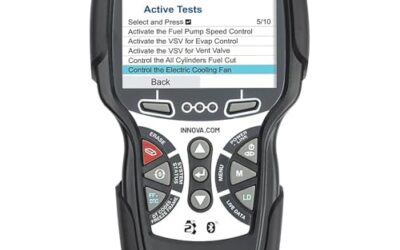
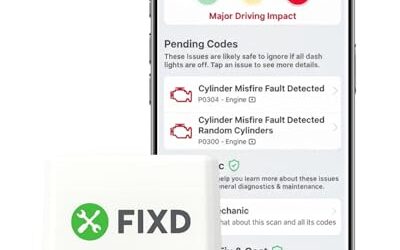
If you need OBD2 scanners for this job, these picks already appear in our OBD2 scanners guides. Check the full guide for fit and who should skip each one.

Pros
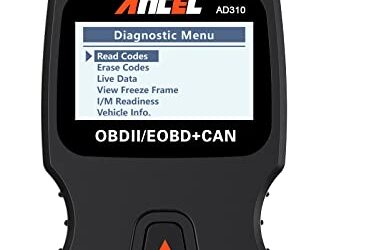
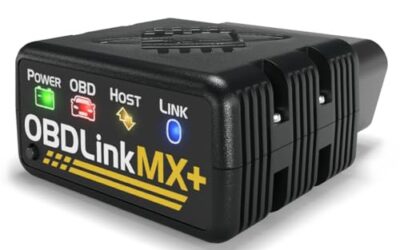
- Supports multiple common OBDII protocols, including CAN
- Provides more than basic code reading with live data, freeze-frame, and readiness information
- Powered through the vehicle, so no separate battery or charger is required
- Compact design and 12-ounce weight support portability
Cons
- Limited to emission-related diagnostics
- Requires a vehicle with an OBDII interface and does not diagnose OBDI vehicles, even with an adapter
- Vehicle compatibility should be confirmed before purchase
Specifications
| Color | Black |
|---|---|
| Dimensions | 4.9212598375 x 2.755905509 x 0.8661417314 inches |
| Product Group | Automotive Parts and Accessories |
| Binding | Automotive |
Best For / Avoid If
Best for buyers prioritizing
- Supports multiple common OBDII protocols, including CAN
- Provides more than basic code reading with live data, freeze-frame, and readiness information
- Powered through the vehicle, so no separate battery or charger is required
Consider another option if
- Limited to emission-related diagnostics
- Requires a vehicle with an OBDII interface and does not diagnose OBDI vehicles, even with an adapter
- Vehicle compatibility should be confirmed before purchase

Pros
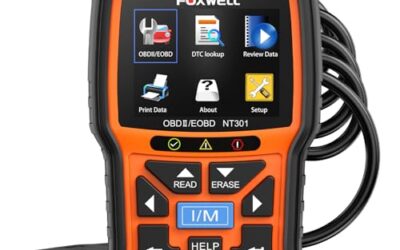
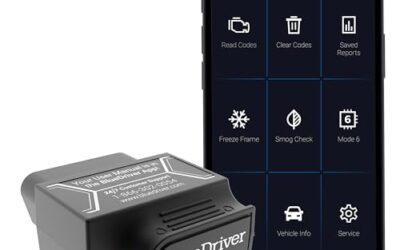
- Includes live-data graphing and logging for supported OBD2 vehicles
- Offers emissions-readiness, O-2 sensor, and EVAP monitoring functions
- Supports common OBD2 protocols and many 1996-plus US gasoline vehicles
- Does not require a separate charging setup
Cons
- Does not scan ABS, SRS, EPB, A/C, battery, or other non-engine systems
- Compatibility and available functions vary by vehicle year, make, model, and VIN
Specifications
| Color | NT301 OBD2 Scanner |
|---|---|
| Size | NT301 Code Reader |
| Dimensions | 8.66 x 3.15 x 6.69 inches |
| Weight | 0.3527396192 Pounds |
| Product Group | Automotive Parts and Accessories |
| Binding | Automotive |
Best For / Avoid If
Best for buyers prioritizing
- Includes live-data graphing and logging for supported OBD2 vehicles
- Offers emissions-readiness, O-2 sensor, and EVAP monitoring functions
- Supports common OBD2 protocols and many 1996-plus US gasoline vehicles
Consider another option if
- Does not scan ABS, SRS, EPB, A/C, battery, or other non-engine systems
- Compatibility and available functions vary by vehicle year, make, model, and VIN

Pros
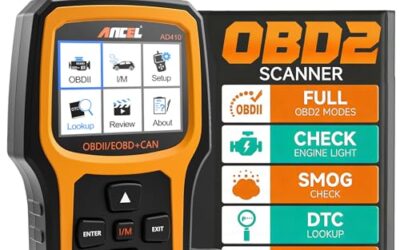
- Broad basic OBD2 diagnostic function set
- Built-in code definitions can help explain fault codes
- Supports major protocols including CAN, ISO9141, KWP2000, J1850 VPW and J1850 PWM
- Color display, multilingual support and on-screen code definitions
Cons
- Limited to engine and emission-related codes
- Does not support ABS, SRS, transmission, bidirectional control or service reset functions
- Vehicle compatibility should be checked before purchase
Specifications
| Color | yellow |
|---|---|
| Dimensions | 9 x 6.3 x 1.6 inches |
| Weight | 0.66 Pounds |
| Product Group | Automotive Parts and Accessories |
| Binding | Automotive |
Best For / Avoid If
Best for buyers prioritizing
- Broad basic OBD2 diagnostic function set
- Built-in code definitions can help explain fault codes
- Supports major protocols including CAN, ISO9141, KWP2000, J1850 VPW and J1850 PWM
Consider another option if
- Limited to engine and emission-related codes
- Does not support ABS, SRS, transmission, bidirectional control or service reset functions
- Vehicle compatibility should be checked before purchase
FAQ
How long does it take for a check engine light to turn off?
It depends on the fault and vehicle. The control module must run the related monitor and record enough successful checks. The light can turn off after one or more drive cycles, but the code may remain stored.
Should I still scan the car if the light is off?
Yes. Scan before clearing anything. Stored and pending codes can reveal an intermittent fault that may return later.
Can a check engine light turn off after tightening the gas cap?
Yes, if a loose cap caused an evaporative leak and the system later passes its leak check. Other evaporative faults can produce the same warning.
Does an off light mean the car will pass emissions testing?
Not always. Readiness monitors can be incomplete after a battery reset or code clear. Inspection rules vary by state, model year, and vehicle condition.
Is it safe to drive with the light off?
Often, if the vehicle runs normally and no other warning appears. Stop and seek help for flashing warnings, severe symptoms, overheating, fuel odor, or loss of power.
Sources and further reading
- J1962 Diagnostic Connector standard (SAE International): Connector requirements used for vehicle diagnostic equipment.
- J1979 E/E Diagnostic Test Modes standard (SAE International): Diagnostic test modes and data commonly accessed through OBD2.
- Vehicle Emissions Inspection and Maintenance (I/M) (US EPA): State and local emissions inspection information.