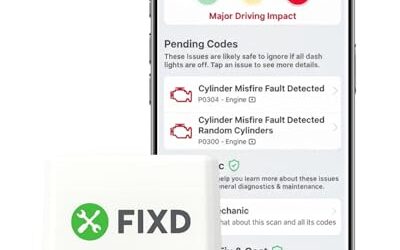
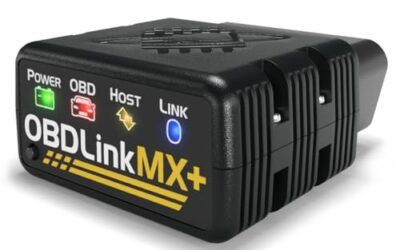
A permanent OBD2 code can remain after a repair until the vehicle’s diagnostic system verifies that the relevant defect is no longer present. An ordinary code-clear command or battery disconnection does not erase that permanent record. Check it separately from current codes and readiness status.
Key takeaways
- A permanent diagnostic trouble code, or DTC, records a past emissions-related fault.
- Most permanent codes disappear only after the related monitor passes.
- Drive-cycle needs vary by vehicle model, model year, engine, fault, and outside conditions.
- A code that returns as current or pending points to an active problem.
- Clearing codes resets readiness monitors and can delay an emissions inspection.
- A basic OBD2 reader may show the code but may not run manufacturer-specific tests.
What a permanent code means
A permanent DTC is a code stored in nonvolatile memory after the powertrain control module detects an emissions-related fault. Unlike many stored codes, it can remain after someone clears the regular fault memory or disconnects the battery. The module keeps the record until its built-in monitor checks the related system and passes.
Federal OBD2 rules use permanent codes to reduce false repairs. A person could clear a check-engine light shortly before an emissions inspection. Permanent-code logic gives the vehicle another way to show that a fault was recently detected. The code itself does not prove that the repair failed. It shows that the vehicle has not yet completed a passing verification test.
OBD2 diagnostic communication uses standards that cover connector and test functions. The SAE J1962 diagnostic connector standard covers the familiar vehicle diagnostic connector. The SAE J1979 diagnostic test modes standard covers common emissions data and test functions.
Why a permanent code remains after repair
The vehicle has not run the right monitor
Each emissions system has its own monitor. An oxygen-sensor code may require closed-loop operation and steady engine temperature. An evaporative-emissions code may require a certain fuel level, ambient temperature, and several hours of soak time. A catalyst monitor may need highway-speed operation after the engine reaches operating temperature.
Short trips may never create the conditions needed for that test. Cold weather, heavy traffic, low fuel, high fuel, extended idling, or repeated key cycles can delay the result. One drive may not be enough.
The repair fixed the part but not the cause
A replaced sensor may have been damaged by another fault. A vacuum leak can create fuel-trim problems that look like a bad oxygen sensor. A weak battery can cause low-voltage faults. Wiring damage, poor grounds, exhaust leaks, fuel-pressure problems, and software issues can produce the same code family.
The permanent code may remain during the first verification drive even when the repair is correct. If the monitor fails again, the code can return as current or pending, and the malfunction indicator lamp may come back.
The code was cleared before repair confirmation
Code clearing removes ordinary stored data and resets readiness monitors. It does not replace diagnosis. After clearing, the car must run its monitors again. A vehicle may show no current code while several monitors remain incomplete.
The vehicle uses different code memory
Some vehicles store faults in more than one control module. A generic scanner may read the engine computer but miss a body, transmission, hybrid, or manufacturer-specific module. Some systems also keep history data that requires an enhanced scan tool.
Vehicle model year matters. OBD2 coverage is broad for gasoline vehicles sold in the United States, but supported tests and module access vary. Diesel, hybrid, plug-in hybrid, and electric vehicles can use different monitors and control modules. Scanner firmware also affects access. A phone app may need a compatible adapter, current app version, and supported iOS or Android version.
Permanent, stored, pending, and current codes
| Code status | What it means | What to do |
|---|---|---|
| Pending | The computer saw a possible fault, but its rules may require another failure before turning on the warning lamp. | Read freeze-frame data and inspect the related system soon. |
| Stored or confirmed | The computer confirmed a fault and saved the DTC. | Diagnose the cause before replacing parts. |
| Current or active | The fault is present during the scan or latest monitor test. | Test the circuit or system before driving more. |
| Permanent | The vehicle recorded an emissions fault and has not completed a passing verification monitor. | Complete the correct drive conditions and rescan. |
| History | A module saved a past event that may not be active now. | Check module details, date data, and related current codes. |
Scanner labels vary. One tool may call a code permanent, while another places it under Mode 0A or permanent faults. The label does not change the repair process. Look at current, pending, stored, and readiness data together.
How to verify that repair worked
- Record all scan data. Save every code, freeze-frame detail, monitor status, and module name before clearing anything. Freeze-frame data shows conditions present when the computer detected the fault.
- Check for active or pending codes. A permanent code alone may reflect the earlier failure. A matching current or pending code needs more diagnosis.
- Inspect the repair. Check connector locks, wire routing, fuse condition, hose connections, sensor installation, and damaged grounds. Do not rely only on the new part.
- Check battery voltage. Low voltage during starting or scanning can create unrelated codes and interrupt monitor operation. Use the vehicle service information for acceptable voltage limits.
- Clear codes only after recording data. Clearing erases useful clues and resets readiness. Do this only when diagnosis or repair calls for it.
- Use the correct drive cycle. Follow the factory service procedure when available. Generic drive-cycle advice may not fit every engine or emissions system.
- Rescan without clearing. After driving, read permanent, current, pending, and readiness status. A passing monitor supports the repair. It does not prove that every vehicle system works normally.
Drive-cycle conditions that can delay removal
The control module needs stable inputs. Coolant temperature, intake temperature, fuel level, vehicle speed, engine load, battery voltage, and time since shutdown can all matter. Some monitors will not run if another fault blocks them. For example, a broad engine-control fault can prevent an evaporative or catalyst monitor from completing.
Fuel-tank monitors often need a fuel level within a specific range. A nearly empty tank, full tank, recent refueling, or a loose fuel cap can change the test. Evaporative tests may run after the vehicle sits for several hours, not during a short trip.
Do not force a drive cycle at unsafe speed or in traffic that does not allow proper control. Follow the owner manual, factory service information, and local road rules. A scan tool may show a monitor as incomplete for several days without proving that the repair failed.
Quick symptom-to-cause checklist
- Permanent code only, no pending code: The monitor may still need to run.
- Permanent and pending matching codes: The fault may still be present or may have returned.
- Warning lamp on again: Treat the related fault as active and diagnose it.
- All monitors incomplete: Codes may have been cleared recently, or battery power may have been lost.
- One monitor will not run: Check its required temperature, fuel level, speed, soak time, and blocking codes.
- Code returns after several normal trips: Inspect the repair, wiring, related parts, and system conditions.
- Scanner cannot access a module: Check connector power, adapter compatibility, app or firmware support, and vehicle network coverage.
Common mistakes
Assuming the code proves the replacement part failed
A permanent code has delayed timing by design. It does not identify the failed component with certainty. Confirm the circuit, power, ground, signal, and system operation before replacing another part.
Disconnecting the battery to erase the code
Battery disconnection can erase ordinary codes and reset monitors, but it may not remove permanent codes. It can also erase learned settings, radio data, window functions, and other vehicle settings. Some vehicles need a battery-maintainer procedure or reinitialization after power loss.
Checking only the warning lamp
The lamp can remain off while a permanent code or pending code exists. Read the full scan result. A no-light condition does not equal a completed repair.
Taking an emissions test immediately after clearing codes
Cleared monitors usually show incomplete until the car completes its tests. Many inspection programs reject a vehicle with too many incomplete monitors, though rules differ by state, vehicle type, model year, and test program. Check your state inspection requirements before scheduling a test. The US EPA emissions inspection and maintenance page explains how state programs operate.
Using a generic scanner for a manufacturer-specific problem
Generic OBD2 data may cover emissions functions but not every module, actuator test, coding function, or service reset. European brands, hybrids, diesel vehicles, and newer networked vehicles often need broader coverage. Connector shape alone does not prove full compatibility.
When to get professional help
Seek professional diagnosis when a current code returns, the vehicle runs poorly, the warning lamp flashes, the engine overheats, fuel smell appears, or the vehicle enters reduced-power mode. A flashing malfunction indicator lamp can signal conditions that may damage the catalytic converter. Reduce driving and follow the owner manual.
Professional help also makes sense when the scanner shows communication errors, multiple unrelated module codes, high-voltage system faults, or a code that requires an oscilloscope, smoke machine, pressure test, or factory scan platform. Hybrid and EV systems can contain high-voltage circuits. Do not probe orange cables or open high-voltage components without the required training and safety process.
Bring the scan printout, repair invoice, dates, fuel level, driving conditions, and any symptoms. This short history helps separate an unfinished monitor from a failed repair.
Gear that can help
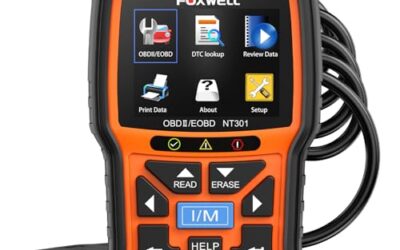
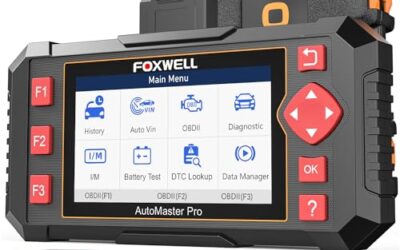
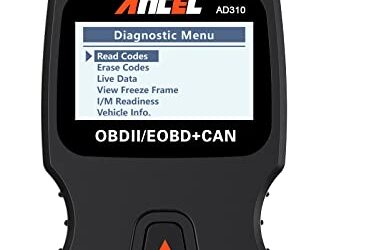
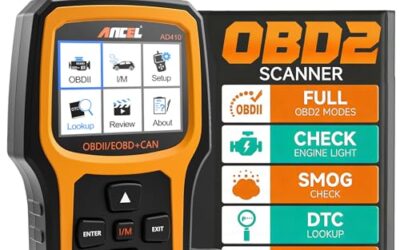
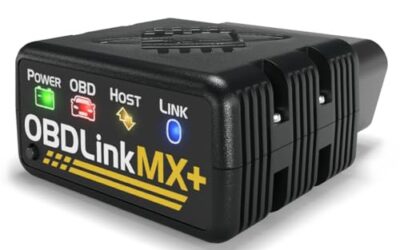
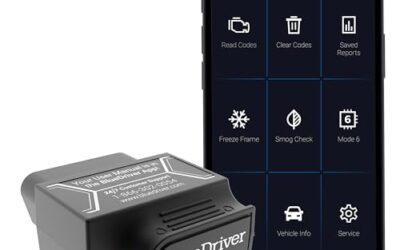
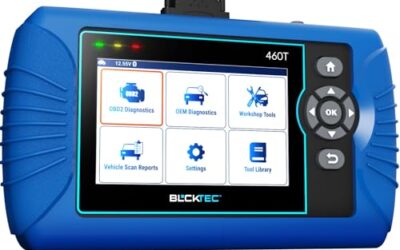
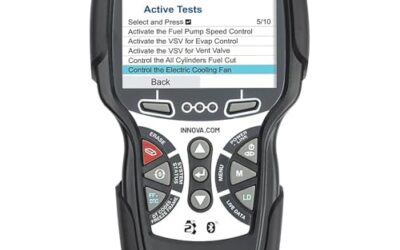
If you need OBD2 scanners for this job, these picks already appear in our OBD2 scanners guides. Check the full guide for fit and who should skip each one.

Pros
- Broad basic OBD2 diagnostic function set
- Built-in code definitions can help explain fault codes
- Supports major protocols including CAN, ISO9141, KWP2000, J1850 VPW and J1850 PWM
- Color display, multilingual support and on-screen code definitions
Cons
- Limited to engine and emission-related codes
- Does not support ABS, SRS, transmission, bidirectional control or service reset functions
- Vehicle compatibility should be checked before purchase
Specifications
| Color | yellow |
|---|---|
| Dimensions | 9 x 6.3 x 1.6 inches |
| Weight | 0.66 Pounds |
| Product Group | Automotive Parts and Accessories |
| Binding | Automotive |
Best For / Avoid If
Best for buyers prioritizing
- Broad basic OBD2 diagnostic function set
- Built-in code definitions can help explain fault codes
- Supports major protocols including CAN, ISO9141, KWP2000, J1850 VPW and J1850 PWM
Consider another option if
- Limited to engine and emission-related codes
- Does not support ABS, SRS, transmission, bidirectional control or service reset functions
- Vehicle compatibility should be checked before purchase

Pros
- Supports check-engine code reading and clearing
- Provides live data features including engine speed, vehicle speed, coolant temperature, and calculated load value
- Includes a 2.5-foot cable and six-button control layout
- Compact 6.02 x 2.75 x 0.91-inch design
Cons
- Does not support ABS, airbag, oil service light, or other non-OBDII systems
- Vehicle compatibility is described as supporting most applicable vehicles rather than every vehicle
- Requires connection to a vehicle’s OBDII port for power
Specifications
| Color | Yellow |
|---|---|
| Size | Portable |
| Dimensions | 6.02 x 2.75 x 0.91 inches |
| Weight | 0.6375 Pounds |
| Product Group | Automotive Parts and Accessories |
| Binding | Automotive |
Best For / Avoid If
Best for buyers prioritizing
- Supports check-engine code reading and clearing
- Provides live data features including engine speed, vehicle speed, coolant temperature, and calculated load value
- Includes a 2.5-foot cable and six-button control layout
Consider another option if
- Does not support ABS, airbag, oil service light, or other non-OBDII systems
- Vehicle compatibility is described as supporting most applicable vehicles rather than every vehicle
- Requires connection to a vehicle’s OBDII port for power
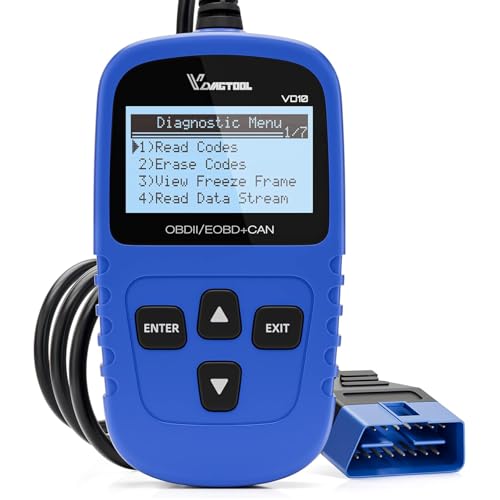
Pros
- Includes code reading, code clearing, live data, freeze-frame, I/M readiness, and vehicle information functions
- Supports VIN, Calibration ID, and Calibration Verification Number retrieval
- Lists compatibility with post-1996 US-based, post-2006 EU-based, and post-2009 Asian-based OBDII vehicles
- Offers a built-in DTC definition database and support for six languages
- Includes a stated five-year warranty
Cons
- The display is described as a two-line LCD screen, which may provide less viewing space than larger scan-tool displays
Specifications
| Color | Blue |
|---|---|
| Dimensions | 9.79921258843 x 6.692913379 x 1.57874015587 inches |
| Product Group | Automotive Parts and Accessories |
| Binding | Unknown Binding |
Best For / Avoid If
Best for buyers prioritizing
- Includes code reading, code clearing, live data, freeze-frame, I/M readiness, and vehicle information functions
- Supports VIN, Calibration ID, and Calibration Verification Number retrieval
- Lists compatibility with post-1996 US-based, post-2006 EU-based, and post-2009 Asian-based OBDII vehicles
Consider another option if
- The display is described as a two-line LCD screen, which may provide less viewing space than larger scan-tool displays
FAQ
Can I erase a permanent code with an OBD2 scanner?
Usually, no. A standard clear command may erase regular fault memory but leave a permanent DTC. The vehicle removes that code after its related monitor passes.
How long does a permanent code take to disappear?
Timing varies. Some monitors can pass during one suitable trip. Others need several trips, a cold soak, or specific temperature and fuel conditions. Model year, engine, fault type, and driving pattern all matter.
Does a permanent code mean the repair failed?
No. It can mean only that verification has not finished. A matching pending or current code, returning warning lamp, or failed monitor gives stronger evidence of an unresolved fault.
Can I pass an emissions inspection with a permanent code?
Rules vary by state and vehicle model year. A permanent code may affect inspection results even if the warning lamp is off. Readiness status and current codes also matter.
Why does my scanner show no code after repair, but the permanent code remains?
Some scan tools display stored and permanent memory separately. The ordinary code may be gone while the permanent record waits for a passing monitor. Scan again after the required drive conditions.
Sources and further reading
- J1962 Diagnostic Connector standard (SAE International): Connector requirements for vehicle diagnostic equipment.
- J1979 E/E Diagnostic Test Modes standard (SAE International): Common emissions diagnostic test modes and data functions.
- Vehicle Emissions Inspection and Maintenance (I/M) (US EPA): State emissions inspection and maintenance program guidance.