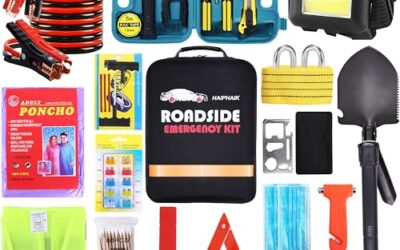
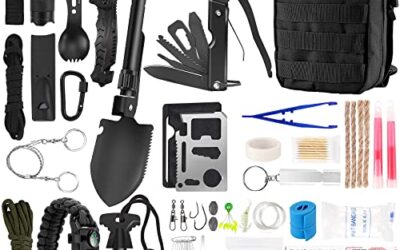
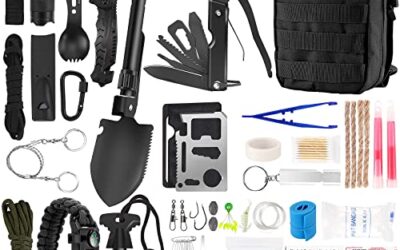
What to include with a roadside emergency kit gift depends on the driver’s vehicle, climate, travel habits, and comfort with basic repairs. Start with visibility and communication gear, then add tire, battery, weather, first-aid, and personal supplies that match actual roadside risks.
A good kit does not replace roadside assistance, a spare tire, or professional help. It gives the driver more time and visibility while waiting, and it may handle simple problems such as low tire pressure or a dead 12-volt battery.
Key takeaways
- Give safety and visibility gear before repair tools.
- Match jumper cables, a jump starter, tire tools, and chargers to vehicle voltage and connector needs.
- Include supplies for weather, passengers, pets, and long waits.
- Check whether the vehicle has a spare tire, tire sealant, run-flat tires, or an EV battery system.
- Keep tools accessible, secured, charged, and easy to understand.
What to include with a roadside emergency kit gift
Build the gift around six groups: roadside visibility, communication, tire support, battery support, personal safety, and vehicle-specific items. The best mix differs for a commuter in a warm city and a driver crossing rural roads in winter.
| Kit group | Useful items | What items let the driver do |
|---|---|---|
| Visibility | Reflective vest, warning triangle, LED flashlight | Help other drivers see the stopped vehicle and help the driver work after dark. |
| Communication | Power bank, charging cables, backup battery | Keep a phone working while the driver calls roadside assistance or emergency services. |
| Tires | Pressure gauge, 12-volt inflator, gloves | Check and restore pressure when the tire remains safe to inflate. |
| Battery | Jumper cables or compatible jump starter | Assist with a discharged 12-volt battery when the vehicle and device support the connection. |
| Weather | Blanket, water, rain gear, hand warmers | Reduce exposure during a long wait in heat, cold, or rain. |
| Basic tools | Tape, zip ties, work gloves, simple hand tools | Manage minor loose parts without pretending to repair a major fault. |
Start with visibility and personal safety
Visibility gear belongs near the top of the kit. A reflective vest makes the driver easier to see outside the vehicle. A flashlight helps with inspection and signals location. Spare batteries matter if the flashlight uses replaceable cells.
Warning triangles or other warning devices can alert approaching traffic. Placement rules differ by location, road type, and conditions. The driver should never stand in traffic to place equipment. A safer position may be inside the vehicle with doors locked, depending on the breakdown location.
Work gloves protect hands from hot, dirty, or sharp parts. Eye protection can help during battery work or tire inspection. A small first-aid kit covers minor cuts but cannot treat serious injuries. Call emergency services for injury, fire, a crash, or an unsafe roadside position.
Communication supplies
A power bank and suitable charging cable can matter more than another hand tool. Cable connectors vary, including USB-C, Lightning, and older USB types. Match the cable to the driver’s phone and keep the power bank charged.
Phone service may fail in remote areas. A roadside kit cannot create cellular coverage. Drivers who travel far from populated areas may need a separate emergency communication plan, based on route and regional coverage.
Add tire support that matches the vehicle
A tire pressure gauge is useful for checking a tire before adding air. An inflator can restore pressure after a slow leak, but it cannot make a damaged tire safe. Sidewall cuts, bulges, exposed cords, and a tire that will not hold pressure call for roadside assistance or tire service.
Check the vehicle’s power connection before gifting a 12-volt inflator. Some vehicles have switched accessory outlets, low outlet limits, or outlets that shut off when the vehicle is off. Cable length also affects whether the tool reaches all four tires.
Vehicle model-year differences can affect the spare tire, jack, wheel-lock key, and tire-monitoring system. Some cars use tire sealant and an inflator instead of a spare. Sealant may have an expiration date and may not work with every tire or tire-pressure sensor. A replacement tire may still be required after temporary use.
Include the vehicle manual or a printed note showing the spare location, jack location, and tire-changing limits. Do not place a jack under an assumed lift point. Use the owner’s manual for lift points, wheel-nut torque, and instructions for disabling systems that could move the vehicle.
For more tire-related gift ideas, see CarTechTalk’s guide to digital tire pressure gauges with memory. A gauge with stored readings can help a driver track pressure, but stored readings do not replace the vehicle’s recommended cold-tire pressure.
Choose battery equipment carefully
Battery tools need closer matching than most emergency supplies. Most conventional cars and trucks use a 12-volt starting battery, but hybrid and electric vehicles also contain high-voltage systems. A normal jump starter is for the low-voltage battery system only, not the traction battery.
Jumper cables need enough length to reach between vehicles without stretching across traffic or placing either vehicle in an unsafe position. Cable quality, clamp insulation, and connection instructions affect safe use. The vehicle manual takes priority because some models specify special jump points.
A portable jump starter avoids needing a second vehicle, but the device still needs a compatible voltage rating and enough charge. Some vehicles have large engines, diesel systems, dual batteries, or unusual battery locations. These factors can rule out small consumer units.
Electric vehicles may need a 12-volt jump procedure for accessories and control systems, but the procedure varies by model. Do not connect equipment to orange high-voltage cables or traction-battery components. A gift note should tell the owner to follow the model-specific manual.
Battery equipment also needs upkeep. A jump starter can lose charge during storage. Add a calendar reminder to inspect and charge it. Corroded clamps, damaged cables, swollen batteries, or cracked cases mean the equipment should leave service.
Pack weather and waiting supplies
Roadside delays can last longer than a simple repair. Add drinking water, shelf-stable snacks, a thermal blanket, rain protection, and hand warmers for cold regions. In hot climates, water and shade matter more than bulky winter gear.
Drivers with children may need diapers, wipes, medication storage, comfort items, and food that fits the child’s needs. Pet owners may need a collapsible bowl, water, leash, waste bags, and a current pet information card. Do not store medication in conditions outside its label limits.
A small towel, spare socks, and basic hygiene supplies can help during wet or dirty roadside work. Keep food and water within expiration dates. Replace supplies after use, and inspect the kit at seasonal changes.
Include vehicle-specific information
A universal kit becomes more useful with a vehicle card. Record the vehicle make, model, model year, engine type, fuel type, and roadside assistance number. Include insurance and medical contact information only if the owner wants those details stored in the vehicle.
List the location of the 12-volt battery, spare tire, jack, tow eye, wheel-lock key, and fuse box. The layout can change across model years and trim levels. A short printed guide helps when the owner has no phone signal.
For a new vehicle owner, pair the kit with a short maintenance checklist. CarTechTalk’s gifts for new car owners covers practical items that belong in and around a vehicle.
Build the kit by driver type
Daily commuter
Prioritize a flashlight, reflective vest, power bank, charging cable, tire gauge, gloves, first-aid kit, water, and basic weather protection. A compact kit may fit under a seat or in a trunk organizer.
Long-distance traveler
Add more food and water, extra charging power, a blanket, warning devices, a tire inflator, and supplies for weak cellular coverage. Weight and storage space matter on trips with limited fuel stops.
Winter driver
Add warm layers, a blanket, hand warmers, traction material suited to local conditions, a windshield scraper, and a brush. Keep the emergency gear accessible if cargo is packed tightly.
EV driver
Include the vehicle’s charging cable only if it can be stored safely and used with the driver’s normal charging plan. Add a compatible phone cable, power bank, visibility gear, and instructions for the low-voltage system. Do not treat a roadside kit as a way to repair or recharge a depleted traction battery.
Teen or new driver
Choose simple tools with clear instructions. Add a card explaining how to call roadside assistance, where to wait, and when not to leave the vehicle. Practice locating the spare, jack, and charging port before an emergency.
Common mistakes
- Giving tools without instructions: A jack, jumper cables, or inflator can cause harm when used at the wrong point or connection.
- Ignoring storage temperature: Batteries, sealants, food, and medication can have storage limits.
- Assuming every car has a spare: Some vehicles use run-flat tires, sealant, or roadside assistance instead.
- Using a jump starter on the wrong system: High-voltage EV components require model-specific safety procedures.
- Hiding the kit under heavy cargo: Emergency supplies help only when the driver can reach them.
- Skipping inspection: Batteries discharge, sealant expires, and supplies disappear after use.
- Expecting a code reader or tool to fix a fault: Reading or clearing a diagnostic code does not repair the cause.
Simple roadside kit decision tree
- Ask where the driver travels. Add heat, cold, rain, or extra food supplies based on route and season.
- Check the vehicle type. Note model year, engine type, EV or hybrid status, spare-tire setup, and battery location.
- Cover visibility first. Add a flashlight, reflective vest, and warning device.
- Add communication power. Match cables to the driver’s phone and keep the power bank charged.
- Add tire and battery tools. Select only equipment compatible with the vehicle and the driver’s skill level.
- Label the kit. Add the owner’s manual, roadside number, and a short inspection date.
- Store it securely. Keep heavy tools from becoming projectiles during sudden braking.
When to get professional help
Call roadside assistance or emergency services when the vehicle sits in traffic, near a blind curve, on railroad tracks, in floodwater, or in another dangerous position. Leave the vehicle only when a safer location is clear.
Get professional help for a damaged tire, brake problem, fuel leak, overheating, smoke, fire, collision damage, steering failure, or repeated battery discharge. A jump start may restore power without fixing the battery, alternator, wiring, or charging fault.
Do not work beneath a vehicle supported only by a portable jack. Do not enter high-voltage EV components. Model-specific procedures and qualified technicians matter more than a general emergency checklist.
Gear that can help
If you need jump starters or tire inflators or fast car chargers for this job, these picks already appear in our jump starters guides. Check the full guide for fit and who should skip each one.

Pros
- High 1000-amp peak rating for a compact 2.5-pound jump starter
- Stated compatibility with 12V vehicles and engines up to 6.0L gas or 3.0L diesel
- Built-in spark-proof and reverse-polarity protection
- Adds power-bank and flashlight functionality for emergency use
Cons
- The stated engine compatibility is limited to up to 6.0L gas and 3.0L diesel
- The listed warranty period is one year
Specifications
| Color | Gray |
|---|---|
| Size | 1000 Amps |
| Dimensions | 6.5748031429 x 3.149606296 x 7.7165354252 inches |
| Weight | 0.4960400895 pounds |
| Product Group | Automotive Parts and Accessories |
| Binding | Automotive |
Best For / Avoid If
Best for buyers prioritizing
- High 1000-amp peak rating for a compact 2.5-pound jump starter
- Stated compatibility with 12V vehicles and engines up to 6.0L gas or 3.0L diesel
- Built-in spark-proof and reverse-polarity protection
Consider another option if
- The stated engine compatibility is limited to up to 6.0L gas and 3.0L diesel
- The listed warranty period is one year
Pros
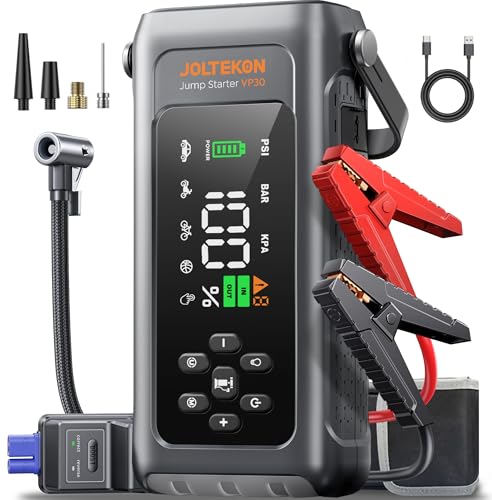
- Combines jump starting, tire inflation, lighting, and portable charging in one device
- Force-start function is specified for completely drained or low-voltage batteries
- Automatic shutoff helps prevent over-inflation
- Operating temperature is listed as -4°F to 140°F
Cons
- The product listing advises charging the unit every 2–3 months during extended storage
- Users are instructed to ensure the battery level exceeds 50% before vehicle startup
Specifications
| Dimensions | 7.88 x 1.97 x 3.78 inches |
|---|---|
| Weight | 2.645547144 pounds |
| Product Group | Automotive Parts and Accessories |
Best For / Avoid If
Best for buyers prioritizing
- Combines jump starting, tire inflation, lighting, and portable charging in one device
- Force-start function is specified for completely drained or low-voltage batteries
- Automatic shutoff helps prevent over-inflation
Consider another option if
- The product listing advises charging the unit every 2–3 months during extended storage
- Users are instructed to ensure the battery level exceeds 50% before vehicle startup

Pros
- Combines a built-in USB-C cable with a standard USB-A QC 3.0 port
- Supports simultaneous charging through two ports
- Compatible with cars, SUVs, trucks, and almost all 12V/24V vehicles according to the listing
- Lists overcharge, overcurrent, and overheating protection
Cons
- The listing does not include detailed specifications beyond the listed output ratings and vehicle input range
Best For / Avoid If
Best for buyers prioritizing
- Combines a built-in USB-C cable with a standard USB-A QC 3.0 port
- Supports simultaneous charging through two ports
- Compatible with cars, SUVs, trucks, and almost all 12V/24V vehicles according to the listing
Consider another option if
- The listing does not include detailed specifications beyond the listed output ratings and vehicle input range
FAQ
Should a roadside emergency kit include jumper cables?
Yes, when the driver owns a compatible 12-volt vehicle and knows where the approved jump points are. A portable jump starter may suit a driver who travels alone, but it needs regular charging.
What is the most useful item in a roadside kit?
Visibility and communication gear often provide the broadest value. A flashlight, reflective vest, warning device, charged power bank, and phone cable help during many types of breakdowns.
Should I include a tire inflator?
Include one when the vehicle has a suitable 12-volt outlet and the driver can use it safely. It helps with low pressure, not tire damage or a large puncture.
Can one kit work for every vehicle?
Basic safety and weather supplies can be shared, but battery tools, tire equipment, spare-tire parts, and EV procedures may differ by vehicle model-year and powertrain.
Where should the driver store the kit?
Store it where the driver can reach it without unloading the vehicle. Secure heavy items, protect electronics from heat and moisture, and inspect the kit at least when seasons change.
Sources and further reading
- Tire Safety (NHTSA): Tire inspection, pressure, and safety guidance.
- Battery Council International: Battery information and safety resources.
- Check for Recalls (NHTSA): Search vehicle safety recalls by VIN or vehicle details.