What is commanded equivalence ratio on a scanner? It is the engine computer’s requested air-fuel mixture target, expressed against a stoichiometric reference. A value near 1.00 usually means the computer wants a stoichiometric mixture, while values below or above 1.00 request leaner or richer operation.
The reading is a command, not proof of what entered the cylinders. Actual mixture depends on fuel pressure, injector operation, air leaks, sensor accuracy, exhaust flow, and engine conditions.
Key takeaways
- Commanded equivalence ratio is an ECU target, not a direct fuel-mixture measurement.
- Near 1.00 usually represents stoichiometric operation for gasoline emissions control.
- Values above 1.00 generally request a lean mixture. Values below 1.00 generally request a rich mixture.
- Diesel, gasoline, flex-fuel, hybrid, and turbocharged vehicles can use the PID differently.
- Compare the command with oxygen-sensor data, fuel trims, engine load, RPM, and operating temperature.
- Scanner support varies by vehicle model year, protocol, software, and control module.
How commanded equivalence ratio works
The engine control module, or ECM, adjusts fueling to meet operating goals. Those goals can include emissions control, power, fuel economy, catalyst protection, cold-start operation, and component protection.
Commanded equivalence ratio describes the requested fuel mixture compared with stoichiometric mixture. Stoichiometric means enough oxygen exists to burn the available fuel with little oxygen or fuel left over. For many gasoline engines, this point is close to an air-fuel ratio of 14.7:1, but fuel type and engine strategy can change that reference.
The term uses a ratio rather than a direct air-fuel number. That lets diagnostic systems describe mixture commands across different fuels and engine strategies.
| Reading | Typical meaning | Possible operating reason |
|---|---|---|
| Near 1.00 | Stoichiometric target | Closed-loop cruise or emissions control |
| Above 1.00 | Lean target | Lean operation, deceleration, or fuel-saving strategy |
| Below 1.00 | Rich target | Cold start, acceleration, high load, or catalyst protection |
These ranges describe common interpretation, not a universal rule. Some scanners display lambda, percentage, or another scaled value. Read the PID label and unit shown by the scan tool.
Commanded equivalence ratio versus actual mixture
A commanded value tells you what the ECM requests. It does not tell you whether injectors delivered that fuel or whether unmetered air entered the engine.
For example, an ECM may command a rich mixture during acceleration. A weak fuel pump, restricted filter, low fuel pressure, or clogged injector can leave the engine lean. The command still shows rich because the ECM requested more fuel.
The reverse can also happen. The ECM may command a normal mixture while a leaking injector adds fuel. Actual combustion then runs rich even though the command looks normal.
Use related PIDs to check the result:
- Short-term fuel trim: Fast correction based on oxygen-sensor feedback.
- Long-term fuel trim: Learned correction stored by the ECM over time.
- Equivalence ratio or lambda from a wideband sensor: A sensor-based estimate of mixture operation, when supported.
- Oxygen-sensor voltage or current: Feedback that varies by sensor type and control strategy.
- MAF or MAP data: Air measurement or calculated engine load.
- Fuel pressure: Available only when the vehicle and scanner support the related data.
Fuel trims near zero do not prove perfect combustion. The ECM can correct only within its control range, and a faulty sensor can report a believable but wrong value.
Why the number changes while driving
Commanded equivalence ratio changes because engine needs change. At warm idle and steady cruise, many gasoline engines target near-stoichiometric operation so the catalytic converter can reduce emissions.
During hard acceleration, the ECM may request a richer mixture. Extra fuel can support power and reduce combustion temperature. Under light load, some engines may request lean operation or reduce fuel during deceleration.
Cold starts create another common pattern. Fuel does not vaporize as easily when the engine and intake are cold. The ECM may request extra fuel until temperature rises.
Turbocharged engines can change mixture targets with boost, intake temperature, knock control, and catalyst temperature. Hybrid vehicles may stop and restart the engine, creating short periods where the reading does not resemble a normal idle.
Diesel engines need separate interpretation. Diesel engines normally operate with excess air and control output mainly through fuel quantity. A scanner may show a commanded equivalence ratio, but its meaning depends on the vehicle’s control model and PID definition.
Where you may see this PID
Scan tools may show commanded equivalence ratio under live data, fuel system data, oxygen-sensor data, or generic OBD2 Mode 01 parameters. Menu names vary by scanner software.
Generic OBD2 access does not guarantee access to every live-data PID. A 1996 or newer US-market vehicle may support basic emissions data, but available information still depends on the vehicle, engine, emissions system, and communication protocol.
Enhanced manufacturer data can expose more useful information. That requires scanner support for the vehicle’s model year, control module, connector communication, and software version. A tool that reads engine codes may not read transmission, ABS, airbag, hybrid, or diesel data.
The vehicle normally uses a 16-pin J1962 diagnostic connector for modern OBD2 communication, but connector access, pin use, and protocol support can vary by vehicle and market. Older vehicles, imported vehicles, and some specialty systems need different equipment.
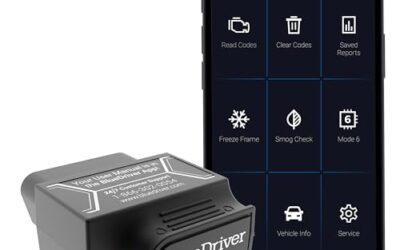
Phone-based scanners add more limits. The adapter must support the vehicle protocol, the app must support the requested PID, and the phone must support the adapter’s Bluetooth or Wi-Fi method. Android and iPhone compatibility can differ. App version, adapter firmware, and vehicle model year also affect access.
How to read commanded equivalence ratio during diagnosis
- Record vehicle details. Note model year, engine, fuel type, transmission, and market. These details affect PID meaning.
- Warm the engine. Start with coolant temperature near normal operating range unless diagnosing cold-start behavior. A cold engine can request extra fuel by design.
- Check stored and pending codes. Record codes and freeze-frame data before clearing anything. Clearing codes erases useful diagnostic context and does not repair the fault.
- View related live data. Display commanded equivalence ratio with short-term trim, long-term trim, RPM, calculated load, coolant temperature, MAF or MAP, and oxygen-sensor data when available.
- Observe idle. Watch for a stable command and compare fuel-trim response. Large corrections can point toward air, fuel, exhaust, or sensor faults.
- Hold a steady cruise. A steady road load can reveal a problem that does not appear at idle. Use a helper or a safe test area. Do not watch the screen while driving.
- Compare load changes. Note how the target responds during light acceleration, moderate load, and closed-throttle deceleration.
- Separate command from result. A rich command with lean feedback suggests a delivery or air-measurement problem. A normal command with rich feedback suggests another fault path.
- Test suspected parts. Use service information for fuel-pressure tests, smoke tests, sensor checks, wiring checks, and injector tests. Do not replace parts from one PID alone.
The duplicated closing tag in a scanner display does not affect vehicle data, but the diagnostic sequence should remain orderly. Record values and conditions before making changes.
Reading patterns that can help
Command near 1.00 with high positive fuel trim
The ECM requests a normal mixture but adds fuel because feedback suggests lean operation. Possible causes include a vacuum leak, intake duct leak after the MAF sensor, low fuel pressure, restricted injectors, exhaust leakage near the oxygen sensor, or inaccurate airflow data.
Check whether the trim is worse at idle or under load. A vacuum leak often affects idle more strongly. A fuel-delivery problem may become more visible as load rises. These patterns are clues, not proof.
Rich command with negative fuel trim
The ECM requests extra fuel and removes fuel in response to rich feedback. This may occur during normal acceleration or cold operation. If it continues after warm-up at light load, inspect fuel pressure, injector leakage, purge flow, coolant-temperature data, and oxygen-sensor operation.
Command does not change
A fixed reading can result from normal control strategy, unsupported data, a frozen scanner display, a failed sensor, or a communication problem. Compare the PID with RPM, load, throttle position, and fuel trims. Confirm that the engine computer is updating data.
Command looks reasonable but drivability remains poor
Mixture target data cannot identify every fault. Misfires, ignition faults, mechanical problems, valve timing issues, exhaust restrictions, crankcase leaks, and transmission problems can create poor performance without an unusual commanded value.
Common mistakes
- Calling the PID an air-fuel sensor reading. It is usually a requested target. Sensor-based lambda or oxygen data represents a different part of the system.
- Treating 1.00 as a universal gasoline number. Fuel type, sensor design, operating mode, and PID scaling matter.
- Diagnosing from one snapshot. Capture data at cold start, warm idle, steady cruise, and load when safe.
- Ignoring closed-loop status. Open-loop operation can produce commands that do not behave like warm, closed-loop cruise.
- Assuming a scanner supports every PID. Generic OBD2 and enhanced vehicle data are different access levels.
- Replacing an oxygen sensor first. Lean or rich feedback can result from fuel, air, exhaust, wiring, or mechanical faults.
- Clearing codes before recording data. Code clearing removes freeze-frame information and resets readiness monitors. It does not fix the cause.
- Driving while reading the scanner. Use a passenger, recording function, or stationary test. Keep attention on traffic.
When to get professional help
Use professional diagnosis when fuel trims remain far from normal, the vehicle has repeated misfires, fuel pressure needs testing, or the issue involves high-voltage hybrid components. Stop driving if the check-engine light flashes, the engine runs severely rough, fuel odor is strong, or power loss creates a traffic hazard.
Hybrid and electric vehicles require extra care because high-voltage systems can remain energized after shutdown. Follow vehicle service procedures. Do not disconnect orange high-voltage cables or open battery enclosures without the required training and equipment.
A repair shop can compare scan data with pressure tests, smoke testing, waveform analysis, injector balance checks, and manufacturer service procedures. This matters when generic OBD2 data cannot access the needed module or test.
Gear that can help
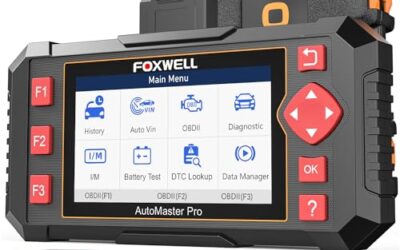
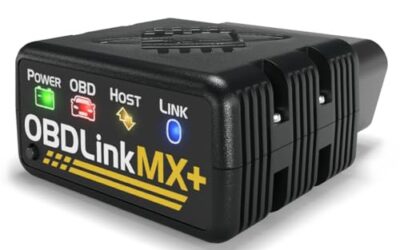
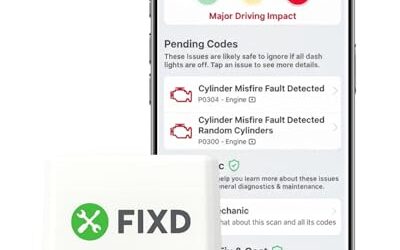
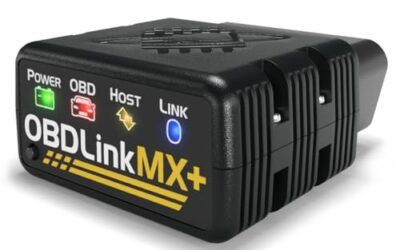
If you need OBD2 scanners for this job, these picks already appear in our OBD2 scanners guides. Check the full guide for fit and who should skip each one.

Pros
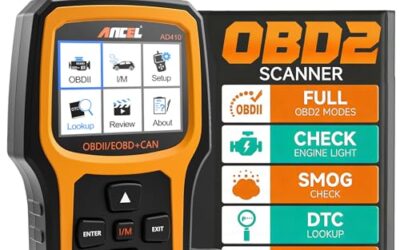
- Supports multiple common OBDII protocols, including CAN
- Provides more than basic code reading with live data, freeze-frame, and readiness information
- Powered through the vehicle, so no separate battery or charger is required
- Compact design and 12-ounce weight support portability
Cons
- Limited to emission-related diagnostics
- Requires a vehicle with an OBDII interface and does not diagnose OBDI vehicles, even with an adapter
- Vehicle compatibility should be confirmed before purchase
Specifications
| Color | Black |
|---|---|
| Dimensions | 4.9212598375 x 2.755905509 x 0.8661417314 inches |
| Product Group | Automotive Parts and Accessories |
| Binding | Automotive |
Best For / Avoid If
Best for buyers prioritizing
- Supports multiple common OBDII protocols, including CAN
- Provides more than basic code reading with live data, freeze-frame, and readiness information
- Powered through the vehicle, so no separate battery or charger is required
Consider another option if
- Limited to emission-related diagnostics
- Requires a vehicle with an OBDII interface and does not diagnose OBDI vehicles, even with an adapter
- Vehicle compatibility should be confirmed before purchase

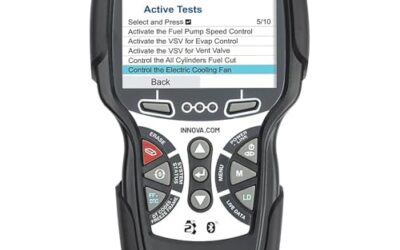
Pros
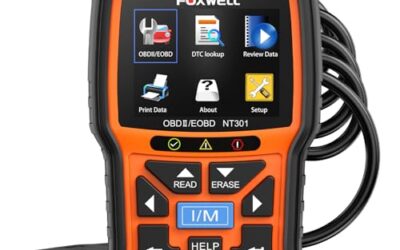
- Includes live-data graphing and logging for supported OBD2 vehicles
- Offers emissions-readiness, O-2 sensor, and EVAP monitoring functions
- Supports common OBD2 protocols and many 1996-plus US gasoline vehicles
- Does not require a separate charging setup
Cons
- Does not scan ABS, SRS, EPB, A/C, battery, or other non-engine systems
- Compatibility and available functions vary by vehicle year, make, model, and VIN
Specifications
| Color | NT301 OBD2 Scanner |
|---|---|
| Size | NT301 Code Reader |
| Dimensions | 8.66 x 3.15 x 6.69 inches |
| Weight | 0.3527396192 Pounds |
| Product Group | Automotive Parts and Accessories |
| Binding | Automotive |
Best For / Avoid If
Best for buyers prioritizing
- Includes live-data graphing and logging for supported OBD2 vehicles
- Offers emissions-readiness, O-2 sensor, and EVAP monitoring functions
- Supports common OBD2 protocols and many 1996-plus US gasoline vehicles
Consider another option if
- Does not scan ABS, SRS, EPB, A/C, battery, or other non-engine systems
- Compatibility and available functions vary by vehicle year, make, model, and VIN

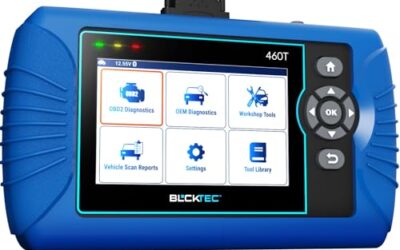
Pros
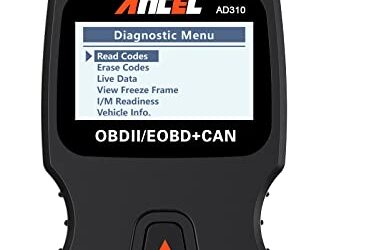
- Broad basic OBD2 diagnostic function set
- Built-in code definitions can help explain fault codes
- Supports major protocols including CAN, ISO9141, KWP2000, J1850 VPW and J1850 PWM
- Color display, multilingual support and on-screen code definitions
Cons
- Limited to engine and emission-related codes
- Does not support ABS, SRS, transmission, bidirectional control or service reset functions
- Vehicle compatibility should be checked before purchase
Specifications
| Color | yellow |
|---|---|
| Dimensions | 9 x 6.3 x 1.6 inches |
| Weight | 0.66 Pounds |
| Product Group | Automotive Parts and Accessories |
| Binding | Automotive |
Best For / Avoid If
Best for buyers prioritizing
- Broad basic OBD2 diagnostic function set
- Built-in code definitions can help explain fault codes
- Supports major protocols including CAN, ISO9141, KWP2000, J1850 VPW and J1850 PWM
Consider another option if
- Limited to engine and emission-related codes
- Does not support ABS, SRS, transmission, bidirectional control or service reset functions
- Vehicle compatibility should be checked before purchase
FAQ
Is commanded equivalence ratio the same as air-fuel ratio?
No. Air-fuel ratio states mass of air compared with fuel. Commanded equivalence ratio states the requested mixture relative to a reference mixture. The value may describe a target rather than actual combustion.
What does 1.00 mean on a scanner?
It commonly means a stoichiometric target. On many gasoline engines, that is near the mixture used for closed-loop emissions control. Confirm the PID definition and fuel type before judging the value.
Why does commanded equivalence ratio go below 1?
Values below 1.00 commonly indicate a richer target. Cold starting, acceleration, high load, catalyst heating, and component protection can cause that command.
Can this PID find a vacuum leak?
It can support vacuum-leak diagnosis when compared with fuel trims, engine load, RPM, and oxygen-sensor data. It cannot prove a leak by itself. A smoke test may be needed.
Do all OBD2 scanners show commanded equivalence ratio?
No. PID access varies by vehicle model year, engine, market, scanner software, connector communication, and firmware. Enhanced vehicle coverage may be required.
Sources and further reading
- J1962 Diagnostic Connector standard (SAE International): Connector standard information for vehicle diagnostic equipment.
- J1979 E/E Diagnostic Test Modes standard (SAE International): Diagnostic test mode information related to emissions data and OBD communication.
- Best OBD2 scanners live data and diagnostic for fuel trim (CarTechTalk): Scanner features that matter for live fuel-trim diagnosis.