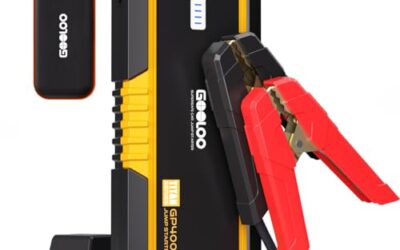
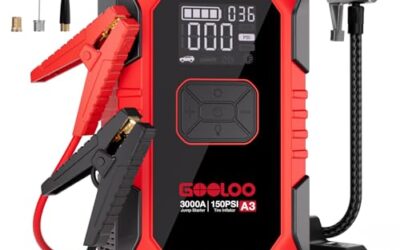
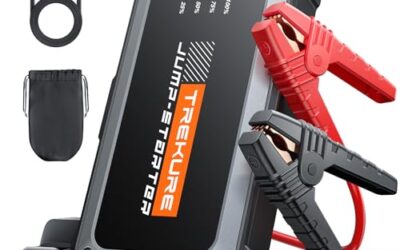
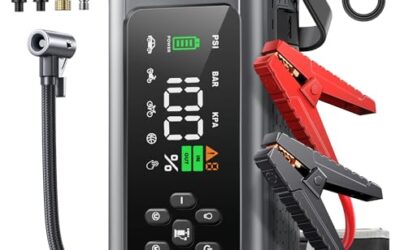
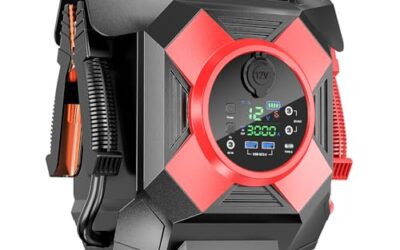
The practical difference in the jump starter vs jumper cables debate comes down to whether you have help. A portable jump starter carries its own power, so you can start a vehicle alone. Jumper cables are cheaper and lighter but require a second running vehicle and someone to help you connect them.
Both tools solve the same core problem, a battery that no longer has enough charge to crank the engine, but they fit different situations. This article explains how each works, where each fits, the safety limits that apply, and how to decide which belongs in your trunk.
Key takeaways
- A portable jump starter is self-contained and lets you start a car without a second vehicle.
- Jumper cables are inexpensive and durable but always need a donor vehicle and a helper.
- Neither tool fixes a bad battery, alternator, or parasitic drain. They only get the engine running once.
- Match the tool to your vehicle voltage and engine size, since large diesels need more cranking power.
- Correct connection order matters for safety with both methods.
What is a jump starter and what are jumper cables?
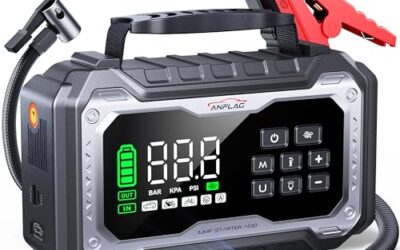
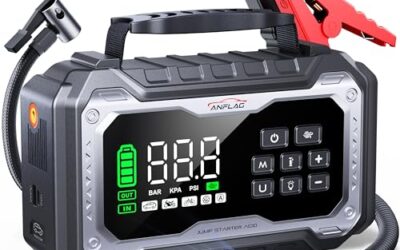
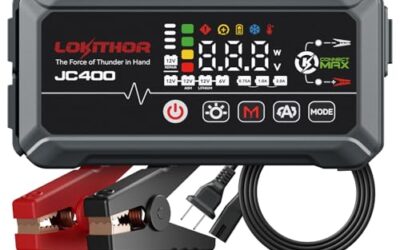
A jump starter is a portable device with an internal battery, usually lithium-ion in modern consumer units, and two output clamps. You connect the clamps to the dead battery, and the stored energy provides the burst of current needed to crank the engine. Many units also include USB ports and a work light.
Jumper cables are a pair of insulated copper or copper-clad aluminum wires with clamps on each end. They carry current from a charged battery in a running donor vehicle to the dead battery in your vehicle. They store no energy of their own, so their usefulness depends entirely on having another working car nearby.
How each one delivers power
With jumper cables, the donor vehicle’s battery and running alternator supply the current. The donor engine should be running so its charging system can support the load. With a jump starter, the internal battery supplies the current directly, and no external power source is involved during the jump.
Jump starter vs jumper cables comparison
The table below summarizes the trade-offs most people care about. Specific weights, capacities, and prices vary widely by brand and model, so treat these as general tendencies rather than fixed figures.
| Factor | Portable jump starter | Jumper cables |
|---|---|---|
| Needs a second vehicle | No | Yes |
| Needs a helper | Usually no | Typically yes |
| Upfront cost | Higher | Lower |
| Requires charging or maintenance | Yes, keep it charged | No |
| Extra features | Often USB power, light | None |
| Lifespan concern | Internal battery ages | Clamp and wire wear |
| Cold weather reliability | Depends on charge state | Depends on donor battery |
When a jump starter makes more sense
A jump starter is the better choice when you often drive alone, park in remote areas, or simply do not want to depend on a passing stranger. Because it is self-contained, you control the outcome without waiting for help. It is also convenient in tight parking situations where you cannot position two vehicles nose to nose.
The main responsibility is maintenance. A jump starter only helps if it holds a charge. Lithium-ion units gradually self-discharge, and cold storage can reduce available capacity, so recharging it every few months is a reasonable habit. Storage inside a very hot or freezing vehicle can also shorten the internal battery’s usable life over time.
Matching capacity to your engine
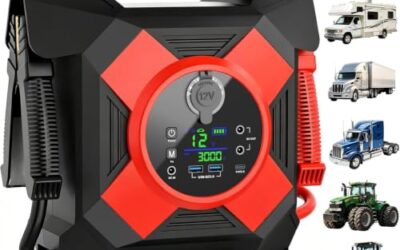
Larger engines, especially diesels and big V8s, need more cranking current than compact gasoline engines. Manufacturers rate units differently, and specifications like peak amps are not standardized across brands, so a unit that easily starts a small sedan may struggle with a large truck. Check the device’s stated engine size or displacement limits against your vehicle before relying on it.
When jumper cables make more sense
Jumper cables shine on cost and simplicity. They have no battery to maintain, they do not age from sitting unused in the same way, and a decent set is inexpensive. If you frequently drive with others, work near coworkers, or live somewhere help is easy to find, cables may be all you need.
Cable quality still matters. Thicker wire, indicated by a lower gauge number, carries current more effectively and tends to work better on larger engines and in cold weather. Longer cables add reach between vehicles but can lose some effectiveness over the extra distance. Clamp quality affects how well the connection holds.
How to use each safely
Before using either method, read your vehicle owner’s manual. Some vehicles have designated jump-start terminals under the hood rather than direct battery posts, and a few have specific procedures or warnings. Confirm both batteries are the same voltage, since most passenger vehicles use 12-volt systems but some equipment does not.
Using jumper cables
- Park the donor vehicle close to yours without the vehicles touching, and turn both ignitions off.
- Connect one red clamp to the positive terminal of the dead battery.
- Connect the other red clamp to the positive terminal of the good battery.
- Connect one black clamp to the negative terminal of the good battery.
- Connect the final black clamp to an unpainted metal ground point on the dead vehicle’s engine block or frame, away from the battery, not to the dead battery’s negative terminal.
- Start the donor vehicle and let it run briefly, then try to start the dead vehicle.
- Once started, remove the clamps in the reverse order.
Using a jump starter
- Make sure the jump starter is charged and the vehicle ignition is off.
- Connect the red clamp to the positive battery terminal.
- Connect the black clamp to an unpainted metal ground point away from the battery, unless the device’s instructions specify otherwise.
- Turn on the jump starter if it has a power switch, then start the vehicle.
- Turn the unit off and disconnect the clamps, black first, then recharge it soon after.
Always follow the instructions that come with your specific jump starter. Some models include reverse-polarity protection and their own connection sequence that overrides general advice.
Common mistakes
- Connecting the final ground clamp to the dead battery terminal. Grounding to the engine block or frame reduces the risk of igniting battery gases near the terminal.
- Reversing polarity. Attaching positive to negative can damage electronics or the batteries. Match red to positive and black to negative or ground.
- Letting a jump starter sit uncharged. A dead jump starter is useless in an emergency.
- Assuming the battery is the only problem. Repeated dead batteries often point to a charging or drain issue that jumping does not fix.
- Using undersized cables on a large engine. Thin cables may not carry enough current to crank a big diesel.
Neither tool repairs the underlying problem
Getting an engine to start is not the same as fixing why it died. A battery can fail from age, cold, a slow parasitic drain, or a failing alternator that never fully recharges it. If your battery goes dead again soon after a jump, that is a sign to have the battery, charging system, and connections tested rather than repeatedly jumping the car.
When to get professional help
Consider professional diagnosis if the battery drains repeatedly, if you smell something burning, if the battery case looks swollen or is leaking, or if you are unsure where to safely connect on a vehicle with a nonstandard layout, such as some hybrids and electric vehicles that have separate high-voltage and low-voltage systems. Working around high-voltage components without training is dangerous. A qualified technician can test battery health and charging output and identify a drain that a jump cannot address.
Frequently asked questions
Is a jump starter better than jumper cables?
Neither is universally better. A jump starter is more convenient and works without help, while jumper cables are cheaper and need no maintenance. The right choice depends on whether you usually have a second vehicle available.
Can I use both a jump starter and jumper cables?
Yes. Some drivers keep cables as an inexpensive backup and a jump starter for situations where no donor vehicle is around. Carrying both covers more scenarios.
Will a jump starter work on any car?
Not necessarily. Capacity varies, and a unit sized for small gasoline engines may not crank a large diesel. Check the device’s stated engine or displacement limits and confirm it matches your vehicle’s voltage.
How often should I charge a portable jump starter?
Follow the manufacturer’s guidance, but recharging every few months and after each use is a common recommendation because lithium-ion units self-discharge over time. A unit stored in extreme heat or cold may need attention more often.
Do jumper cables work if both batteries are dead?
No. Jumper cables move power from a charged battery to a dead one, so the donor vehicle must have a working battery and, ideally, a running engine.