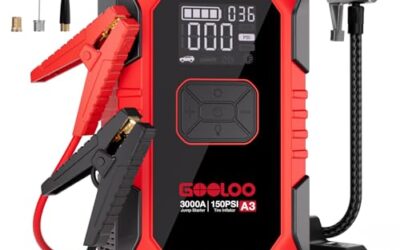
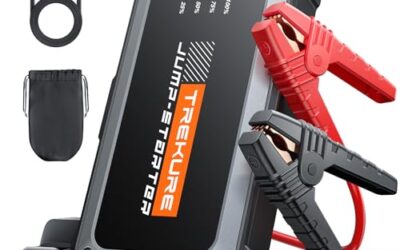
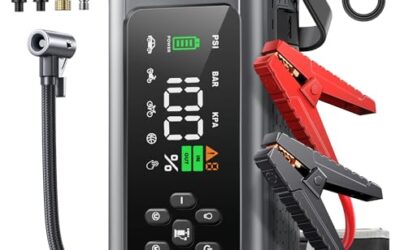
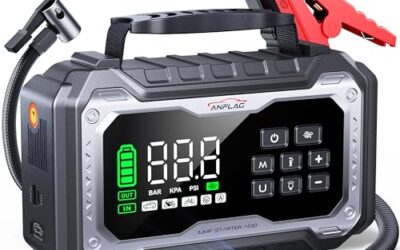
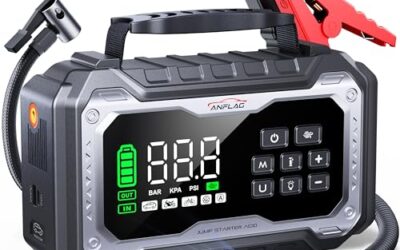
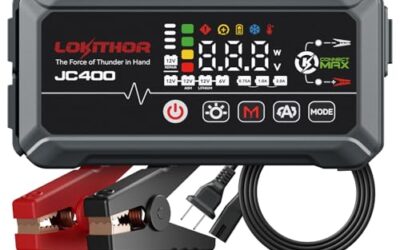
Jump Starter vs Battery Charger
Jump starters and battery chargers are essential tools for vehicle battery maintenance. A jump starter delivers a quick burst of power to start a dead battery, whereas a battery charger gradually recharges and conditions the battery for long-term health. Understanding the differences helps you choose the right tool for your needs, whether you are dealing with a stranded vehicle or preventive maintenance.
Both devices are important for keeping your vehicle running smoothly, but they address different scenarios. Jump starters are portable and designed for emergencies, while battery chargers are typically used for regular upkeep and recovery from low charge states.
Key Takeaways
- Jump starters provide an instant power boost to start a dead battery.
- Battery chargers restore and maintain battery health over time.
- Choose based on whether you need an emergency start or ongoing maintenance.
- Always consider vehicle model year, voltage compatibility, and connector types.
- Safety is paramount when handling batteries and electrical connections.
What is a Jump Starter?
A jump starter is a portable device equipped with its own battery that can provide a high current surge to jump-start a vehicle’s dead battery. It is commonly used in situations where the vehicle’s battery has been drained due to leaving lights on, using accessories, or the vehicle sitting unused for an extended period.
Jump starters come in various sizes, from small units suitable for cars to larger ones for trucks, SUVs, and even marine applications. They are designed to be easy to use with simple clamp connections.
How Does a Jump Starter Work?
When a vehicle’s battery is dead, it cannot provide enough power to crank the engine. A jump starter connects its clamps to the battery terminals and supplies a large amount of current, typically 500 to 2000 amps, to turn the starter motor and start the engine.
Once the engine starts, the vehicle’s alternator takes over charging the battery. The jump starter can then be used to charge the battery if needed, but its primary role is starting. Always follow the correct connection order: positive first, then negative, to avoid sparks.
Jump starters are particularly useful for vehicles with model years before 2000 or those with weak batteries that struggle to start.
What is a Battery Charger?
A battery charger is a device that connects to the vehicle’s battery to restore its charge after depletion. It is ideal for maintaining battery health, especially for vehicles that are driven infrequently or stored for long periods.
Battery chargers come in different types, including trickle chargers, smart chargers, and desulfators. They are usually plugged into a standard electrical outlet and connected to the battery with clips or cables.
How Does a Battery Charger Work?
Battery chargers work by applying a controlled electrical current to the battery. They go through stages: bulk charge to quickly restore charge, absorption to bring the battery to full voltage, and float to maintain the charge at a lower level.
This process is safer than jump starting because it does not overwhelm the battery. Modern chargers often have automatic features to detect battery type and prevent overcharging, which can damage the battery or the charger.
Using a battery charger regularly helps prevent issues like sulfation in lead-acid batteries, which occurs when discharged batteries sit for too long.
Jump Starter vs Battery Charger: Practical Differences
The primary practical difference is in their intended use and operation. Jump starters are for immediate starting of a dead battery in an emergency, providing a high surge of power. Battery chargers, on the other hand, are for slowly restoring charge and maintaining the battery’s health over time.
Jump starters cannot be used as a substitute for a charger in maintenance situations because their high current can damage the battery if left connected too long. Conversely, attempting to start a vehicle with a battery charger can cause damage to both the charger and the battery due to the charger’s inability to handle the high starting loads.
Another key difference is portability and convenience. Jump starters are designed to be carried in a vehicle for quick deployment, while battery chargers are often kept at home or in a workshop for scheduled use.
When to Use a Jump Starter
Use a jump starter when your vehicle will not start and the battery is completely dead or very low. This is common after the vehicle has been sitting for weeks or months, or if electrical accessories have drained the battery while the vehicle was parked.
Consider your vehicle’s model year and battery type. Older vehicles may require a higher capacity jump starter. Ensure the jump starter’s voltage matches your vehicle’s 12-volt system and that the connector type is compatible with your battery terminals, such as ring terminals or eye terminals.
Jump starters are also useful for RVs, boats, motorcycles, and other vehicles with separate batteries. Always ensure the jump starter is rated for the starting requirements of your vehicle.
When to Use a Battery Charger
Use a battery charger when the battery is low but the vehicle can be started with another method, or for regular maintenance to keep the battery in good condition. It is particularly recommended for vehicles that are driven less than 100 miles per week or stored for extended periods.
Battery chargers are safer for ongoing use and can be left connected for maintenance purposes. They help prevent deep discharge and sulfation, which can shorten the battery’s life.
Choose a charger based on your battery type: for standard lead-acid batteries, a basic charger may suffice, while AGM or lithium batteries may require specific smart chargers that detect the battery chemistry.
Comparison Table
| Aspect | Jump Starter | Battery Charger |
|---|---|---|
| Purpose | Instant starting of dead battery | Restore and maintain battery health |
| Current Output | High surge (500-2000 amps) | Low controlled current (1-10 amps) |
| Primary Use | Emergency starting | Preventive maintenance and recovery |
| Portability | Yes, easy to carry | No, usually stationary |
| Safety Considerations | High risk if misused, careful connection needed | Lower risk, automatic features in modern models |
| Charging Capability | Secondary function at best | Primary function |
Safety Warnings
When using either device, always wear eye protection to guard against sparks or splashes. Ensure the vehicle is in park with the parking brake engaged. Never attempt to jump start or charge a frozen battery, as it can explode.
For jump starters, connect the positive clamp to the positive battery terminal first and the negative to an unpainted metal surface on the vehicle. For battery chargers, connect in the reverse order to avoid sparks.
Do not smoke or use open flames near batteries. If you are unsure about any step, consult a professional mechanic.
Common Mistakes
One common mistake is using a jump starter on a battery that is not dead, which can damage the jump starter’s battery. Another is leaving the clamps connected after starting, which can drain the jump starter.
Attempting to start a vehicle using a battery charger can cause serious damage to the charger’s internal components or the battery itself. Always use the appropriate tool for the task.
Ignoring compatibility limits, such as using a jump starter with the wrong voltage or connector, can lead to electrical fires or equipment failure. Always check the specifications for your vehicle and the device.
Choosing the Right Tool for Your Needs
Decide based on your typical needs. If you frequently have dead batteries due to neglect, a jump starter is essential. For regular drivers who want to prevent issues, a battery charger is more appropriate.
Some users opt for a combo unit that can function as both, but understand the limitations. A jump starter with charging capability is best for occasional use, while a dedicated charger is better for frequent maintenance.
Consider the size and weight of the device if portability is important. For home use, a stationary charger may be sufficient, but for on-the-go, a portable jump starter is necessary.
When to Get Professional Help
If your vehicle has other electrical issues beyond the battery, such as warning lights or strange noises, seek professional diagnosis. Persistent battery problems may indicate alternator or starter faults that require repair.
If you are not comfortable with electrical connections or unsure about compatibility, it is best to have a professional handle the task to avoid damage or safety issues.
FAQ
What is the main difference between a jump starter and a battery charger?
The main difference is that a jump starter is used for immediate starting of a dead battery, while a battery charger is used to restore and maintain the battery’s charge over time.
Can a jump starter be used to charge a battery?
Some jump starters have a charging function, but it is not their primary purpose and they are not designed for extended charging like a dedicated charger.
How often should I use a battery charger for my vehicle?
Once a month for vehicles stored for more than a week, or as recommended by the battery manufacturer for your specific vehicle model year.
Are jump starters safe to use on all vehicles?
Yes, but ensure the jump starter is compatible with your vehicle’s voltage (usually 12V) and battery type. Check the connector type and amp rating for your model year.
What should I do if my battery won’t hold a charge after using a charger?
Have the battery tested at a professional auto parts store or by a mechanic. It may need replacement if it is faulty.