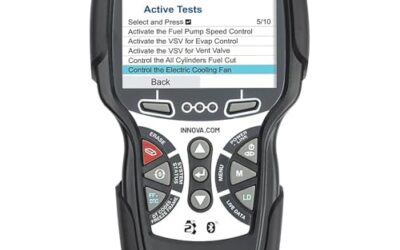
To prioritize multiple OBD2 trouble codes, start with safety, drivability and faults that can cause secondary codes. Read and save the complete scan report and freeze-frame data before clearing anything. Diagnose the underlying cause rather than replacing every part named in a code description.
- Stop driving for red warning lights, low oil pressure, overheating, severe misfire, or unsafe braking and steering symptoms.
- Separate current, pending, and permanent codes before choosing a repair.
- Check battery voltage, grounds, fuses, connectors, and shared power supplies early.
- Use code descriptions as clues, not proof that a named part failed.
- Do not clear codes until records and freeze-frame data are saved.
What multiple OBD2 codes mean
One vehicle fault can create several diagnostic trouble codes, or DTCs. A weak battery can disrupt several control modules. A failed sensor can cause both a sensor circuit code and fuel-trim codes. A vacuum leak can produce lean mixture codes, misfire codes, and oxygen-sensor response codes.
Codes use different levels of detail. Generic P0 codes follow common OBD2 definitions. Manufacturer-specific P1 codes may need factory data or a scanner with enhanced coverage. B, C, and U codes point toward body, chassis, and network systems. Basic emission scanners may not read every module on a vehicle.
Vehicle model-year matters. US-market gasoline vehicles generally support standard OBD2 emissions data, but coverage for transmission, airbag, ABS, body, and manufacturer functions varies. Diesel, hybrid, and electric vehicles can require different tests and safety procedures. Connector shape alone does not prove full system compatibility.
How to prioritize multiple obd2 trouble codes
1. Check immediate safety symptoms first
Safety outranks scan order. Stop and arrange professional help if the vehicle has weak brakes, sudden steering changes, overheating, smoke, fuel odor, loss of power in traffic, or an oil-pressure warning. An OBD2 scan cannot replace inspection of brakes, tires, steering, suspension, or fluid levels.
A flashing check-engine light usually signals an active misfire that can damage the catalytic converter. Reduce load and stop driving if the engine shakes, loses power, or the light continues flashing. Do not treat a steady light as permission to ignore severe symptoms.
2. Record every code before clearing anything
Connect the scanner with the ignition off unless its instructions say otherwise. Turn ignition on without starting the engine, then scan every available module. Save code numbers, descriptions, status, freeze-frame data, and module names.
Write down mileage, fuel level, outside temperature if shown, engine temperature, vehicle speed, load, RPM, and battery voltage. These details show the conditions present when the module stored the code. A code recorded during cranking points toward a different path than one recorded during highway load.
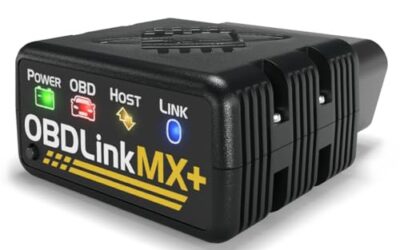
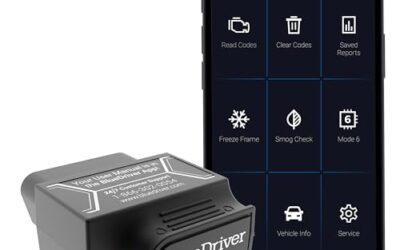
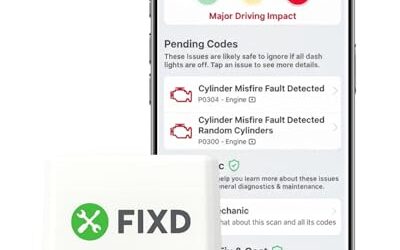
Phone-based scanners add compatibility limits. The adapter needs the correct app, Bluetooth or Wi-Fi support, phone OS, and vehicle protocol. Firmware can affect module coverage and communication. A scanner that reads engine emissions codes may not access ABS or airbag systems.
3. Sort codes by status
| Status | Meaning | Priority |
|---|---|---|
| Current or confirmed | Fault met the module’s test conditions and remains stored. | High when symptoms or safety risks exist. |
| Pending | Fault appeared during part of a monitor test but may need another drive cycle. | Check after confirmed and power-supply faults. |
| Permanent | Emissions fault remains in memory until the vehicle completes its monitor and passes. | Repair cause first; clearing will not remove it. |
| History | Fault happened earlier but is not currently active. | Compare with recent battery work or repairs. |
Code status differs by scanner and vehicle. Some tools show only limited status information. A permanent code can remain after repair because the vehicle must run its self-test. It does not prove that the original fault remains active.
4. Fix power and communication faults before sensor codes
Low voltage is a common reason for a crowded scan report. Check battery condition, charging voltage, battery terminals, engine grounds, body grounds, and main fuses. Use the vehicle service information for test limits because voltage values vary by vehicle state and charging system.
U-codes indicate lost communication between modules. Inspect battery power, grounds, network connectors, water intrusion, and recent aftermarket wiring before replacing modules. A single module or wiring fault can make several other modules report communication loss.
Do not probe airbag circuits casually. Supplemental restraint systems can deploy or become disabled during improper testing. Follow the service manual and use tools approved for that system.
5. Identify a parent fault
Look for one code that can logically create others. A mass-airflow signal fault can affect fuel mixture and misfire detection. An engine coolant temperature fault can alter fuel delivery, fan operation, and emissions testing. A crankshaft position fault can affect starting, ignition, injection, and camshaft correlation.
“Circuit” codes usually direct attention to wiring, power, ground, connector condition, or the sensor circuit. They do not automatically condemn the sensor. “Range or performance” codes can involve the sensor, actuator, mechanical timing, air leaks, fuel pressure, or software conditions.
Use wiring diagrams to find shared circuits. Several sensors losing the same reference voltage point toward a short, open circuit, power supply, or ground problem. Replacing each sensor in the order shown on the scan screen can waste money.
6. Use freeze-frame and live data together
Freeze-frame shows a snapshot. Live data shows what the system does now. Compare coolant temperature with the actual engine temperature, throttle position with pedal input, manifold pressure with engine load, and oxygen or air-fuel sensor behavior with fuel trims.
Fuel-trim codes need context. Positive trim means the control system is adding fuel against a lean reading. Causes can include unmetered air, low fuel pressure, restricted injectors, exhaust leaks near sensors, or inaccurate airflow data. Negative trim means the system is removing fuel from a rich condition. Causes can include excessive fuel pressure, leaking injectors, purge flow, or incorrect sensor input.
Long-term fuel trim and short-term fuel trim behave differently across idle and higher RPM. A lean condition strongest at idle can support a vacuum-leak theory. A lean condition that worsens under load can point toward fuel delivery or airflow limits. These patterns are clues, not final proof.
7. Test the suspected system before replacing parts
Follow a test sequence from the repair manual. Check visual condition, power, ground, reference voltage, signal voltage, resistance where applicable, mechanical operation, and related inputs. Some sensors use digital signals or network messages, so resistance testing can give a false result or damage a circuit.
Confirm connector pin locations for the exact model-year and engine. Manufacturers can change wiring, sensor types, calibration, and connector assignments within one generation. A generic online diagram may fit a different engine or market.
For engine faults, inspect intake hoses, vacuum lines, exhaust leaks, fuel pressure, ignition coils, spark plugs, injector operation, and valve timing as the code family suggests. For transmission faults, fluid condition, speed signals, solenoid circuits, adaptation values, and mechanical pressure may matter. The scanner alone cannot separate every electrical fault from mechanical failure.
8. Repair, then verify the result
Repair the tested cause, not the most expensive code. Reconnect wiring, secure grounds, replace damaged parts, and follow torque and fluid procedures from the vehicle manual. After repair, scan again and check whether current codes return.
Some monitors need specific drive conditions. A vehicle may need cold starts, steady cruising, deceleration, or fuel-level conditions before all tests run. Emissions readiness rules also differ by state and inspection program. Clearing codes resets readiness monitors and can delay an emissions test.
Road-test only when the vehicle is safe. Watch warning lights, temperature, oil pressure, brake feel, and drivability. Recheck live data and pending codes after the drive cycle.
Quick decision tree for several codes
- Safety warning or severe symptom? Stop driving and inspect or tow the vehicle.
- Many unrelated codes appeared at once? Check battery voltage, grounds, fuses, and module communication.
- One system has several related codes? Find shared power, ground, reference, air, fuel, or mechanical causes.
- One confirmed code and several pending codes? Test the confirmed code first, then rescan.
- Only a sensor code remains? Test its circuit and related conditions before replacing the sensor.
- Code returns after repair? Check wiring, live data, mechanical causes, software updates, and exact vehicle coverage.
Common mistakes
- Replacing every named part. A code identifies a failed test, not always a failed component.
- Clearing codes before saving data. This removes useful freeze-frame information and resets readiness monitors.
- Ignoring battery voltage. Low cranking voltage can create false or secondary faults.
- Reading only the engine computer. ABS, airbag, transmission, body, and network faults may sit in other modules.
- Using a generic definition for a manufacturer code. P1, B, C, and U codes can require brand-specific information.
- Testing a circuit with the wrong method. Resistance tests, test lights, and back-probing can harm sensitive circuits.
- Driving with a flashing check-engine light. Active misfire can damage emissions hardware and reduce engine control.
- Assuming no code means no fault. Some mechanical, intermittent, safety, and pending faults may not trigger a stored DTC.
When to get professional help
Use a repair shop when the vehicle has a flashing check-engine light, overheating, oil-pressure loss, brake or steering faults, fuel odor, severe power loss, or repeated stalling. Towing costs less than turning a small fault into engine, catalytic-converter, or collision damage.
Professional diagnosis also makes sense when the scan shows U-codes, multiple module failures, airbag faults, hybrid or EV high-voltage warnings, transmission pressure concerns, or network problems. These systems need wiring diagrams, scope testing, bidirectional controls, factory procedures, or high-voltage training.
Choose a scanner based on the exact job. Basic emissions work needs different coverage than ABS bleeding, airbag diagnosis, key programming, coding, or manufacturer service functions. CarTechTalk’s guide to professional car diagnostic tools explains why advanced functions vary by vehicle. The guide to advanced OBD2 scanner coverage covers the difference between generic engine data and broader module access.
Related reading: OBD2 Scanner Buying Guide for Beginners.
Gear that can help
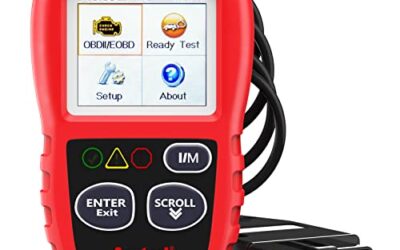
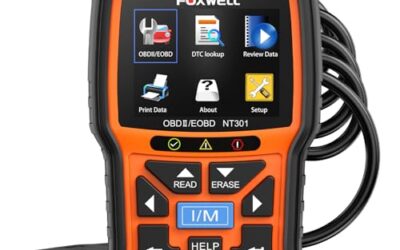
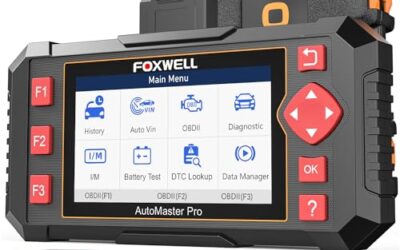
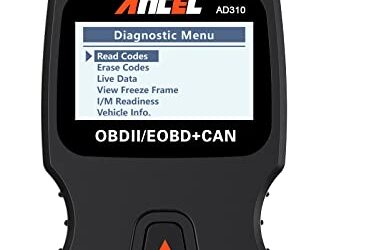
If you need OBD2 scanners for this job, these picks already appear in our OBD2 scanners guides. Check the full guide for fit and who should skip each one.

Pros
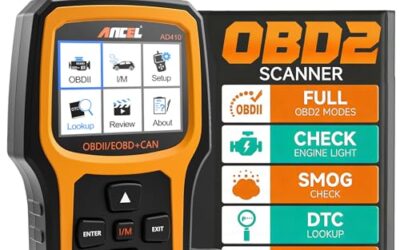
- Broad basic OBD2 diagnostic function set
- Built-in code definitions can help explain fault codes
- Supports major protocols including CAN, ISO9141, KWP2000, J1850 VPW and J1850 PWM
- Color display, multilingual support and on-screen code definitions
Cons
- Limited to engine and emission-related codes
- Does not support ABS, SRS, transmission, bidirectional control or service reset functions
- Vehicle compatibility should be checked before purchase
Specifications
| Color | yellow |
|---|---|
| Dimensions | 9 x 6.3 x 1.6 inches |
| Weight | 0.66 Pounds |
| Product Group | Automotive Parts and Accessories |
| Binding | Automotive |
Best For / Avoid If
Best for buyers prioritizing
- Broad basic OBD2 diagnostic function set
- Built-in code definitions can help explain fault codes
- Supports major protocols including CAN, ISO9141, KWP2000, J1850 VPW and J1850 PWM
Consider another option if
- Limited to engine and emission-related codes
- Does not support ABS, SRS, transmission, bidirectional control or service reset functions
- Vehicle compatibility should be checked before purchase

Pros
- Supports check-engine code reading and clearing
- Provides live data features including engine speed, vehicle speed, coolant temperature, and calculated load value
- Includes a 2.5-foot cable and six-button control layout
- Compact 6.02 x 2.75 x 0.91-inch design
Cons
- Does not support ABS, airbag, oil service light, or other non-OBDII systems
- Vehicle compatibility is described as supporting most applicable vehicles rather than every vehicle
- Requires connection to a vehicle’s OBDII port for power
Specifications
| Color | Yellow |
|---|---|
| Size | Portable |
| Dimensions | 6.02 x 2.75 x 0.91 inches |
| Weight | 0.6375 Pounds |
| Product Group | Automotive Parts and Accessories |
| Binding | Automotive |
Best For / Avoid If
Best for buyers prioritizing
- Supports check-engine code reading and clearing
- Provides live data features including engine speed, vehicle speed, coolant temperature, and calculated load value
- Includes a 2.5-foot cable and six-button control layout
Consider another option if
- Does not support ABS, airbag, oil service light, or other non-OBDII systems
- Vehicle compatibility is described as supporting most applicable vehicles rather than every vehicle
- Requires connection to a vehicle’s OBDII port for power
Pros
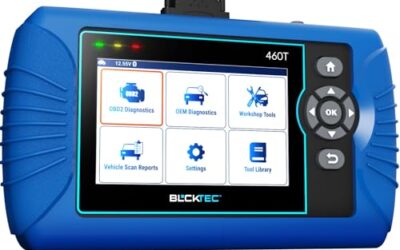
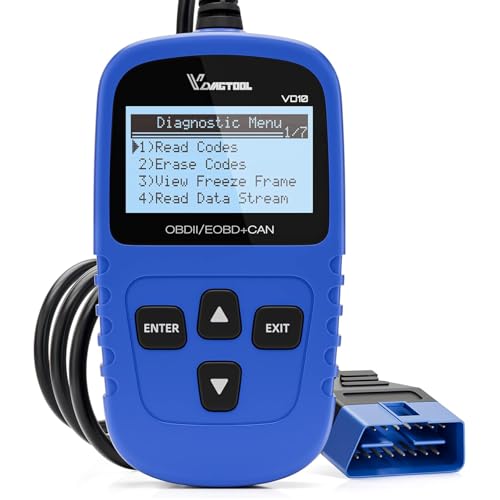
- Includes code reading, code clearing, live data, freeze-frame, I/M readiness, and vehicle information functions
- Supports VIN, Calibration ID, and Calibration Verification Number retrieval
- Lists compatibility with post-1996 US-based, post-2006 EU-based, and post-2009 Asian-based OBDII vehicles
- Offers a built-in DTC definition database and support for six languages
- Includes a stated five-year warranty
Cons
- The display is described as a two-line LCD screen, which may provide less viewing space than larger scan-tool displays
Specifications
| Color | Blue |
|---|---|
| Dimensions | 9.79921258843 x 6.692913379 x 1.57874015587 inches |
| Product Group | Automotive Parts and Accessories |
| Binding | Unknown Binding |
Best For / Avoid If
Best for buyers prioritizing
- Includes code reading, code clearing, live data, freeze-frame, I/M readiness, and vehicle information functions
- Supports VIN, Calibration ID, and Calibration Verification Number retrieval
- Lists compatibility with post-1996 US-based, post-2006 EU-based, and post-2009 Asian-based OBDII vehicles
Consider another option if
- The display is described as a two-line LCD screen, which may provide less viewing space than larger scan-tool displays
FAQ
Should I fix the first code shown by the scanner?
No. Scan order may reflect module order, not fault order. Prioritize safety faults, power and communication faults, then the code that can create related symptoms.
Can one bad sensor cause several OBD2 codes?
Yes. A sensor can affect fuel control, ignition, emissions monitors, and misfire detection. Test its circuit and related systems before replacing it.
Does clearing codes repair the vehicle?
No. Clearing removes stored data and resets some monitors. The fault remains until repaired, and the code can return when test conditions occur again.
Why did codes appear after a dead battery?
Low voltage or interrupted module communication can create temporary codes. Save the codes, test the battery and charging system, clear only after recording data, then rescan after normal operation.
Can an OBD2 scanner read ABS or airbag codes?
Only when its software and vehicle coverage support those modules. A standard emissions scanner may read engine codes but not chassis or restraint systems.
Sources and further reading
- J1962 Diagnostic Connector standard (SAE International): Connector requirements and related diagnostic access information.
- J1979 E/E Diagnostic Test Modes standard (SAE International): Standardized diagnostic data modes used by OBD systems.