How to interpret short term fuel trim starts with one rule: positive numbers mean the engine computer adds fuel, while negative numbers mean it removes fuel. Read STFT with engine temperature, load, engine bank, long term fuel trim, oxygen sensor data, and fuel system design in view.
STFT can point toward vacuum leaks, unmetered air, fuel delivery problems, exhaust leaks, injector faults, or sensor errors. It cannot identify one failed part by itself. Use live data as a pattern, then test the suspected system.
Key takeaways
- Positive STFT means the computer adds fuel because measured combustion looks lean.
- Negative STFT means the computer removes fuel because measured combustion looks rich.
- Small changes at warm idle can be normal. Large, steady changes need context.
- Compare idle readings with readings at 2,500 rpm and under load.
- STFT reacts quickly. LTFT records longer-term correction and may hide an earlier fault.
- Bank-to-bank differences can narrow the search on V6, V8, and other multi-bank engines.
- Scan-tool PID names, update speed, units, and supported data vary by vehicle model year and ECU.
What short term fuel trim means
Short term fuel trim, or STFT, is the immediate injector-fueling correction made by the engine control module. The module watches oxygen sensor or air-fuel ratio sensor feedback, then adjusts injector pulse width to keep combustion near its target mixture.
A zero reading means little current correction. A positive reading means the module lengthens injector operation and adds fuel. A negative reading means it shortens injector operation and removes fuel.
STFT is usually shown as a percentage. Some scan tools show separate values for Bank 1 and Bank 2, while others label sensor locations or use manufacturer-specific names. The display may update slowly or average values, so two tools can show slightly different numbers at the same moment.
How fuel trim works
During closed-loop operation, the ECU uses feedback to correct fueling. A lean signal prompts more fuel. A rich signal prompts less fuel. The correction moves back and forth as the system controls the mixture.
This movement matters. A live STFT value that changes around a small range can show active control. A fixed high number suggests the ECU has reached a strong correction and may be unable to bring the mixture back to target.
STFT does not operate during every driving condition. The engine may use open-loop fueling during cold start, heavy acceleration, wide-open throttle, deceleration, or certain fault conditions. Fuel trim readings during those events may not support the same diagnosis as warm, closed-loop data.
How to interpret short term fuel trim step by step
- Identify vehicle and scan-tool limits. Record model year, engine, fuel type, bank count, and scan tool. Generic OBD2 access may show basic fuel trims but miss manufacturer-specific data. Connector type, ECU software, scan-tool firmware, and phone OS can affect live-data access. A tool that connects to one vehicle may not display the same PIDs on another.
- Warm the engine fully. Check coolant temperature and wait until the vehicle reaches normal operating temperature. Cold-start enrichment can make positive trim normal. Do not use idle readings during warm-up as a final diagnosis.
- Confirm closed-loop operation. Check the scan tool for closed-loop status or related oxygen-sensor activity. If the ECU remains in open loop because of a fault, cold engine, or operating condition, STFT may not show a useful correction.
- Record both banks at warm idle. Note STFT Bank 1, STFT Bank 2, LTFT Bank 1, and LTFT Bank 2 when available. Record engine speed, coolant temperature, intake air temperature, and fuel pressure if the vehicle reports it. A single frozen number gives less information than a short pattern.
- Hold engine speed near 2,500 rpm. Use park or neutral only where the vehicle manual allows it. Keep clear of belts, fans, and hot parts. Compare trim after the value settles. A major change between idle and raised speed helps separate airflow leaks from fuel supply problems.
- Check response under load. Review trims during a safe road test only when another person can monitor the scan tool, or use recorded data. A lean reading that worsens under load points toward limited fuel delivery more strongly than an idle-only lean reading.
- Compare banks and sensors. Similar high positive trim on both banks suggests a shared cause, such as low fuel pressure, incorrect air measurement, or a shared vacuum source. One affected bank points more toward a bank-specific intake leak, exhaust leak, injector issue, or sensor problem.
- Test the likely cause. Inspect hoses and intake ducts, check for exhaust leaks ahead of oxygen sensors, measure fuel pressure against vehicle specifications, and test sensors with service information. Replace parts only after the test supports the fault.
STFT number ranges and what they suggest
There is no universal pass or fail percentage for every vehicle. Engine size, calibration, sensor type, fuel system, altitude, fuel blend, and scan-tool reporting can change the reading. Use the vehicle maker’s service data when available.
| STFT pattern | What it may suggest | Next check |
|---|---|---|
| Near zero with small movement | Fuel control is making little correction under that condition. | Compare warm idle, raised rpm, and load. |
| Positive at idle, lower at raised rpm | Unmetered air may enter after the mass airflow sensor. A vacuum leak is one possibility. | Inspect intake hoses and use an approved smoke test method. |
| Positive at idle and load | Fuel delivery, air measurement, exhaust leakage, or a shared intake issue may affect the whole engine. | Check fuel pressure, air metering data, exhaust leaks, and fuel quality. |
| Negative at idle and load | Excess fuel, incorrect air measurement, leaking injector, fuel-pressure fault, or purge flow may be involved. | Check purge operation, injector balance, fuel pressure, and sensor data. |
| One bank differs sharply | The fault may affect one bank, one injector group, one intake runner area, or one sensor circuit. | Compare bank-specific tests and inspect related wiring. |
| Rapid swings with poor engine operation | Air-fuel control may be reacting to a fault, misfire, exhaust leak, or unstable sensor signal. | Check misfire data, oxygen-sensor signals, ignition, and exhaust integrity. |
Many technicians treat sustained corrections around plus or minus 10 percent as a reason to investigate, but that is a rule of thumb, not a universal limit. Some vehicles tolerate more correction without storing a code. Others set a fault with a smaller change when conditions meet a specific monitor threshold.
Positive STFT: engine appears lean
Positive STFT means the ECU adds fuel. The oxygen or air-fuel ratio feedback indicates less fuel than the calibration expects. A positive value does not prove that the engine lacks fuel. False air, sensor bias, and exhaust leakage can create the same result.
Positive trim mainly at idle
An intake leak often affects idle more than higher engine speed. At idle, a small leak can add a large amount of unmetered air compared with the engine’s total airflow. Inspect the intake boot, PCV hoses, brake-booster hose, manifold area, and purge plumbing.
Do not spray flammable chemicals around a running engine. A smoke machine used according to its instructions can locate leaks with less fire risk, but some leaks need separate pressure, vacuum, or component tests.
Positive trim under load
Trim that rises during acceleration or climbing can point toward fuel delivery limits. Possible causes include low fuel pressure, restricted fuel flow, weak pump output, injector restriction, or incorrect fuel-pressure control.
Check fuel pressure against the service specification at the correct operating conditions. A static pressure check may miss a problem that appears during acceleration. Fuel-pump access and pressure-test procedures differ by vehicle.
Negative STFT: engine appears rich
Negative STFT means the ECU removes fuel. The engine appears to receive more fuel than needed, or the feedback system reports a rich condition.
Possible causes include excessive fuel pressure, a leaking injector, purge vapor entering at the wrong time, a restricted air filter, incorrect mass airflow data, or a biased oxygen or air-fuel ratio sensor. A coolant-temperature sensor that reports an engine colder than reality can also affect fueling.
Check fuel pressure, purge command and flow, injector operation, airflow data, and coolant temperature. Compare scan data with actual conditions. For example, coolant temperature should rise in a believable pattern after startup, but the exact value depends on ambient temperature and vehicle design.
STFT versus LTFT
STFT changes quickly. LTFT, or long term fuel trim, stores a learned correction over time. The ECU may use LTFT to reduce the work required from STFT.
| Data | Behavior | Diagnostic use |
|---|---|---|
| STFT | Fast correction that can move within seconds. | Shows the current response during a chosen condition. |
| LTFT | Slower learned correction that may remain after conditions change. | Shows a repeated fueling trend across driving conditions. |
Look at combined trim, not one PID alone. For example, positive STFT with positive LTFT supports a repeated lean trend. Negative STFT with negative LTFT supports a repeated rich trend. The exact calculation and learning strategy vary by ECU.
Clearing codes or disconnecting the battery erases learned values on some vehicles, but it does not repair the cause. It can also reset readiness monitors and remove useful freeze-frame information. Record data before clearing anything, and follow local emissions-test requirements.
Common mistakes
- Calling every positive number a vacuum leak. Fuel delivery and sensor faults can also create positive trim.
- Reading cold-start data as a fault. Warm-up enrichment can produce positive corrections.
- Ignoring engine load. Idle, cruising, and acceleration expose different faults.
- Trusting one bank without comparison. Bank differences can reveal where a problem starts.
- Confusing sensor voltage with fuel trim. Oxygen-sensor voltage and STFT use different scales and meanings.
- Replacing an oxygen sensor first. The sensor may report a real mixture problem.
- Ignoring misfire data. An ignition misfire can leave oxygen in the exhaust and make the ECU interpret the mixture as lean.
- Using fuel-trim data after an active fault changes strategy. Open-loop operation, sensor failure, or a severe misfire can make normal interpretation unreliable.
- Assuming generic OBD2 covers every function. Enhanced data, bidirectional tests, coding, and manufacturer-specific PIDs may need vehicle-specific coverage.
When to get professional help
Get professional diagnosis when trims are high on both banks, the vehicle has a severe misfire, fuel pressure needs testing, or the engine runs poorly after basic checks. Seek help sooner if you smell raw fuel, see fuel leakage, hear an exhaust leak near the cabin, or the check-engine light flashes.
Fuel systems can hold pressure after shutdown. Hot exhaust parts, moving belts, cooling fans, and flammable vapors create injury and fire risks. Use the vehicle repair manual, wear suitable eye protection, and do not work under a vehicle supported only by a jack.
A professional may use smoke testing, pressure gauges, injector balance testing, lab-scope signals, exhaust-gas analysis, or manufacturer scan functions. These tests can separate a sensor reporting a real condition from a sensor creating a false reading.
Choosing a scanner for fuel-trim diagnosis
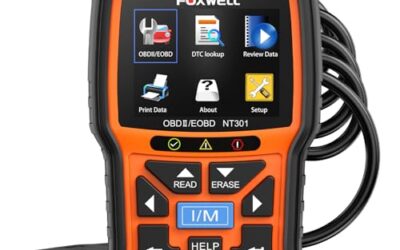
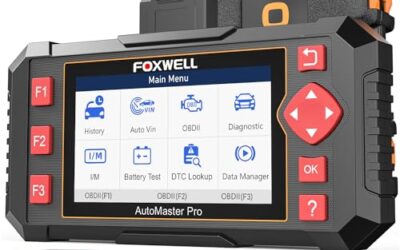
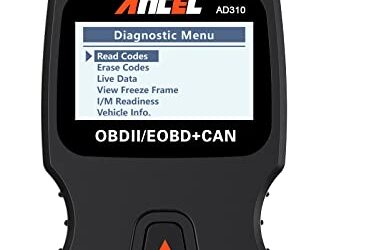
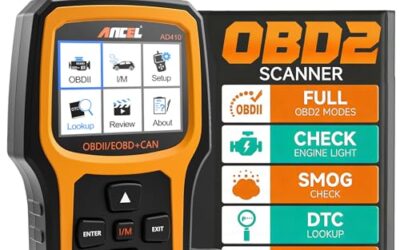
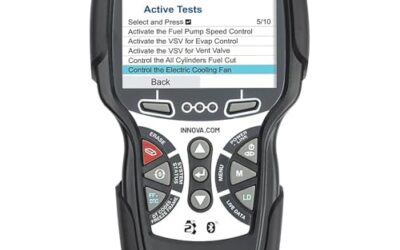
Basic OBD2 scanners often show STFT, LTFT, oxygen-sensor data, coolant temperature, engine speed, and load. More advanced tools may graph PIDs, record data, show enhanced manufacturer data, or run active tests. Match tool coverage to the vehicle, not only to the connector.
For a comparison of live-data features, see OBD2 scanners with live data for fuel-trim diagnosis. Drivers working on newer vehicles can also review advanced OBD2 scanner coverage and professional diagnostic tool functions.
Wireless scanners add phone compatibility to the list. Bluetooth version, app support, Android or iOS requirements, vehicle model year, and firmware can limit use. A wired tool may work without a phone but still lack enhanced access for certain brands.
Gear that can help
If you need OBD2 scanners for this job, these picks already appear in our OBD2 scanners guides. Check the full guide for fit and who should skip each one.

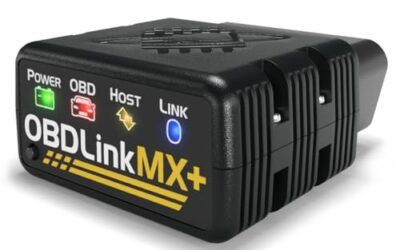
Pros
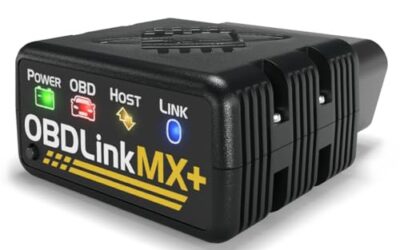
- Supports iPhone, Android, and Windows devices
- Works with a range of named diagnostic applications
- Offers enhanced OEM support for several vehicle brands
- Includes protection against over-voltage and battery drain
Cons
- Vehicle compatibility and available features should be confirmed in the troubleshooting guide before purchase
Specifications
| Color | Black |
|---|---|
| Size | Small |
| Dimensions | 2.0078740137 x 0.9055118101 x 1.8110236202 Inches |
| Weight | 0.06172943336 pounds |
| Product Group | Automotive Parts and Accessories |
| Binding | Automotive |
Best For / Avoid If
Best for buyers prioritizing
- Supports iPhone, Android, and Windows devices
- Works with a range of named diagnostic applications
- Offers enhanced OEM support for several vehicle brands
Consider another option if
- Vehicle compatibility and available features should be confirmed in the troubleshooting guide before purchase
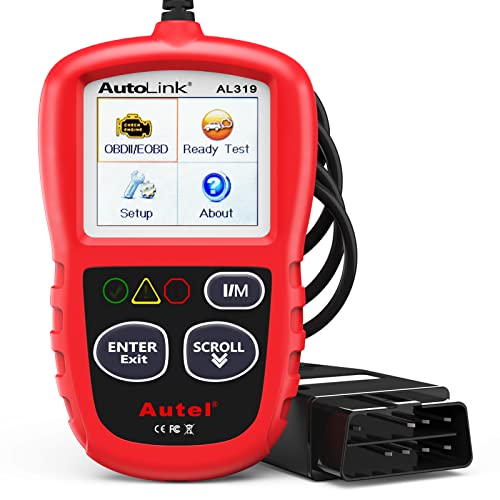
Pros
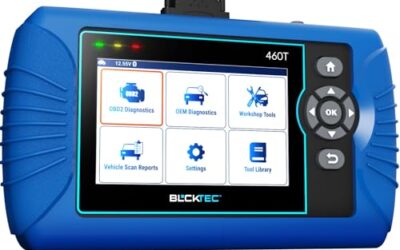
- Supports multiple diagnostic functions beyond basic code reading
- No batteries are needed for operation
- Offers seven language options, including English, French, and Spanish
- Designed with a plug-and-play interface for end users and DIYers
Cons
- The listing does not identify all seven supported languages
Specifications
| Color | OBD2 Scanner |
|---|---|
| Size | AL319 |
| Dimensions | 4.61 x 2.83 x 0.71 inches |
| Weight | 0.39021820374 Pounds |
| Product Group | Automotive Parts and Accessories |
| Binding | Automotive |
Best For / Avoid If
Best for buyers prioritizing
- Supports multiple diagnostic functions beyond basic code reading
- No batteries are needed for operation
- Offers seven language options, including English, French, and Spanish
Consider another option if
- The listing does not identify all seven supported languages

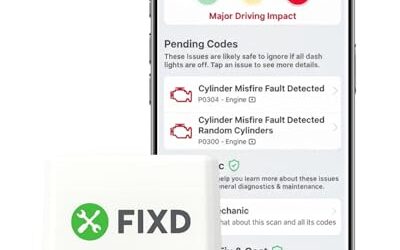
Pros
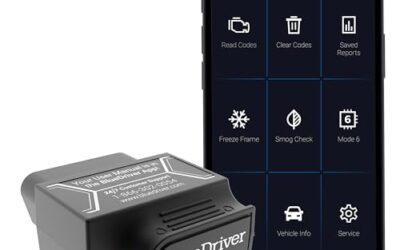
- Supports code scanning and code resets without requiring an expert
- Tracks vehicle-specific scans, mileage-based reminders, and shared results
- Compact 1.75 x 0.75 x 1.6-inch sensor is designed to stay under the dash
Cons
- Advanced features require an optional premium subscription after the 14-day trial
- Features may vary by vehicle make and model
Specifications
| Color | White |
|---|---|
| Size | 1 Pack |
| Dimensions | 1.75 x 0.75 x 1.6 inches |
| Weight | 0.06 pounds |
| Product Group | Automotive Parts and Accessories |
| Binding | Automotive |
Best For / Avoid If
Best for buyers prioritizing
- Supports code scanning and code resets without requiring an expert
- Tracks vehicle-specific scans, mileage-based reminders, and shared results
- Compact 1.75 x 0.75 x 1.6-inch sensor is designed to stay under the dash
Consider another option if
- Advanced features require an optional premium subscription after the 14-day trial
- Features may vary by vehicle make and model
FAQ
What is a normal STFT reading?
Small changes near zero are common during warm closed-loop operation, but no single range fits every vehicle. Compare the reading with service data, LTFT, engine load, and bank behavior.
Is positive fuel trim lean or rich?
Positive fuel trim means the ECU adds fuel because feedback indicates a lean condition. The cause may be low fuel delivery, unmetered air, an exhaust leak, or incorrect sensor data.
What does negative fuel trim mean?
Negative fuel trim means the ECU removes fuel because feedback indicates a rich condition. Check fuel pressure, injector leakage, purge flow, airflow data, and sensor accuracy.
Can STFT diagnose a vacuum leak?
STFT can support a vacuum-leak diagnosis when trim is high at idle and falls at raised rpm. Confirm the leak with inspection or a suitable test.
Should I reset fuel trims before testing?
Usually, record existing data first. Resetting learned values can erase clues and reset readiness monitors. A reset may be part of a documented repair procedure, but it does not fix the fault.
Sources and further reading
- J1962 Diagnostic Connector standard (SAE International): Connector requirements for standardized vehicle diagnostic equipment.
- J1979 E/E Diagnostic Test Modes standard (SAE International): Standardized diagnostic data and test modes used by OBD systems.