How to interpret long term fuel trim starts with reading its percentage, then comparing it with short term fuel trim, engine load, and oxygen sensor data. Positive numbers mean the engine computer adds fuel, while negative numbers mean it removes fuel. A scan tool shows clues, not a final diagnosis.
Key takeaways
- Positive long term fuel trim means the computer has added fuel over time.
- Negative long term fuel trim means the computer has removed fuel over time.
- Small changes can be normal. Large changes need engine speed, load, bank, and short term fuel trim context.
- High trim at idle often points toward unmetered air. High trim during acceleration can point toward low fuel delivery or restricted airflow.
- Check engine lights, fuel trim limits, and diagnostic codes vary by vehicle software and model year.
- Clearing fuel trim or trouble codes does not repair the fault.
What long term fuel trim means
Long term fuel trim, often shown as LTFT, is the engine control module’s learned fuel correction. The module compares oxygen sensor or air-fuel sensor feedback with its target mixture. It then changes injector pulse width to keep combustion near that target.
LTFT uses a percentage. A positive value means the module adds fuel because measured combustion appears too lean. A negative value means it removes fuel because combustion appears too rich. Zero means no learned correction at that operating point.
The computer usually stores separate corrections for different engine conditions. These areas can include idle, low load, cruise, and higher load. A scan tool may show one value, several load ranges, or bank-specific values. Display behavior depends on vehicle software and scanner support.
How to read positive and negative numbers
| LTFT reading | Basic meaning | Possible direction for diagnosis |
|---|---|---|
| Near 0% | Little learned correction | Look elsewhere if symptoms or codes remain |
| Positive value | Computer adds fuel | Check for lean conditions, unmetered air, low fuel pressure, or exhaust leaks before sensors |
| Negative value | Computer removes fuel | Check for excess fuel, leaking injectors, high fuel pressure, or incorrect sensor input |
| Different values by bank | One cylinder group behaves differently | Compare bank-specific intake, exhaust, injector, and sensor conditions |
There is no single LTFT percentage that proves a fault on every vehicle. Many technicians treat values close to zero as favorable, then investigate when correction becomes consistently large or pairs with symptoms. The useful question is not only whether a number is high. Ask when it becomes high and whether both fuel trim types agree.
How to interpret long term fuel trim step by step
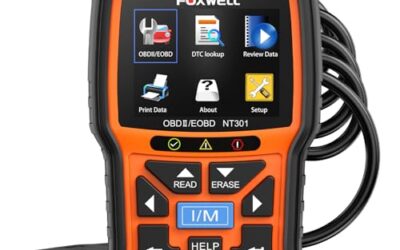
- Confirm scan data quality. Use a scanner that supports live data and the vehicle’s OBD2 protocol. Most US-market light vehicles sold from model year 1996 onward have OBD2, but enhanced manufacturer data can require different software, subscription access, or a different communication method. A basic code reader may not show LTFT.
- Record engine conditions. Note coolant temperature, engine speed, load, fuel system status, short term fuel trim, LTFT, oxygen sensor or air-fuel sensor readings, and fuel pressure when available. Readings taken during cold start can mislead because warm-up enrichment changes fueling.
- Warm the engine. Check fuel trim after coolant temperature reaches normal operating range and closed-loop operation begins. The exact temperature and operating strategy vary by vehicle. Do not treat open-loop readings as normal LTFT evidence.
- Check idle first. Let the engine stabilize without touching the accelerator. Record both banks if the engine has more than one bank. A high positive correction at idle that drops near cruise points toward air entering after the mass airflow sensor, such as an intake boot, vacuum hose, PCV path, or intake gasket.
- Raise engine speed without load. Hold a safe, moderate speed only where the vehicle and workspace allow it. Compare trim with the idle reading. If positive trim stays high or rises, the cause may affect total airflow or fuel delivery rather than only idle vacuum.
- Compare cruise and load. A road test requires safe traffic conditions and a second person when possible. High positive trim under load can point toward weak fuel delivery, restricted fuel flow, low pump output, injector limits, or incorrect airflow measurement. Do not perform aggressive testing on public roads.
- Compare STFT and LTFT. Short term fuel trim reacts quickly. LTFT changes slowly because it represents learned correction. If both values are positive, the module is correcting a current lean condition. If LTFT is strongly positive but STFT is near zero, the module may have learned an old condition, or the current operating cell may differ from the stored correction.
- Compare engine banks. One affected bank narrows the search toward that bank’s injector group, intake path, exhaust leak, or sensor. Similar trim on both banks points more toward shared fuel supply, shared airflow measurement, fuel quality, or a common vacuum source.
- Inspect and test the likely cause. Look for split hoses, loose clamps, damaged intake ducting, exhaust leaks before sensors, fuel pressure faults, injector problems, and wiring damage. Use smoke testing, fuel pressure testing, and sensor testing according to vehicle service information.
- Clear learned values only after recording data. Clearing codes or adaptive memory can erase useful clues and may reset emissions readiness monitors. It does not fix the source of the fuel trim problem. After repair, follow the vehicle’s drive cycle requirements and confirm that trim returns to a stable range.
Use short term fuel trim with LTFT
STFT and LTFT work as a pair. STFT reacts to sensor feedback in near real time. LTFT records a longer correction after the control module sees a repeatable pattern. Their sum gives a rough view of current correction, but scan tool timing and display rules vary.
For example, LTFT at plus 12% with STFT near plus 2% suggests the module has learned a lean correction and currently needs little extra adjustment. LTFT at plus 12% with STFT at plus 15% suggests the lean condition remains active. These readings require engine temperature, load, and bank context.
A negative LTFT with negative STFT suggests excess fuel or a false rich signal. Possible causes include leaking injectors, excessive fuel pressure, a purge valve stuck open, restricted air intake, or an air-fuel sensor problem. A sensor can report a rich condition without causing it, so replacing that sensor first can miss the real fault.
Fuel trim patterns and likely causes
Positive trim mostly at idle
Air entering after the airflow sensor has a larger effect at idle because the engine consumes less total air. Inspect vacuum hoses, the PCV system, intake manifold sealing, throttle body areas, and brake-booster vacuum plumbing. A smoke test can reveal leaks that visual inspection misses.
Positive trim at idle and cruise
A shared air or fuel problem becomes more likely. Check the mass airflow sensor’s wiring and installation, fuel pressure, fuel filter arrangement where serviceable, pump output, and injector balance. Some vehicles use speed-density control instead of a mass airflow sensor, so the diagnostic path changes.
Positive trim mainly under load
Fuel delivery may fall behind demand. Possible causes include low pump pressure, voltage loss at the pump, restricted fuel supply, limited injectors, or incorrect load data. A fuel pressure gauge reading at idle alone may miss a problem that appears during acceleration.
Negative trim on both banks
The engine may receive too much fuel or report a false rich state. Check fuel pressure regulation, injector leakage, purge flow, coolant temperature input, and air-fuel sensor data. Some direct-injection systems need special pressure testing equipment and service procedures.
One bank differs sharply
Focus on parts shared by that bank. Inspect its intake runner area, injectors, exhaust manifold and sensor wiring, and possible exhaust leaks before the upstream sensor. A bank comparison has less value on engines with different bank layouts or unusual firing arrangements.
Why model year and scan tool support matter
OBD2 data names are common, but data coverage is not identical across vehicles. A 1996 vehicle may expose fewer live-data parameters than a newer vehicle. Some vehicles show LTFT1 and LTFT2. Others show multiple fuel-trim cells, commanded equivalence ratio, or manufacturer-specific air-fuel data.
Voltage also matters during diagnosis. Low system voltage can affect fuel pump output, sensor heaters, communication, and actuator operation. Check battery and charging voltage when scan data appears unstable or several unrelated systems show faults.
Connector type matters too. A standard 16-pin J1962 connector does not guarantee full access to every module. Some diagnostic work needs manufacturer software, a compatible interface, a supported phone OS, current scanner firmware, or a wired connection instead of Bluetooth. Check tool support for the vehicle’s model year and engine, not only its brand.
For scanner feature context, see OBD2 scanners with live data for fuel trim and OBD2 scanners for advanced vehicle diagnostics.
Common mistakes
- Calling every positive number a vacuum leak. Fuel pressure, airflow measurement, exhaust leaks, and restricted fuel delivery can create similar readings.
- Reading data during warm-up. Open-loop enrichment can make cold readings poor evidence.
- Ignoring engine load. A trim problem at idle can have a different cause from one under acceleration.
- Replacing oxygen sensors first. Sensors report mixture conditions. They may not cause those conditions.
- Using one bank as proof for the whole engine. Bank-specific faults can hide inside an average.
- Clearing codes before recording data. Erased adaptive values can remove a useful pattern and reset readiness monitors.
- Assuming trim proves emissions compliance. A vehicle can show acceptable trim and still fail another monitor or emissions test.
When to get professional help
Get professional diagnosis when fuel trim is far from normal with a flashing check engine light, severe misfire, stalling, fuel odor, or loss of power. Stop driving when misfire could damage the catalytic converter or when fuel leakage creates a fire risk.
Professional equipment helps with smoke testing, fuel pressure under load, injector balance, oscilloscope testing, exhaust gas analysis, and manufacturer-specific data. Direct-injection fuel systems can contain very high pressure. Follow the service manual and use proper protective equipment before opening those systems.
A shop may also need wiring diagrams and bidirectional controls. Basic OBD2 access cannot command every purge valve, injector, throttle, or fuel pump. A vehicle-specific fault may require tools beyond a generic scanner.
Gear that can help
If you need OBD2 scanners for this job, these picks already appear in our OBD2 scanners guides. Check the full guide for fit and who should skip each one.

Pros
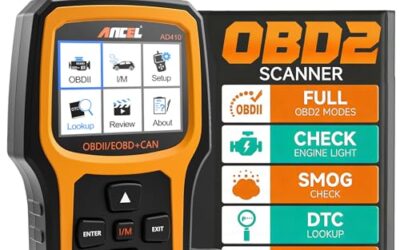
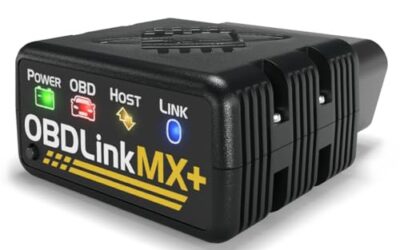
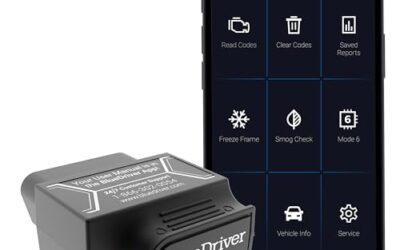
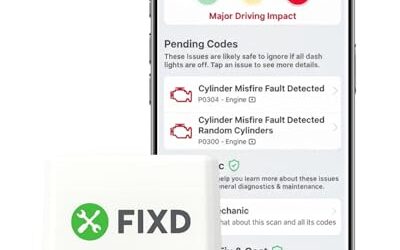
- Supports code scanning and code resets without requiring an expert
- Tracks vehicle-specific scans, mileage-based reminders, and shared results
- Compact 1.75 x 0.75 x 1.6-inch sensor is designed to stay under the dash
Cons
- Advanced features require an optional premium subscription after the 14-day trial
- Features may vary by vehicle make and model
Specifications
| Color | White |
|---|---|
| Size | 1 Pack |
| Dimensions | 1.75 x 0.75 x 1.6 inches |
| Weight | 0.06 pounds |
| Product Group | Automotive Parts and Accessories |
| Binding | Automotive |
Best For / Avoid If
Best for buyers prioritizing
- Supports code scanning and code resets without requiring an expert
- Tracks vehicle-specific scans, mileage-based reminders, and shared results
- Compact 1.75 x 0.75 x 1.6-inch sensor is designed to stay under the dash
Consider another option if
- Advanced features require an optional premium subscription after the 14-day trial
- Features may vary by vehicle make and model

Pros
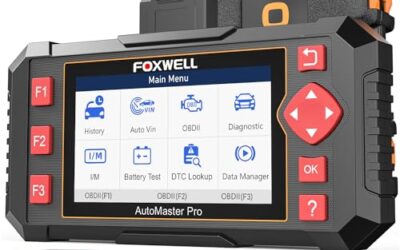
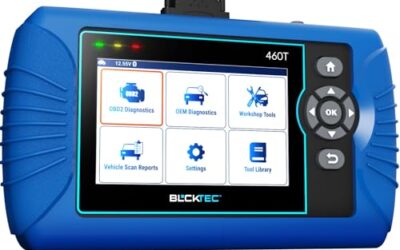
- Provides diagnostics for four major vehicle systems
- Includes useful functions such as live data and I/M readiness
- Supports automatic VIN retrieval and manual vehicle selection
- Lifetime updates and a protective case are included
Cons
- Does not support oil reset, battery registration, ABS bleeding, throttle body relearn, or ABS relearn
- SRS crash or collision data cannot be cleared
- Vehicle compatibility varies by make, model, and year, and AUTOVIN may not work on some older vehicles or brands
Specifications
| Color | red |
|---|---|
| Dimensions | 7.68 x 3.54 x 1.18 inches |
| Product Group | Automotive Parts and Accessories |
| Binding | Automotive |
Best For / Avoid If
Best for buyers prioritizing
- Provides diagnostics for four major vehicle systems
- Includes useful functions such as live data and I/M readiness
- Supports automatic VIN retrieval and manual vehicle selection
Consider another option if
- Does not support oil reset, battery registration, ABS bleeding, throttle body relearn, or ABS relearn
- SRS crash or collision data cannot be cleared
- Vehicle compatibility varies by make, model, and year, and AUTOVIN may not work on some older vehicles or brands

Pros
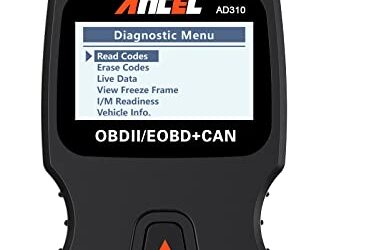
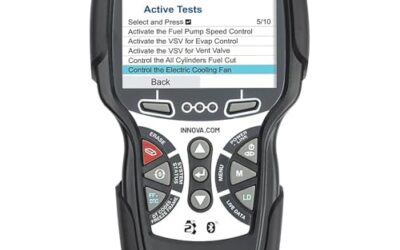
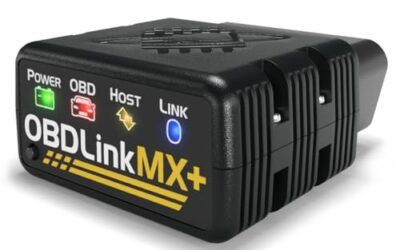
- Supports multiple common OBDII protocols, including CAN
- Provides more than basic code reading with live data, freeze-frame, and readiness information
- Powered through the vehicle, so no separate battery or charger is required
- Compact design and 12-ounce weight support portability
Cons
- Limited to emission-related diagnostics
- Requires a vehicle with an OBDII interface and does not diagnose OBDI vehicles, even with an adapter
- Vehicle compatibility should be confirmed before purchase
Specifications
| Color | Black |
|---|---|
| Dimensions | 4.9212598375 x 2.755905509 x 0.8661417314 inches |
| Product Group | Automotive Parts and Accessories |
| Binding | Automotive |
Best For / Avoid If
Best for buyers prioritizing
- Supports multiple common OBDII protocols, including CAN
- Provides more than basic code reading with live data, freeze-frame, and readiness information
- Powered through the vehicle, so no separate battery or charger is required
Consider another option if
- Limited to emission-related diagnostics
- Requires a vehicle with an OBDII interface and does not diagnose OBDI vehicles, even with an adapter
- Vehicle compatibility should be confirmed before purchase
FAQ
What is a normal long term fuel trim?
There is no universal number for every vehicle. A stable value near zero often needs less investigation than a consistently large positive or negative correction. Compare readings across temperature, load, banks, and engine operating conditions.
Is positive LTFT always a vacuum leak?
No. Positive LTFT means the computer adds fuel to correct a lean result. Vacuum leaks are one possibility. Low fuel pressure, restricted delivery, incorrect airflow data, exhaust leaks, and sensor faults can also contribute.
Can bad fuel cause high fuel trim?
Yes. Poor fuel quality or an incorrect fuel type can affect combustion and correction. Confirm the fuel used matches the vehicle manual before replacing parts.
Does resetting LTFT fix the engine?
No. Resetting adaptive memory only removes learned values. The fault returns when the control module measures the same condition again. Record data first, repair the cause, then complete the required drive cycle.
Can a basic code reader show LTFT?
Some can, but many only read and erase generic codes. Live-data support, vehicle model year, engine coverage, scanner firmware, and phone operating system can limit access.
Sources and further reading
- J1962 Diagnostic Connector standard (SAE International): Connector details for standardized vehicle diagnostic access.
- J1979 E/E Diagnostic Test Modes standard (SAE International): Definitions for standardized OBD diagnostic data and test modes.
- Vehicle Emissions Inspection and Maintenance (I/M) (US EPA): Information about emissions inspection programs and readiness considerations.