How to check floor mat pedal clearance: park on level ground, secure the vehicle, and confirm driver-side mat stays flat and anchored while each pedal moves through its full travel. If mat shifts, catches, or limits pedal movement, remove it and do not drive until the area is clear.
- Inspect only with vehicle parked and secured, never while driving.
- Use only one driver-side mat, fitted for your vehicle and attached to its floor retainers.
- Check accelerator and brake movement separately, then together.
- A mat that moves, curls, overlaps, or catches fails the check.
What you need before checking floor mat pedal clearance
You need a stationary vehicle, clear view of driver footwell, and access to mat retainers and pedals. Keep engine off. Set parking brake and select Park for an automatic, or follow your vehicle manual for a manual transmission. The vehicle must not be able to roll during inspection.
Take out bags, loose objects, and extra mats from driver footwell. Do not stack one mat over another. If vehicle uses a removable mat, lift it out and inspect carpet and anchor points for debris or damage. Do not pull or disconnect wiring under seat or carpet.
Use owner’s manual for location and use of floor mat anchors. Mat shape, attachment points, pedal layout, and floor contours vary by vehicle model and model year. A mat that fits one trim or model year may not fit another. If mat or vehicle instructions conflict with general steps here, follow vehicle instructions.
How to check floor mat pedal clearance step by step
- Park and secure vehicle. Choose flat ground away from traffic. Turn engine off, apply parking brake, and keep transmission in Park or the gear specified by owner’s manual. Do not perform inspection with vehicle moving.
- Check mat position. Driver-side mat should lie flat in its intended position. Look for curled corners, folded edges, bunching, or material extending beneath pedals. Check that it does not cover accelerator or brake pedal faces.
- Attach mat to retainers. If vehicle has floor mat hooks, clips, or other retainers, align mat holes and secure them as instructed. Do not cut mat, add improvised fasteners, or force a mismatched opening onto a retainer.
- Test accelerator movement. With engine off, press accelerator slowly through its available travel and release it. Watch and feel for mat contact, drag, or resistance. Pedal should return as vehicle instructions describe. Do not press hard against an obstruction.
- Test brake movement. Press brake pedal through its normal stationary range. Confirm mat does not catch pedal, block travel, or shift toward it. Brake pedal feel can differ with engine off, so assess clearance and movement, not whether pedal feels like it does during powered operation.
- Check pedals together. Press and release each pedal again while watching mat edge and anchors. Check clearance from both pedal arms and pedal faces. Use a flashlight if needed; do not put fingers beneath a pedal while moving it.
- Recheck anchor security. Gently tug mat edge by hand, away from pedals. Mat should remain attached and flat. If it pulls free, slips, or no longer aligns with retainers, remove it.
- Repeat after any change. Recheck after cleaning, moving a seat, reinstalling mat, or switching seasonal mats. Seat position can change how driver’s foot approaches pedal area.
Do not start the engine to test pedal clearance. Do not drive around the block as a test. A visual and stationary movement check can identify interference, but it cannot certify every condition that may occur during driving.
What counts as enough clearance?
There is no single gap measurement that applies to every vehicle and mat. Pedal shape, mounting point, mat thickness, carpet contour, and vehicle-specific instructions differ. Use a functional test: pedal must move through its intended range without touching, dragging, or pushing mat, and mat must stay anchored during pedal operation.
| Inspection result | What it means | Next step |
|---|---|---|
| Mat stays flat and attached; pedals move freely | No interference found during stationary check | Recheck if mat moves or footwell setup changes |
| Mat edge curls or shifts during pedal use | Mat may catch or obstruct pedal | Remove mat; check fit and retainers |
| Mat does not align with vehicle anchors | Fitment may be wrong or mat may be damaged | Do not use it in driver footwell |
| Pedal catches or does not return normally | Possible interference or separate pedal issue | Do not drive; seek qualified inspection |
Why vehicle and mat fitment matter
Floor mats are not universal just because their outlines look similar. Pedal clearance depends on mat length and width, floor shape, anchor position, and trim details. Model-year changes can alter footwell shape or retention hardware. Driver-side mats may also differ from passenger-side or rear mats.
Choose a mat specified for exact vehicle model and model year, then compare its retention points with vehicle’s factory anchors. If vehicle has factory mat retainers, do not remove, relocate, or replace them with improvised hardware. If mat lacks matching anchor openings, it is not a safe driver-side fit.
Material and thickness can affect how mat bends or holds shape, but material alone does not prove fit. A rigid edge can still interfere if mat outline is wrong. A flexible mat can still shift if it lacks proper retention. Fit and secure attachment matter more than appearance.
For fitment context, see how floor mat fitment is assessed for an F-350 crew cab. Vehicle-specific details in that guide do not establish fit for other models.
Common mistakes
- Stacking mats. Extra layers can shift, bunch, or raise mat surface near pedals. Use one correctly fitted driver-side mat.
- Assuming universal fit means safe fit. A mat can cover carpet yet miss factory retainers or extend beneath pedals.
- Leaving mat unsecured. A loose mat may move after the stationary check. Engage original retention system as instructed.
- Checking only one pedal. Accelerator and brake occupy different positions and move differently. Check both independently and together.
- Testing while engine runs or vehicle moves. This adds risk and does not improve basic clearance inspection. Keep vehicle parked and secured.
- Trimming mat without instructions. Cutting can weaken mat or leave it unable to attach correctly. Use a mat made for vehicle instead.
- Ignoring changes after cleaning. A mat can be reinstalled crooked or left unattached. Repeat inspection after removal and reinstallation.
When to get professional help
Do not drive if mat touches a pedal, blocks its travel, or moves into pedal area. Remove the mat and keep it out of driver footwell until correct fit and secure attachment are clear.
Seek a qualified mechanic or vehicle dealer if pedal catches or fails to return even with mat removed, if factory retainers are broken or missing, or if you cannot identify correct mat attachment points. A pedal problem may be separate from floor mat fit. Do not assume removing mat fixed a pedal fault without checking normal operation.
Gear that can help
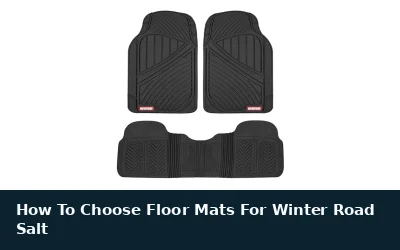
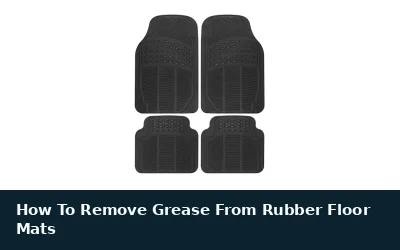
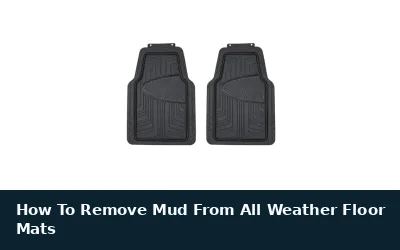
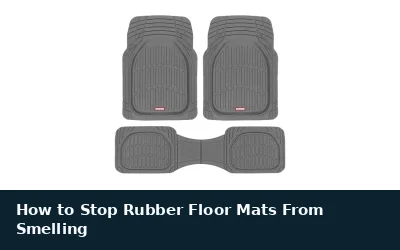
If you need all-weather floor mats and liners for this job, these picks already appear in our all-weather floor mats and liners guides. Check the full guide for fit and who should skip each one.

Pros
- Complete four-piece set covers the front and rear seating areas
- Anti-slip rubberized nibs are included on the bottom of each mat
- Padded heel rest and ergonomic grooves add comfort and traction
- Fits most cars, trucks, vans, and SUVs according to the listing
Cons
- Semi-universal sizing may not fit every vehicle
- The listing does not include detailed vehicle-specific compatibility information
Specifications
| Color | Black |
|---|---|
| Size | 25"L x 17.5"W (Front), 13"L x 17.5"W(Rear) |
| Dimensions | 26.1811 x 17.9133 x 0.7874 Inches |
| Weight | 3.77 Pounds |
| Product Group | Automotive Parts and Accessories |
| Binding | Automotive |
Best For / Avoid If
Best for buyers prioritizing
- Complete four-piece set covers the front and rear seating areas
- Anti-slip rubberized nibs are included on the bottom of each mat
- Padded heel rest and ergonomic grooves add comfort and traction
Consider another option if
- Semi-universal sizing may not fit every vehicle
- The listing does not include detailed vehicle-specific compatibility information

Pros
- All-weather design is intended to help protect vehicle carpets from spills, dirt, and snow
- Front and rear mats can be cut to the desired size
- Specified dimensions are provided for both front and rear mats
Cons
- Universal fit may require trimming for a suitable vehicle-specific fit
- Mats may have slight creases after packaging that need tidying or exposure to sunlight to disappear
Specifications
| Color | BLack Red |
|---|---|
| Dimensions | 27.2 x 17.3 x 2 inches |
| Product Group | Automotive Parts and Accessories |
Best For / Avoid If
Best for buyers prioritizing
- All-weather design is intended to help protect vehicle carpets from spills, dirt, and snow
- Front and rear mats can be cut to the desired size
- Specified dimensions are provided for both front and rear mats
Consider another option if
- Universal fit may require trimming for a suitable vehicle-specific fit
- Mats may have slight creases after packaging that need tidying or exposure to sunlight to disappear

Pros
- Waterproof and stain-resistant materials support easier cleaning
- Heavy nibbed backing helps reduce mat movement
- Four-piece set covers front and rear footwells
Cons
- Universal-fit design may require measurement before installation
- Exact binding type is listed as unknown
Specifications
| Color | All Black |
|---|---|
| Dimensions | 25.1968 x 17.3228 x 0.15748 inches |
| Weight | 3.99918543268 pounds |
| Product Group | Automotive Parts and Accessories |
| Binding | Unknown Binding |
Best For / Avoid If
Best for buyers prioritizing
- Waterproof and stain-resistant materials support easier cleaning
- Heavy nibbed backing helps reduce mat movement
- Four-piece set covers front and rear footwells
Consider another option if
- Universal-fit design may require measurement before installation
- Exact binding type is listed as unknown
Before you buy, it is worth reading Car Floor Mat Buying Guide and Best Car Floor Mat.
FAQ
Should I check pedal clearance with engine running?
No. Keep vehicle parked and engine off for this inspection. If pedal movement or return seems abnormal with mat removed, do not drive; get qualified help.
Can I use two driver-side floor mats?
No. Stacking mats adds a loose layer that can move or interfere with pedal operation. Use one correctly fitted mat attached to vehicle retainers.
How often should I recheck clearance?
Check after installing, cleaning, or moving a mat, and after changing seat position if that affects footwell access. Recheck promptly if mat looks shifted or pedal movement feels different.
Does a mat need a visible gap from every pedal?
Not necessarily. Mat must not contact or restrict pedal during its intended movement. No single universal gap measurement applies across vehicle designs.
Can I trim a mat that catches the accelerator?
Do not use a mat that catches. Replace it with one made for exact vehicle fit unless mat and vehicle instructions specifically permit a particular adjustment.