Yes, you can jump start an EV 12v battery in many models, but only through the vehicle’s specified 12-volt terminals or jump points. A jump can wake the vehicle’s computers and close its high-voltage contactors, but it does not charge the main traction battery or fix a failed 12-volt battery.
Use the owner’s manual for exact terminal locations and connection order. EV model year, trim, battery type, and regional configuration can change the procedure.
Key takeaways
- EVs use a separate low-voltage battery for computers, locks, lights, displays, and control systems.
- A 12-volt jump starter or another 12-volt vehicle can often supply temporary power.
- Never connect equipment to orange high-voltage cables, service plugs, or traction-battery terminals.
- Do not assume a successful jump means the 12-volt battery is healthy.
- Some EVs require a specific recovery procedure after low-voltage power loss.
- A jump will not add meaningful range to a depleted high-voltage battery.
Why does an EV have a 12-volt battery?
An EV still needs low-voltage power for basic control systems. The 12-volt battery may run door locks, alarm systems, interior lights, screens, communication modules, brake controls, and computers before the vehicle becomes ready to drive.
The traction battery stores much more energy, but it normally stays electrically isolated when the vehicle is off. Control modules first use the 12-volt system. After those modules wake up and approve operation, contactors connect the high-voltage battery to the drive system.
This arrangement means a weak 12-volt battery can make an EV appear completely dead. The large battery may still have charge, yet the vehicle cannot unlock, boot, select drive, or close its high-voltage contactors.
Can you jump start an EV 12v battery safely?
Usually, yes, if the owner’s manual permits external 12-volt assistance. The jump point may sit under the hood, behind a fuse-box cover, or inside a dedicated service area. Some EVs use a conventional lead-acid battery. Others use an absorbed glass mat or lithium low-voltage battery.
Voltage matters. A normal automotive jump starter supplies 12-volt system power. Do not use a 24-volt truck booster, welding equipment, battery charger set to an unknown mode, or any device that exceeds the vehicle’s instructions.
Connector location matters too. Some EVs provide remote positive and negative posts rather than direct battery access. A painted body bolt, random bracket, or high-voltage ground point may not be an approved connection.
What you need before attempting a jump
- Owner’s manual or official roadside procedure for your exact model and model year.
- A charged 12-volt jump starter with suitable clamps, or another 12-volt vehicle approved by the manual.
- Safety glasses and gloves where practical.
- Clear access to the approved positive and negative jump points.
- Vehicle parked safely, with the parking brake applied and transmission in Park.
A portable jump starter avoids running a second vehicle and reduces the chance of an incorrect donor connection. Its output still must match the EV’s instructions. A jump starter for gas or diesel vehicles does not automatically fit every EV connection layout.
How to jump start an EV 12v battery
Use this sequence only when it matches your owner’s manual. Manual instructions control if they differ.
- Secure both vehicles or the jump pack. Park on stable ground. Keep traffic away. Turn off lights, climate controls, audio systems, and accessories.
- Locate the approved jump points. Open the service panel or hood area described in the manual. Do not remove covers around orange cables or touch high-voltage parts.
- Confirm voltage. Use a 12-volt source. Do not connect a 24-volt system or a source with an unknown setting.
- Connect positive first. Attach the red clamp to the EV’s marked positive jump post. Attach the other red clamp to the donor battery positive terminal if using another vehicle.
- Connect negative last. Attach the black clamp to the EV’s approved negative post or ground point. If using another vehicle, connect the other black clamp to the donor negative terminal or the location specified by its manual.
- Allow the EV to wake. Wait briefly, then press the brake pedal and use the power control as the manual directs. Some models need several seconds before the display and ready indicator appear.
- Remove cables in reverse order. Turn off the donor vehicle if the manual requires it. Remove the negative connection first, then the positive connection. Prevent clamps from touching each other or exposed metal.
- Keep the EV on or in its ready state. Follow the model’s instructions for the required period. This lets the vehicle’s DC-to-DC converter support the low-voltage system.
- Arrange a battery test. If the 12-volt battery discharged once, have it tested and inspect the charging system. A jump restores operation temporarily, not battery capacity.
Can another car jump an EV?
Often, but the owner’s manual decides. A gasoline vehicle with a healthy 12-volt system can provide temporary power. The donor engine may need to remain off because some EV manuals prohibit using a running donor vehicle.
Do not use an EV’s high-voltage battery as a donor source. Most EVs cannot provide conventional 12-volt jump power through their charge port or traction system. Even when an accessory outlet exists, it may not support jump-start current.
Using a portable 12-volt jump starter is often easier at the roadside. It avoids vehicle-to-vehicle positioning and reduces variables. It still cannot help if the EV has a damaged cable, blown fuse, failed DC-to-DC converter, or internal high-voltage fault.
What if the EV does not wake after a jump?
Start with simple checks:
- No lights or display: Recheck clamp contact, polarity, approved posts, and jump-pack charge.
- Clicking or repeated resets: The 12-volt battery may be deeply discharged or internally damaged.
- Lights work but vehicle stays not ready: The EV may need a specific brake, key, charging-cable, or power-button sequence.
- Warning about electrical or high-voltage systems: Stop repeated attempts and request roadside service.
- Vehicle wakes, then dies: Suspect a weak 12-volt battery, DC-to-DC converter issue, loose connection, or related fuse.
A damaged 12-volt battery may absorb enough power to prevent the vehicle from booting. Holding a jump pack connected longer may not solve that problem. Repeated attempts can also create heat or electrical stress.
EV 12-volt battery versus traction battery
| System | Job | Can a normal jump starter charge it? |
|---|---|---|
| 12-volt battery | Runs low-voltage electronics and wakes vehicle controls. | It can provide temporary power or assist startup. |
| High-voltage traction battery | Runs the motor and stores driving energy. | No. A jump starter does not recharge it. |
| DC-to-DC converter | Uses traction-battery energy to maintain the low-voltage system while ready. | No. Converter faults need diagnosis. |
If the traction battery is empty, a 12-volt jump may let the car unlock and display information, but the vehicle may still show zero range. Use an approved charging station or arrange transport according to the manual.
Common mistakes
- Connecting to orange cables: Orange usually identifies high-voltage wiring. Keep away from it.
- Using a 24-volt booster: Excess voltage can damage vehicle electronics.
- Guessing the ground point: Use the marked terminal or manual-approved ground.
- Jumping through the charge port: The charge port is not a universal 12-volt access point.
- Leaving accessories on: Lights, climate systems, and infotainment consume the limited recovery power.
- Assuming the battery is fixed: A jump can hide a battery nearing failure.
- Repeatedly cycling power: Several failed attempts can drain the booster and complicate diagnosis.
- Forcing a locked hood or hatch: Use the mechanical release procedure in the manual.
When to get professional help
Call roadside assistance or an EV-qualified technician when the manual prohibits an external jump, the approved terminals are inaccessible, or the vehicle shows high-voltage warnings. Professional help also fits a battery that will not hold charge, a damaged cable, smoke, heat, corrosion, fluid leakage, or a crash history.
Request EV-capable recovery if the vehicle cannot enter neutral or roll safely. Some EVs require flatbed transport. Towing with driven wheels on the ground can damage the motor, reduction gear, or electrical system on certain models.
Ask for a low-voltage battery test, charging-system check, and fault scan. Clearing a warning code does not repair a weak battery or failed converter. Model-year software can also change wake-up and charging behavior, so service information for the exact vehicle matters.
How to prevent another dead EV 12-volt battery
- Keep the key fob away from the vehicle if the manual warns about repeated wake cycles.
- Close doors, hatch, and charge-port doors fully.
- Remove aftermarket accessories that remain powered while parked.
- Use the vehicle’s storage or transport mode for long parking when available.
- Follow the manual for low-voltage battery maintenance and replacement.
- Have unexplained repeated discharge diagnosed instead of relying on repeated jumps.
Long parking periods affect EVs differently by model. Battery-management software, alarm activity, connected services, temperature, and low-voltage battery age can all affect standby drain.
Gear that can help
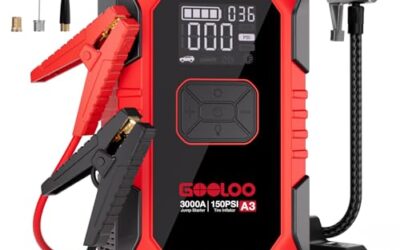
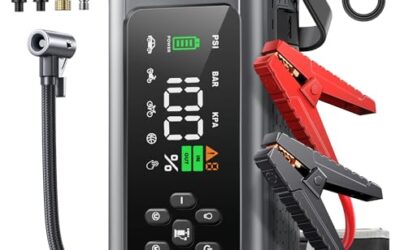
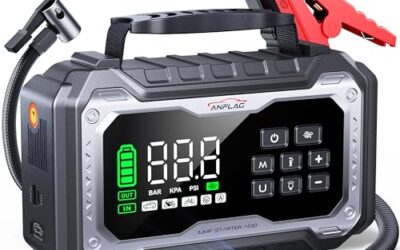
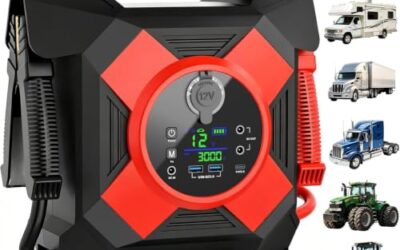
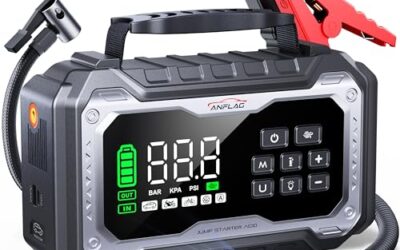
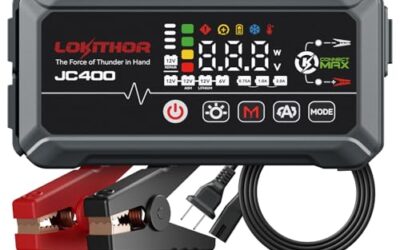
If you need jump starters for this job, these picks already appear in our jump starters guides. Check the full guide for fit and who should skip each one.

Pros
- High 1000-amp peak rating for a compact 2.5-pound jump starter
- Stated compatibility with 12V vehicles and engines up to 6.0L gas or 3.0L diesel
- Built-in spark-proof and reverse-polarity protection
- Adds power-bank and flashlight functionality for emergency use
Cons
- The stated engine compatibility is limited to up to 6.0L gas and 3.0L diesel
- The listed warranty period is one year
Specifications
| Color | Gray |
|---|---|
| Size | 1000 Amps |
| Dimensions | 6.5748031429 x 3.149606296 x 7.7165354252 Inches |
| Weight | 2.4 Pounds |
| Product Group | Automotive Parts and Accessories |
| Binding | Automotive |
Best For / Avoid If
Best for buyers prioritizing
- High 1000-amp peak rating for a compact 2.5-pound jump starter
- Stated compatibility with 12V vehicles and engines up to 6.0L gas or 3.0L diesel
- Built-in spark-proof and reverse-polarity protection
Consider another option if
- The stated engine compatibility is limited to up to 6.0L gas and 3.0L diesel
- The listed warranty period is one year

Pros
- High listed 7000A peak-current output
- Supports the stated range of gas and 12.0L diesel engines
- Includes forced-start functionality for fully drained batteries
- Combines jump-starting, USB charging, and emergency lighting in one portable unit
- Uses metal clamps and lists 14 safety protections
Cons
- The source data does not identify a separate wall charger or its specifications
Best For / Avoid If
Best for buyers prioritizing
- High listed 7000A peak-current output
- Supports the stated range of gas and 12.0L diesel engines
- Includes forced-start functionality for fully drained batteries
Consider another option if
- The source data does not identify a separate wall charger or its specifications

Pros
- Supports a stated range of gas and diesel engine sizes
- Combines jump-starting capability with power-bank and emergency-light functions
- Includes reverse-polarity, short-circuit, overheating, overvoltage, overload, deep-discharge, and overcurrent protections
- Provides a built-in handle for portability
Specifications
| Color | Gray-blue |
|---|---|
| Dimensions | 7.4409448743 x 3.6614173191 x 1.7716535415 inches |
| Weight | 1.4109584768 pounds |
| Product Group | Automotive Parts and Accessories |
| Binding | Automotive |
Best For / Avoid If
Best for buyers prioritizing
- Supports a stated range of gas and diesel engine sizes
- Combines jump-starting capability with power-bank and emergency-light functions
- Includes reverse-polarity, short-circuit, overheating, overvoltage, overload, deep-discharge, and overcurrent protections
FAQ
Can I use a lithium jump starter on an EV?
Usually, a 12-volt lithium jump starter can provide temporary power if its output and connection method match the owner’s manual. Its chemistry does not override voltage, polarity, current, or terminal requirements.
Will jumping the 12-volt battery charge the EV?
No. It can wake the vehicle and allow normal charging to begin. The traction battery charges through the vehicle’s approved AC or DC charging system.
How long should I leave the jump starter connected?
Follow the model and jump-starter instructions. Disconnect after the EV reaches its ready state or after the stated procedure. Longer connection time does not repair a failed battery.
Can I jump start an EV in the rain?
Follow the manual and keep connections dry when possible. Avoid standing water, damaged cables, exposed conductors, and any high-voltage component. Stop if conditions make safe clamp placement uncertain.
Does every EV have a 12-volt battery?
Most modern EVs use a low-voltage battery, but voltage, chemistry, location, and service procedure vary. Some newer vehicles use a different low-voltage architecture. The exact manual controls.
Related reading
For equipment selection, see the guide to jump starters for stored vehicles and the cold-weather jump starter guide. Battery basics also appear on the Battery Council International website.
Sources and further reading
- Battery Council International (Battery Council International): Battery safety and general battery information.