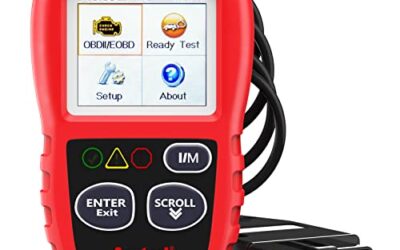
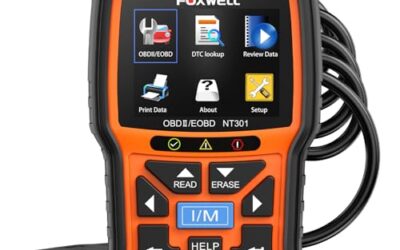
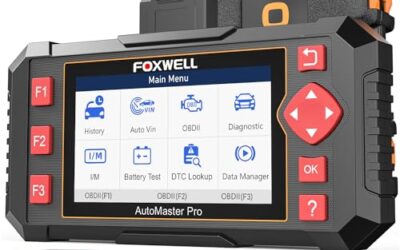
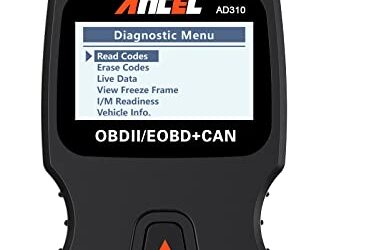
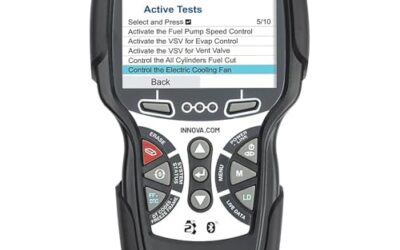
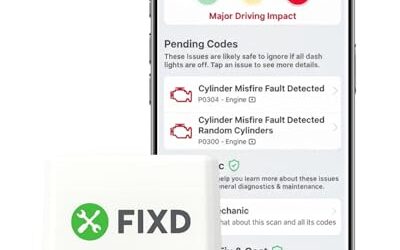
Can an OBD2 scanner read hybrid battery data? Yes, but only when scanner coverage includes your vehicle’s hybrid control modules and the data those modules share through the diagnostic connector. A basic code reader may show a check-engine code while hiding battery readings, while an advanced scan tool may display battery block voltage, temperature, state of charge, current, and cooling data.
Key takeaways
- Basic OBD2 readers usually focus on emissions-related powertrain codes.
- Hybrid battery readings often sit inside battery, hybrid control, inverter, or vehicle control modules.
- Useful data can include battery block voltage, state of charge, current, temperature, fan speed, and isolation faults.
- Vehicle model year, hybrid system type, connector support, software, and regional configuration affect access.
- A scanner reading can point toward a fault, but it cannot prove battery pack health by itself.
- High-voltage hybrid parts can remain dangerous after shutdown. Do not open or probe the battery pack without proper training.
What hybrid battery data can an OBD2 scanner read?
The answer depends on which control module the scanner can access. Hybrid vehicles use several modules to monitor and control the high-voltage system. Names vary by manufacturer, but common examples include a hybrid vehicle control module, battery energy control module, battery management system, inverter control module, and engine control module.
When supported, live data may show individual battery block voltages, pack voltage, battery current, state of charge, state of health estimates, battery temperatures, cooling fan commands, and charging or discharging status. Some vehicles also expose cell voltage, isolation resistance, contactor status, regenerative braking data, and inverter temperature.
“Battery block” does not always mean one physical cell. Manufacturers group cells into monitored sections, and the scanner may show each group as Block 1, Block 2, or another label. A voltage difference between blocks can help identify an imbalance, but the reading needs context from load, temperature, charge level, and vehicle operation.
Why basic OBD2 scanners may not show it
Federal OBD2 rules focus mainly on emissions-related diagnostics. The standard diagnostic connector gives a vehicle a common access point, but it does not force every manufacturer to expose every hybrid parameter through every scanner.
A low-cost code reader may support generic powertrain codes and a limited set of live data. That support can cover engine speed, coolant temperature, fuel trims, oxygen sensor data, and similar emissions information. It may not communicate with the hybrid battery module at all.
Some scanners advertise hybrid support but limit that support to code reading. Others offer live data only for selected models or model years. A device may connect to a 2015 vehicle but lack coverage for a similar 2022 model because software definitions and module communication changed.
The connector also matters. Most modern US vehicles use a 16-pin J1962 diagnostic connector, but connector presence does not prove full hybrid access. Communication may use CAN networks, manufacturer-specific protocols, gateway security, or module authorization.
OBD2 scanner data versus a battery health test
A scanner shows what vehicle modules report. A battery health test asks a broader question: how well can the pack deliver and accept energy under controlled conditions?
| Reading or test | What it can show | What it cannot prove alone |
|---|---|---|
| Battery block voltage | Voltage balance at a moment in time | Long-term capacity or failure under load |
| State of charge | Estimated stored energy level | Remaining battery life |
| Battery temperature | Heat across monitored areas | Whether cooling airflow is adequate without further checks |
| Battery current | Charge or discharge activity | Maximum safe output capacity |
| State of health estimate | Module-calculated condition estimate | Independent confirmation of usable capacity |
| Fault codes | Conditions the control system detected | The exact failed part in every case |
Battery control modules calculate many values from sensors, operating history, and internal models. A normal-looking reading at idle does not rule out a problem during acceleration, regenerative braking, or high battery temperature. A stored code also needs freeze-frame data, service information, and a test plan.
Which hybrid systems may be supported?
Hybrid support varies by system type. Full hybrids can run the vehicle with the engine, electric motor, or both. Plug-in hybrids add a larger battery, charging hardware, and more operating modes. Mild hybrids often use a lower-voltage system and may expose different data. Some vehicles combine a high-voltage traction battery with a separate 12-volt battery and DC-to-DC converter.
Scanner coverage can also differ between conventional hybrids, plug-in hybrids, fuel-cell vehicles, and battery-electric vehicles. A tool that reads Toyota hybrid battery data may not read Ford, Honda, Hyundai, Kia, Lexus, or European vehicle modules in the same way. Brand coverage does not guarantee coverage for every platform from that brand.
Model year matters because manufacturers can change battery chemistry, module names, communication gateways, and security controls. A vehicle built for the US market may expose different functions than a similar vehicle sold in another region. Always use coverage information for the exact year, model, engine, hybrid system, and market.
What scanner features matter?
Full-system scanning
Full-system scanning lets the tool query more than the engine module. Look for access to hybrid control, battery, inverter, transmission, brake, and body modules when those modules apply to the vehicle. This feature gives a better view of hybrid faults than generic OBD2 mode alone.
Live data with graphing
Graphing helps compare battery block voltages, temperatures, and current while the vehicle changes operating state. A list of numbers can hide a brief voltage drop. Graphs can reveal patterns, but only when the scanner samples quickly enough and the vehicle is operated safely.
Bidirectional controls
Some advanced tools can command a cooling fan, contactor, relay, or other actuator. This can help a trained technician test system response. Bidirectional control can also create risk if used without the correct procedure, so it is not the same as ordinary live-data access.
Security access and gateway support
Some newer vehicles protect diagnostic functions behind a security gateway. The scanner may read generic codes but block manufacturer-specific modules or active tests. Access may require an account, paid authorization, an approved adapter, or a shop-level subscription.
App, phone, and adapter compatibility
Bluetooth and Wi-Fi adapters depend on phone hardware, operating system, app support, and firmware. An adapter may work with Android but not iPhone, or with one app but not another. Bluetooth versions and permissions can affect connection stability. Wired tools avoid some wireless issues but still need current vehicle coverage.
How to check hybrid battery data safely
- Identify vehicle year, make, model, powertrain, and market. Record whether it is a hybrid, plug-in hybrid, mild hybrid, or battery-electric vehicle.
- Read the scanner coverage list for the exact vehicle. Look for hybrid battery or battery management live data, not only generic OBD2 code reading.
- Update scanner firmware and vehicle software definitions before connecting. Old coverage can hide newer module support.
- Park outdoors or in a well-ventilated area when possible. Set the parking brake and keep the vehicle secure.
- Connect through the diagnostic port with the ignition state required by the vehicle and scanner instructions.
- Run a full system scan before clearing anything. Save codes, freeze-frame details, and module names.
- Open live data for the hybrid battery or battery management module. Record values with the vehicle in the operating state specified by service information.
- Compare related readings instead of judging one number alone. Compare battery blocks with each other, temperatures across sensors, and current with charge or discharge state.
- Stop if the scan tool requests a service procedure you do not understand. Do not command contactors, high-voltage relays, or cooling systems without correct instructions.
Do not touch orange high-voltage cables, battery terminals, inverter terminals, or exposed components. Turning the vehicle off does not make every high-voltage part safe. Service disconnects, capacitors, interlock circuits, and required wait times vary by vehicle.
Can a scanner identify a failing hybrid battery?
It can provide clues, but it cannot make that diagnosis from one screen. Repeated voltage imbalance, abnormal temperature spread, rapid state-of-charge swings, isolation faults, or battery-related trouble codes can support a battery diagnosis.
Other faults can create similar readings. A blocked battery air inlet, failed cooling fan, damaged temperature sensor, weak 12-volt battery, loose connection, inverter fault, wiring problem, or software issue can affect hybrid operation. Battery readings can also change with ambient temperature, battery age, driving load, and charge level.
A useful diagnosis combines scan data with symptoms, code definitions, service tests, wiring checks, and a proper load or capacity assessment. A replacement battery decision should not rest on a single block-voltage difference or a generic scanner message.
Common mistakes
- Assuming every OBD2 reader supports hybrids: Generic emissions access does not equal hybrid battery access.
- Reading only engine codes: Hybrid faults may be stored in battery, inverter, brake, or vehicle control modules.
- Calling state of charge battery health: A full charge reading describes current charge, not remaining service life.
- Judging one voltage snapshot: Battery behavior under changing load can matter more than an idle reading.
- Clearing codes before recording them: Clearing erases useful diagnostic clues and does not repair the fault.
- Ignoring the 12-volt battery: Low auxiliary voltage can cause communication and control problems in hybrid vehicles.
- Using an unrelated app: A working adapter connection does not prove that the app supports hybrid modules.
- Opening the battery pack: High-voltage work requires vehicle-specific training, insulated equipment, and correct isolation procedures.
When to get professional help
Use a qualified hybrid technician when the vehicle shows a high-voltage warning, isolation fault, battery overheating, smoke, burning odor, crash damage, or a no-start condition involving the hybrid system. Professional help also makes sense when the scanner cannot access the battery module, codes return after clearing, or readings conflict with vehicle behavior.
Choose a shop with training for your vehicle brand and hybrid system. Ask whether the diagnosis includes battery data, cooling-system checks, 12-volt testing, isolation testing, and manufacturer service procedures. A general code scan may be useful first, but it may not cover the tests needed for a hybrid repair.
For broader scanner selection, see CarTechTalk’s guide to OBD2 scanners for advanced use and its guide to professional car diagnostic tools. Live-data basics also appear in the guide to OBD2 scanners for live data and fuel trim.
Gear that can help
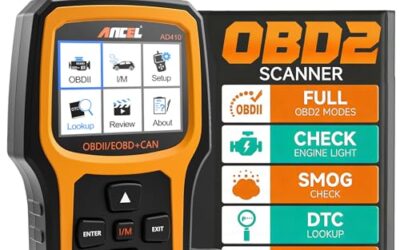
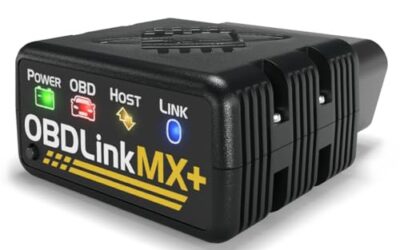
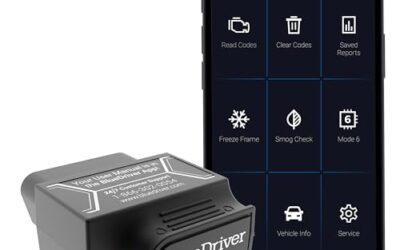
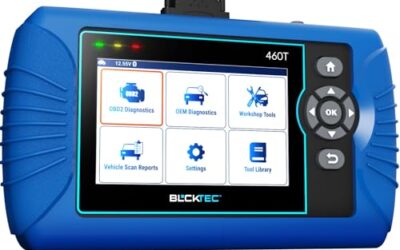
If you need OBD2 scanners for this job, these picks already appear in our OBD2 scanners guides. Check the full guide for fit and who should skip each one.
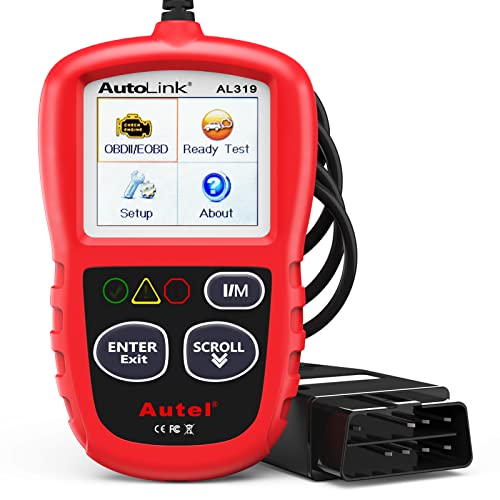
Pros
- Supports multiple diagnostic functions beyond basic code reading
- No batteries are needed for operation
- Offers seven language options, including English, French, and Spanish
- Designed with a plug-and-play interface for end users and DIYers
Cons
- The listing does not identify all seven supported languages
Specifications
| Color | OBD2 Scanner |
|---|---|
| Size | AL319 |
| Dimensions | 4.61 x 2.83 x 0.71 inches |
| Weight | 0.39021820374 Pounds |
| Product Group | Automotive Parts and Accessories |
| Binding | Automotive |
Best For / Avoid If
Best for buyers prioritizing
- Supports multiple diagnostic functions beyond basic code reading
- No batteries are needed for operation
- Offers seven language options, including English, French, and Spanish
Consider another option if
- The listing does not identify all seven supported languages

Pros
- Supports code scanning and code resets without requiring an expert
- Tracks vehicle-specific scans, mileage-based reminders, and shared results
- Compact 1.75 x 0.75 x 1.6-inch sensor is designed to stay under the dash
Cons
- Advanced features require an optional premium subscription after the 14-day trial
- Features may vary by vehicle make and model
Specifications
| Color | White |
|---|---|
| Size | 1 Pack |
| Dimensions | 1.75 x 0.75 x 1.6 inches |
| Weight | 0.06 pounds |
| Product Group | Automotive Parts and Accessories |
| Binding | Automotive |
Best For / Avoid If
Best for buyers prioritizing
- Supports code scanning and code resets without requiring an expert
- Tracks vehicle-specific scans, mileage-based reminders, and shared results
- Compact 1.75 x 0.75 x 1.6-inch sensor is designed to stay under the dash
Consider another option if
- Advanced features require an optional premium subscription after the 14-day trial
- Features may vary by vehicle make and model

Pros
- Provides diagnostics for four major vehicle systems
- Includes useful functions such as live data and I/M readiness
- Supports automatic VIN retrieval and manual vehicle selection
- Lifetime updates and a protective case are included
Cons
- Does not support oil reset, battery registration, ABS bleeding, throttle body relearn, or ABS relearn
- SRS crash or collision data cannot be cleared
- Vehicle compatibility varies by make, model, and year, and AUTOVIN may not work on some older vehicles or brands
Specifications
| Color | red |
|---|---|
| Dimensions | 7.68 x 3.54 x 1.18 inches |
| Product Group | Automotive Parts and Accessories |
| Binding | Automotive |
Best For / Avoid If
Best for buyers prioritizing
- Provides diagnostics for four major vehicle systems
- Includes useful functions such as live data and I/M readiness
- Supports automatic VIN retrieval and manual vehicle selection
Consider another option if
- Does not support oil reset, battery registration, ABS bleeding, throttle body relearn, or ABS relearn
- SRS crash or collision data cannot be cleared
- Vehicle compatibility varies by make, model, and year, and AUTOVIN may not work on some older vehicles or brands
FAQ
Can a cheap OBD2 scanner read hybrid battery voltage?
Usually, only if its coverage specifically includes the hybrid battery module and live data. Generic OBD2 access may show engine data without battery block readings.
Can an OBD2 scanner read individual hybrid battery cells?
Some advanced tools show battery blocks or monitored groups. They may not show every physical cell, and labels differ by vehicle.
Does a hybrid battery code mean the battery needs replacement?
No. The code can involve cooling, wiring, sensors, isolation, control modules, or the battery itself. Diagnosis requires vehicle-specific tests.
Can I test a hybrid battery with the car off?
Some modules report stored values with the ignition on, but operating data may require the vehicle to be ready or under controlled load. Follow service instructions and avoid high-voltage parts.
Will clearing a hybrid code fix the problem?
No. Clearing removes stored diagnostic information. The fault remains until its cause is repaired, and the code may return.
Sources and further reading
- J1962 Diagnostic Connector standard (SAE International): Connector requirements used for vehicle diagnostic access.
- J1979 E/E Diagnostic Test Modes standard (SAE International): Diagnostic test modes and data access concepts used by OBD systems.