A loose, damaged or missing gas cap can trigger an EVAP fault and illuminate the check engine light on vehicles that use a sealed cap. Tightening the cap does not prove that the entire EVAP system is leak-free, and the warning may remain until the vehicle completes the relevant checks.
Key takeaways
- A loose gas cap commonly affects the EVAP system, which controls fuel vapors.
- Check the cap first because this costs nothing and avoids unnecessary parts replacement.
- A light that stays on does not prove the gas cap fixed the fault.
- Other causes include cracked hoses, a bad purge valve, a vent valve fault, or a leaking fuel tank.
- A flashing check engine light needs prompt attention because it can signal an active misfire.
- Vehicle model year, fuel system layout, and local emissions rules affect diagnosis and repair.
How a gas cap can turn on the check engine light
Modern vehicles use an evaporative emissions system, often called EVAP, to keep gasoline vapors inside the fuel system. The system includes the fuel tank, gas cap, vapor lines, purge valve, vent valve, charcoal canister, and pressure sensors.
The engine computer checks this system for leaks. Depending on vehicle design, it may seal the system and apply vacuum or pressure. It then watches how quickly that pressure changes. A loose cap can create a leak large enough to fail the test.
The computer may store a diagnostic trouble code such as P0455 for a large EVAP leak, P0456 for a small EVAP leak, or another manufacturer-specific code. Code meanings can vary by model year and vehicle brand. A code points toward a system or test result, not always one failed part.
What a loose gas cap usually feels like
A loose cap may cause no driving symptom at all. The vehicle can start, idle, and drive normally while the check engine light stays on. Some drivers notice the light after refueling because the EVAP monitor runs after the vehicle reaches certain temperature, speed, fuel level, and operating conditions.
Some vehicles show a message such as “Check Fuel Cap” or “Check Gas Cap.” Others only store a code. The light may appear immediately, after several trips, or after the system runs its leak test. Exact timing depends on vehicle software and drive conditions.
Quick symptom-to-cause checklist
| Symptom | Possible cause | First action |
|---|---|---|
| Light appears after refueling | Loose, missing, or poorly seated gas cap | Remove and reinstall the cap |
| Cap clicks but seal looks cracked | Damaged cap gasket or cap body | Compare with vehicle manual and replace with correct fitment |
| Fuel smell near vehicle | EVAP leak, fuel leak, or spilled fuel | Inspect from a safe location and avoid ignition sources |
| Light stays on after cap check | Stored code, small leak, valve fault, or hose damage | Read the code before replacing parts |
| Light flashes while engine runs poorly | Active misfire or another serious fault | Reduce driving and seek service promptly |
What to do after tightening the gas cap
- Park safely. Stop on a stable surface. Turn off the engine before removing the cap.
- Inspect the cap. Look for a cracked seal, damaged threads, dirt on the sealing surface, or a missing tether that interferes with seating.
- Reinstall the cap. Turn it until the vehicle’s cap mechanism clicks or reaches its normal stopping point. Do not force it past the point described in the owner’s manual.
- Check the filler neck. Look for dirt, damage, or a distorted sealing surface. Do not scrape or modify the filler neck.
- Drive normally. The vehicle may need several trips before its EVAP monitor runs. A light that turns off later suggests the computer no longer detects the fault, but it does not prove the cap caused it.
- Scan the vehicle. Use an OBD2 scanner that works with the vehicle’s model year and diagnostic system. Read stored and pending codes before clearing anything.
Gas cap designs differ. Some use a threaded cap, while others use a capless filler system. A capless vehicle can still develop an EVAP leak around the filler flap, seal, tank, or related components. Do not install a conventional cap on a capless system unless the vehicle maker specifies it.
Does tightening the cap turn off the light?
Sometimes. The computer may turn off the light after it runs the EVAP test and sees normal results. That can take more than one drive cycle. A scan tool may also clear the stored code, but clearing a code does not repair the leak or failed component.
Clearing the code resets diagnostic information and emissions readiness monitors. This matters if the vehicle faces an emissions inspection. Many inspection programs reject vehicles with monitors that have not completed. State and local rules differ, and some require a waiting period after battery disconnection or code clearing.
If the light returns, the vehicle still detects a fault or another fault has appeared. Read the code again. Record freeze-frame data when available because it shows operating conditions present when the computer stored the fault.
Other causes that look like a loose gas cap
Damaged EVAP hoses
Rubber and plastic vapor lines can crack, split, or disconnect. Damage often occurs near the fuel tank, charcoal canister, engine bay, or service connections. A small split may not produce a noticeable fuel smell.
Faulty purge valve
The purge valve meters vapor from the charcoal canister into the engine. If it sticks open, the vehicle may have hard starting after refueling, rough idle, stalling, or fuel-trim changes. A purge valve code does not prove the valve alone caused the issue. Wiring, hoses, and control signals also matter.
Faulty vent valve
The vent valve controls fresh-air entry and system sealing during an EVAP test. Dirt, corrosion, water, or an electrical fault can prevent proper operation. The valve location differs by vehicle and may sit near the fuel tank or canister.
Fuel tank or filler-neck leak
A damaged tank, filler neck, seal, or fuel-pump module gasket can create an EVAP leak. Fuel vapor or liquid fuel near the vehicle raises the safety risk. Do not keep driving around a strong fuel smell while assuming the gas cap is responsible.
Electrical or sensor fault
EVAP pressure sensors, valve wiring, connectors, and computer controls can fail. These faults may set codes that resemble a leak. A visual cap check cannot diagnose an electrical problem.
How to diagnose an EVAP code
Start with the least invasive checks. Confirm the gas cap fits the vehicle and seats correctly. Inspect visible hoses and connectors without pulling hard on them. Read the code with an OBD2 scanner. Note whether the code is stored, pending, permanent, or manufacturer-specific.
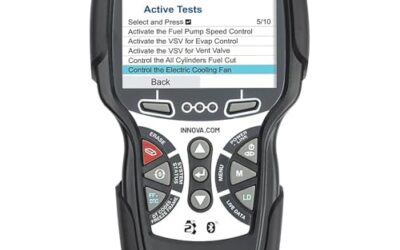
Basic scanners often read generic powertrain codes. Some vehicles need a more advanced tool for manufacturer-specific codes, enhanced data, bidirectional controls, or EVAP test functions. Tool support can vary by model year, engine, connector, software, and region. Most gasoline vehicles sold in the United States use the standard 16-pin J1962 diagnostic connector, but access location and supported functions differ.
A repair shop may perform a smoke test. This introduces visible smoke into the EVAP system under controlled conditions and looks for escape points. Test procedures vary by vehicle. Do not pressurize the system with shop air unless the service information allows that method and pressure.
Professional diagnosis may also check purge and vent valve operation, wiring voltage, sensor readings, fuel tank pressure, and system sealing. These tests can separate a cap problem from a leak hidden above the fuel tank.
Common mistakes
- Replacing the cap without reading the code. A new cap cannot fix a cracked hose or failed valve.
- Assuming a clicking cap is good. The click mechanism can work while the gasket fails to seal.
- Clearing the light before recording data. Erasing the code removes useful clues and resets readiness monitors.
- Driving until the light flashes. A flashing light can indicate a severe misfire that may damage the catalytic converter.
- Using the wrong cap. Thread size, seal shape, pressure behavior, and emissions requirements can differ by vehicle.
- Opening the fuel system near flames or sparks. Gasoline vapor ignites easily. Avoid smoking, open flames, and hot work areas.
- Calling every EVAP code a gas-cap code. The code identifies a test failure or circuit issue, not always the cap.
When to get professional help
Seek professional diagnosis when the light returns after cap inspection, when the code points to a valve or sensor, or when the vehicle has a fuel smell. A shop has smoke-test equipment and scan tools that can access vehicle-specific data.
Stop driving and arrange prompt service if the check engine light flashes, the engine runs roughly, the vehicle stalls, fuel leaks onto the ground, or fuel vapor is strong inside or around the vehicle. Do not park a leaking vehicle in an enclosed garage.
Vehicle age also matters. Older cars may have brittle hoses and corrosion around connectors. Newer vehicles may use more sensors and stricter leak detection. Hybrid vehicles can have gasoline EVAP systems alongside high-voltage equipment. Follow the model-specific service information and keep clear of orange high-voltage cables.
Do you need an OBD2 scanner?
You do not need a scanner to inspect and reseat a gas cap. A scanner helps when the light stays on or returns. It can show whether the fault is current, pending, or stored and can reveal codes unrelated to the cap.
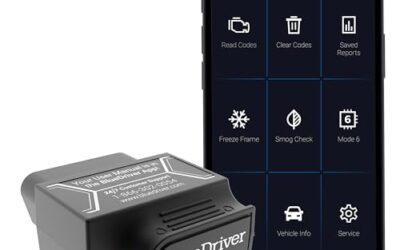
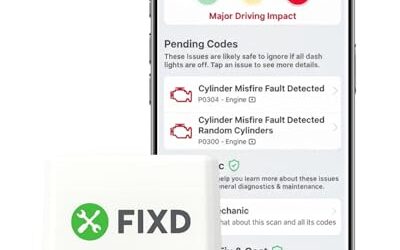
For basic checks, a generic OBD2 scanner may read common emissions codes. Advanced troubleshooting may require live data, manufacturer-specific coverage, smoke-test support, or active tests. Phone-based scanners also depend on the adapter, app, phone OS, Bluetooth or Wi-Fi behavior, and vehicle support. Firmware and app updates can change function.
For related guidance, see OBD2 scanners for live data and fuel trim and professional car diagnostic tools for advanced troubleshooting. Drivers working on newer or specialized vehicles can also review OBD2 scanners for advanced use.
Gear that can help
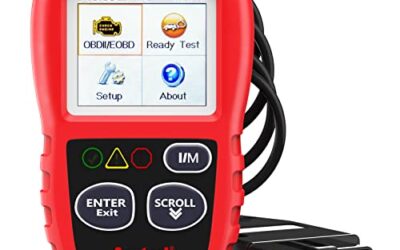
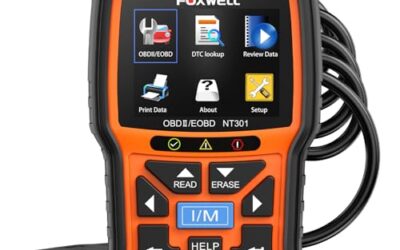
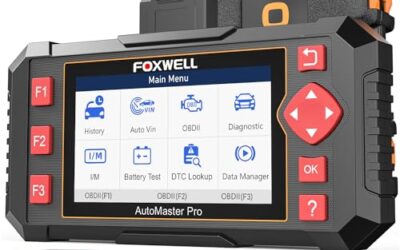
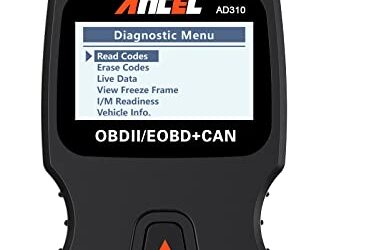
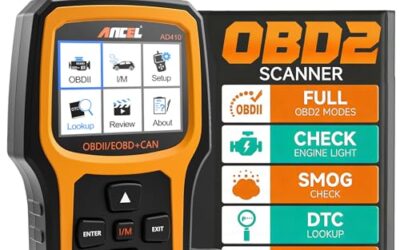
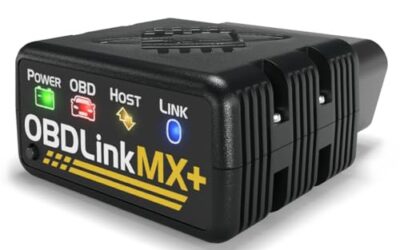
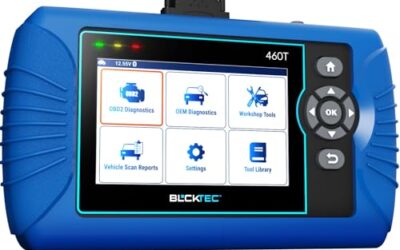
If you need OBD2 scanners for this job, these picks already appear in our OBD2 scanners guides. Check the full guide for fit and who should skip each one.

Pros
- Broad basic OBD2 diagnostic function set
- Built-in code definitions can help explain fault codes
- Supports major protocols including CAN, ISO9141, KWP2000, J1850 VPW and J1850 PWM
- Color display, multilingual support and on-screen code definitions
Cons
- Limited to engine and emission-related codes
- Does not support ABS, SRS, transmission, bidirectional control or service reset functions
- Vehicle compatibility should be checked before purchase
Specifications
| Color | yellow |
|---|---|
| Dimensions | 9 x 6.3 x 1.6 inches |
| Weight | 0.66 Pounds |
| Product Group | Automotive Parts and Accessories |
| Binding | Automotive |
Best For / Avoid If
Best for buyers prioritizing
- Broad basic OBD2 diagnostic function set
- Built-in code definitions can help explain fault codes
- Supports major protocols including CAN, ISO9141, KWP2000, J1850 VPW and J1850 PWM
Consider another option if
- Limited to engine and emission-related codes
- Does not support ABS, SRS, transmission, bidirectional control or service reset functions
- Vehicle compatibility should be checked before purchase

Pros
- Supports check-engine code reading and clearing
- Provides live data features including engine speed, vehicle speed, coolant temperature, and calculated load value
- Includes a 2.5-foot cable and six-button control layout
- Compact 6.02 x 2.75 x 0.91-inch design
Cons
- Does not support ABS, airbag, oil service light, or other non-OBDII systems
- Vehicle compatibility is described as supporting most applicable vehicles rather than every vehicle
- Requires connection to a vehicle’s OBDII port for power
Specifications
| Color | Yellow |
|---|---|
| Size | Portable |
| Dimensions | 6.02 x 2.75 x 0.91 inches |
| Weight | 0.6375 Pounds |
| Product Group | Automotive Parts and Accessories |
| Binding | Automotive |
Best For / Avoid If
Best for buyers prioritizing
- Supports check-engine code reading and clearing
- Provides live data features including engine speed, vehicle speed, coolant temperature, and calculated load value
- Includes a 2.5-foot cable and six-button control layout
Consider another option if
- Does not support ABS, airbag, oil service light, or other non-OBDII systems
- Vehicle compatibility is described as supporting most applicable vehicles rather than every vehicle
- Requires connection to a vehicle’s OBDII port for power
Pros
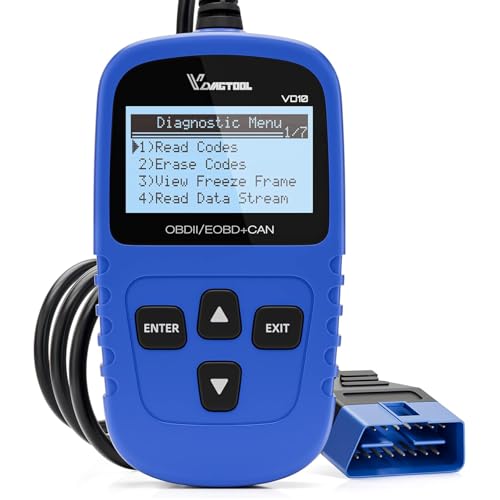
- Includes code reading, code clearing, live data, freeze-frame, I/M readiness, and vehicle information functions
- Supports VIN, Calibration ID, and Calibration Verification Number retrieval
- Lists compatibility with post-1996 US-based, post-2006 EU-based, and post-2009 Asian-based OBDII vehicles
- Offers a built-in DTC definition database and support for six languages
- Includes a stated five-year warranty
Cons
- The display is described as a two-line LCD screen, which may provide less viewing space than larger scan-tool displays
Specifications
| Color | Blue |
|---|---|
| Dimensions | 9.79921258843 x 6.692913379 x 1.57874015587 inches |
| Product Group | Automotive Parts and Accessories |
| Binding | Unknown Binding |
Best For / Avoid If
Best for buyers prioritizing
- Includes code reading, code clearing, live data, freeze-frame, I/M readiness, and vehicle information functions
- Supports VIN, Calibration ID, and Calibration Verification Number retrieval
- Lists compatibility with post-1996 US-based, post-2006 EU-based, and post-2009 Asian-based OBDII vehicles
Consider another option if
- The display is described as a two-line LCD screen, which may provide less viewing space than larger scan-tool displays
Frequently asked questions
How long after tightening a gas cap does the light go off?
The vehicle may need several normal drive cycles before the EVAP monitor runs and turns the light off. Timing depends on model year, fuel level, temperature, speed, and computer strategy.
Can a loose gas cap cause poor fuel economy?
Usually, a loose cap causes an EVAP fault rather than a direct fuel-economy change. Fuel economy can change if another fault, such as a purge-valve problem or engine-control issue, is present.
Can a loose gas cap cause the car to fail emissions testing?
Yes. An active check engine light or incomplete readiness monitors can cause failure under local inspection rules. Requirements vary by state and program.
Should you replace a gas cap after one EVAP code?
Replace it when the seal, threads, or body show damage, or when vehicle-specific diagnosis identifies the cap as the leak source. Read the code and inspect the system before buying parts.
Can a missing gas cap damage the engine?
A missing cap usually creates an EVAP leak and emissions fault. It can also allow dirt or water near the filler opening, depending on vehicle design. Replace it with the correct cap and inspect for contamination.
Sources and further reading
- J1962 Diagnostic Connector standard (SAE International): Connector details for vehicle diagnostic equipment.
- J1979 E/E Diagnostic Test Modes standard (SAE International): Diagnostic data and test modes used by OBD systems.
- Vehicle Emissions Inspection and Maintenance (I/M) (US EPA): How emissions inspection programs operate across states and local areas.