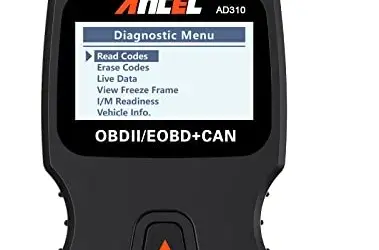
ANCEL AD310 Classic Enhanced Universal OBD II delivers strongest overall capability for drivers seeking engine fault diagnostics under $25. Device pairs broad protocol compatibility across KWP2000, J1850, ISO9141, and CAN standards with live sensor data and freeze frame capture. Direct DLC power eliminates internal batteries while physical buttons provide reliable garage operation.

Pros
- Supports multiple common OBDII protocols, including CAN
- Provides more than basic code reading with live data, freeze-frame, and readiness information
- Powered through the vehicle, so no separate battery or charger is required
- Compact design and 12-ounce weight support portability
Cons
- Limited to emission-related diagnostics
- Requires a vehicle with an OBDII interface and does not diagnose OBDI vehicles, even with an adapter
- Vehicle compatibility should be confirmed before purchase
Specifications
| Color | Black |
|---|---|
| Dimensions | 4.9212598375 x 2.755905509 x 0.8661417314 inches |
| Product Group | Automotive Parts and Accessories |
| Binding | Automotive |
Best For / Avoid If
Best for buyers prioritizing
- Supports multiple common OBDII protocols, including CAN
- Provides more than basic code reading with live data, freeze-frame, and readiness information
- Powered through the vehicle, so no separate battery or charger is required
Consider another option if
- Limited to emission-related diagnostics
- Requires a vehicle with an OBDII interface and does not diagnose OBDI vehicles, even with an adapter
- Vehicle compatibility should be confirmed before purchase
Pros
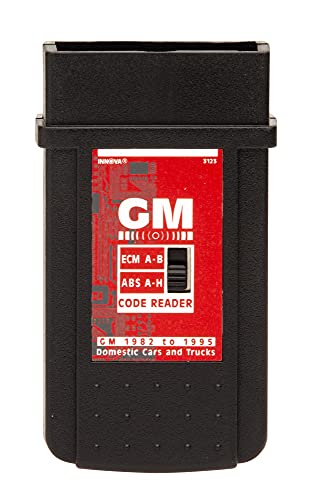
- Supports both ECM and ABS code reading
- Covers most GM domestic cars and trucks from model years 1982 to 1995
- Provides multilingual instructions in English, French, and Spanish
- Compact listed dimensions of 10 x 2 x 6 inches and weight of 0.64 pounds
Cons
- Does not read codes on diesel, Cadillac, Geo, Nova, or Sprint vehicles
Best For / Avoid If
Best for buyers prioritizing
- Supports both ECM and ABS code reading
- Covers most GM domestic cars and trucks from model years 1982 to 1995
- Provides multilingual instructions in English, French, and Spanish
Consider another option if
- Does not read codes on diesel, Cadillac, Geo, Nova, or Sprint vehicles
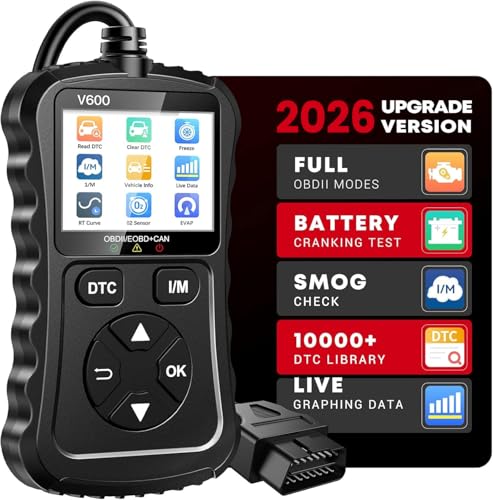
Pros
- Combines engine-code scanning with a real-time voltage test function
- Offers multiple diagnostic views and readiness-monitoring functions
- Compact design with a long, flexible cable and non-slip housing
- Listed compatibility includes most 1996+ US cars and more than 2000 European and Asian models
Cons
- The listing says it cannot detect trucks or motorcycles, and heavy-duty pickup trucks and mini trucks cannot be tested
- Only Japanese car models manufactured after 2005 are stated to have OBD diagnostic capabilities
- The listing says an unresolved fault code may require clearing by a computer at a 4S shop
Specifications
| Color | black |
|---|---|
| Size | Small and Portable |
| Dimensions | 4.5 x 0.7 x 5 inches |
| Weight | 0.3125 pounds |
| Product Group | Automotive Parts and Accessories |
| Binding | Automotive |
Best For / Avoid If
Best for buyers prioritizing
- Combines engine-code scanning with a real-time voltage test function
- Offers multiple diagnostic views and readiness-monitoring functions
- Compact design with a long, flexible cable and non-slip housing
Consider another option if
- The listing says it cannot detect trucks or motorcycles, and heavy-duty pickup trucks and mini trucks cannot be tested
- Only Japanese car models manufactured after 2005 are stated to have OBD diagnostic capabilities
- The listing says an unresolved fault code may require clearing by a computer at a 4S shop
CarTechTalk earns commissions through qualified purchases via retail links below without altering editorial evaluations. Diagnostic tools in sub-$25 tier focus strictly on powertrain error management, emission status tracking, and base vehicle data retrieval.
Budget OBD2 Scanner Comparison Under $25
Direct comparison highlights hardware variations, protocol support ranges, and manufacturer warranty coverage across entry diagnostic units.
| Product Name | Observed Price | Primary Vehicle Interface | Screen Display | Power Source | Documented Warranty |
|---|---|---|---|---|---|
| ANCEL AD310 Classic Enhanced Universal OBD II | $23.99 | 16-pin OBD2 (1996+ US) | Monochrome LCD with contrast adjustment | Vehicle DLC port (8V-18V) | – |
| Autel OBD2 Scanner MS309 Universal Car Engine | $22.99 | 16-pin OBD2 (1996+ US) | Backlit monochrome display | Vehicle DLC port | 12 months |
| INNOVA 3123 GM OBD1 Code Reader, Windows XP | $20.70 | 12-pin GM OBD1 assembly line diagnostic link | Vehicle check engine light flash output | Vehicle diagnostic port | – |
| VDIAGTOOL VD10 OBD2 Scanner Code Reader Car | $18.99 | 16-pin OBD2 (1996+ US) | 2-line LCD with white backlight | Vehicle DLC port | 5 years |
| XIAUODO OBD2 Scanner Car Code Reader Support | $15.28 | 16-pin OBD2 (1996+ US) | Color LCD screen | Vehicle DLC port | 90 days |
Diagnostic Protocols and Hardware Limitations Under $25
Sub-$25 diagnostic tools access standardized powertrain information governed by SAE J1979 regulations. Vehicle communication occurs across specific wiring pins inside standard 16-pin Data Link Connector (DLC):
- ISO 15765-4 (CAN): Dominates modern vehicles built after 2008. Uses pin 6 (CAN High) and pin 14 (CAN Low).
- ISO 9141-2 and ISO 14230-4 (KWP2000): Common in older European and Asian imports. Communicates across pin 7 (K-Line) and pin 15 (L-Line).
- SAE J1850 VPW: Utilized across legacy General Motors applications. Communicates through pin 2.
- SAE J1850 PWM: Utilized across legacy Ford Motor Company platforms. Uses pin 2 and pin 10 differential pair.
- Pin 16 and Pins 4/5: Deliver continuous 12-volt battery power and chassis/signal grounds. Handheld units power directly from vehicle bus without alkaline batteries.
Hardware in budget segment contains dedicated microcontrollers programmed with generic diagnostic trouble code (DTC) databases. Units retrieve Mode $01 (live engine sensor parameters), Mode $02 (freeze frame engine operating points), Mode $03 (confirmed emission diagnostic codes), Mode $04 (clear emissions codes and reset malfunction indicator lamp), and Mode $07 (pending codes detected during drive cycles). Budget tools omit high-speed memory, wireless radios, multiplexers, and hardware transceivers required for secondary control modules.
Five Sub-$25 Diagnostic Tools Evaluated
ANCEL AD310 Classic Enhanced Universal OBD II
ANCEL AD310 functions as dependable baseline engine code reader for general motorists. Hardware incorporates thick 2.5-foot insulated cable, durable housing measuring 8.9 by 6.9 by 1.4 inches, and total weight of 12 ounces. Unit executes core emissions diagnosis, extracts live powertrain parameter streaming, captures freeze frame snapshots, verifies I/M readiness status, and reads vehicle identification numbers (VIN). Tool draws direct power from OBD2 port across standard 8V-18V vehicle systems.
- Best for: Weekend mechanics requiring sturdy physical build and wide legacy OBD2 protocol compatibility.
- Drawback: Manufacturer states tool only supports diagnosis of emission-related issues. If engine fault stems from non-emission component, unit cannot read fault codes.
- Avoid if: Vehicle uses older OBDI port. Manufacturer notes tool cannot interface with OBDI systems even with adapter cables.
Autel OBD2 Scanner MS309 Universal Car Engine
Autel MS309 emphasizes compact form factor alongside built-in database containing over 1,000 diagnostic trouble code definitions. Device queries generic codes (P0, P2, P3, U0), manufacturer-specific codes (P1, P3, U1), and pending faults. Two-button interface directs navigation through freeze frame records, vehicle calibration IDs (CVN), and I/M readiness monitor sweeps before state inspection. Manufacturer documents 12-month warranty backing and lifetime technical support.
- Best for: Commuters wanting pocket-sized code reader for glovebox storage to verify gas cap errors or emission readiness.
- Drawback: Tool cannot bypass Safe Gateway (SGW) modules. Manufacturer confirms device cannot clear codes on FCA vehicles (Chrysler, Dodge, Jeep) produced after 2017.
- Avoid if: You own 2018 or newer FCA platform, or require advanced engine parameter displays beyond basic OBD2 codes.
INNOVA 3123 GM OBD1 Code Reader, Windows XP
INNOVA 3123 serves distinct historic vehicle role outside modern OBD2 parameters. Hardware interfaces directly with General Motors 12-pin assembly line diagnostic link (ALDL) self-test connectors found on domestic vehicles from 1982 through 1995. Tool bridges diagnostic terminals safely without damaging vehicle computer circuitry. Device triggers vehicle instrument cluster check engine light to flash numerical trouble codes for ECM and ABS systems.
- Best for: Owners restoring or maintaining pre-1996 domestic General Motors passenger cars and light trucks.
- Drawback: Hardware lacks modern 16-pin OBD2 connector and integrated digital readout screen. Troubleshooting requires manual counting of instrument cluster light flashes.
- Avoid if: Vehicle was manufactured in 1996 or later, or vehicle is diesel-powered, Cadillac, Geo, Nova, or Sprint platform.
VDIAGTOOL VD10 OBD2 Scanner Code Reader Car
VDIAGTOOL VD10 offers entry-level code reading supported by manufacturer-listed 5-year warranty protection. Unit houses 2-line LCD screen featuring white backlight and manual contrast adjustment. Internal database includes over 3,000 trouble code definitions to explain generic and manufacturer-specific powertrain faults directly on screen. Firmware reads sensor data streams including engine RPM, intake air temperature, fuel trim corrections, and misfire counts across 12-volt passenger vehicles.
- Best for: Budget-conscious car owners prioritizing extended manufacturer warranty coverage alongside live sensor monitoring.
- Drawback: Display hardware utilizes basic 2-line text screen, which restricts simultaneous parameter viewing compared to larger multi-line displays.
- Avoid if: European vehicle manufactured prior to 2006 or Asian import built prior to 2009 where manufacturer notes protocol coverage gaps.
XIAUODO OBD2 Scanner Car Code Reader Support
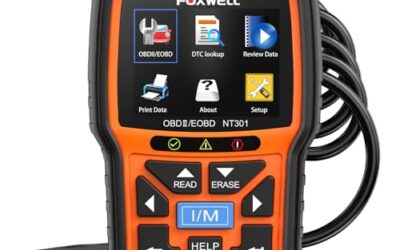
XIAUODO OBD2 Scanner incorporates color display screen, 6-button directional keypad, dedicated one-click DTC and I/M hotkeys, and dynamic voltage monitoring. Manufacturer states internal database holds over 30,000 fault code definitions alongside multi-language support covering 10 languages. Voltage monitoring displays electrical bus charging status directly through diagnostic port connection to detect battery or alternator decline.
- Best for: Drivers wanting color interface, instant hotkey navigation, and real-time charging voltage readings under $16.
- Drawback: Manufacturer warranty covers 90 days only. Unit documentation explicitly specifies inability to test heavy-duty pickup trucks, mini trucks, or motorcycles.
- Avoid if: Japanese brand vehicle produced before 2005, as manufacturer specifies diagnostic functionality on Japanese models begins post-2005.
Step-by-Step Diagnostic Workflow for Budget Scan Tools
Operating low-cost handheld scanners requires structured execution to prevent erroneous data clearing or incomplete diagnostic cycles.
- Locate Data Link Connector: Inspect lower dashboard region beneath steering column, driver footwell, or center console storage area. Confirm 16-pin port contains clean terminal contacts free from corrosion or debris.
- Establish Connection: Insert scanner connector firmly into vehicle port with ignition turned off. Ensure pins seat fully to provide secure ground and battery power contact.
- Power Ignition Circuit: Turn vehicle ignition key to ON position (engine off) or depress push-to-start button twice without touching brake pedal. Confirm scanner display powers on via pin 16 supply.
- Execute Protocol Handshake: Select diagnostic scan option from tool main menu. Scanner cycles through CAN, KWP2000, ISO9141, and J1850 bus configurations until vehicle powertrain control module (PCM) responds.
- Document Diagnostic Trouble Codes: Record all active codes (P0xxx, P1xxx), pending codes, and permanent codes before attempting erasure. Review freeze frame data records to document exact vehicle speed, engine coolant temperature, and fuel trim status present when fault occurred.
- Perform Necessary Mechanical Repairs: Replace failed components identified during diagnostic assessment. Clearing codes without fixing underlying mechanical problems causes fault codes and check engine illumination to return immediately.
- Clear Fault Memory: Return to scanner menu, select erase codes command, and verify ignition remains in ON position with engine off. Confirm check engine light turns off.
- Drive Readiness Cycle: Operate vehicle across highway and urban stop-and-go driving conditions to allow PCM internal monitors (catalyst, evaporative emissions, oxygen sensors) to complete self-evaluation routines.
Emissions Readiness Monitors and Inspection Verification
Budget OBD2 scanners provide critical value prior to mandatory state emissions testing. Vehicle engine computers run internal self-testing diagnostic sequences called Inspection and Maintenance (I/M) Readiness Monitors. Emission monitoring divides into continuous monitors and non-continuous monitors:
- Continuous Monitors: Misfire detection, fuel trim delivery, and comprehensive component monitoring run continuously while engine operates.
- Non-Continuous Monitors: Catalyst efficiency, heated oxygen sensor response, secondary air injection, evaporative emissions (EVAP) pressure decay, and exhaust gas recirculation (EGR) flow evaluate only when vehicle meets specific temperature, speed, and fuel level conditions.
State inspection stations reject vehicles displaying “Not Ready” status flags on multiple monitors. Clearing diagnostic codes with budget scanner resets all monitors to incomplete status. Drivers must perform manufacturer drive cycles until scanner confirms readiness flags show ready status. Autel MS309, ANCEL AD310, VDIAGTOOL VD10, and XIAUODO code readers extract these status bits directly across vehicle communication lines.
Who Should Skip Sub-$25 OBD2 Scanners
Motorists experiencing braking, chassis, restraint system, or transmission problems should avoid sub-$25 diagnostic readers entirely. Tools in budget price class communicate exclusively with powertrain control modules (PCM/ECM) under standard OBD2 protocols. Hardware architectures omit circuitry and software licensing required to access specialized vehicle computer modules:
- Anti-Lock Braking Systems (ABS): Wheel speed sensor failures, ABS pump motor codes, and brake pressure faults remain invisible to sub-$25 code readers.
- Supplemental Restraint Systems (SRS): Airbag deployment codes, seat belt pretensioner faults, and occupant detection errors require dedicated restraint system scanners.
- Transmission Control Modules (TCM): Detailed clutch slip data, transmission temperature tracking, and solenoid pressure faults require enhanced diagnostic tools.
- Body Control Modules (BCM): Door lock modules, climate control sensors, window motors, and lighting controllers require advanced multi-system scanners.
- Bidirectional Controls and Active Tests: Sub-$25 tools cannot actuate fuel pumps, cycle ABS valves, command cooling fans, or run EVAP smoke leak purge solenoid tests.
- Vehicle Adaptations and Resets: Electronic parking brake (EPB) retraction, steering angle sensor (SAS) calibration, oil service interval resets, and battery registration require diagnostic tablets starting in $100 to $400 range.
- Security Gateway Access: Modern vehicles, specifically 2018 and newer FCA platforms (Jeep, Ram, Dodge, Chrysler), lock diagnostic communication behind Security Gateway (SGW) architecture. Unlocking modules requires certified AutoAuth-enabled diagnostic tools with network subscriptions.
Shoppers facing multi-system warnings or seeking professional-level repair capabilities should bypass entry-level tools and investigate mid-tier diagnostic scan tablets offering 4-system or all-system coverage.
Related reading: OBD2 Scanner Buying Guide for Beginners and Best Rated OBD2 Scanner.
Final Decision Framework for Sub-$25 Scanners
Selecting suitable diagnostic reader under $25 requires matching vehicle model year, operational priorities, and diagnostic requirements:
- Select ANCEL AD310 Classic Enhanced Universal OBD II when primary goals involve durable shop handling, live sensor streaming, and confirmed operation across broad US, European, and Asian passenger vehicle protocols.
- Select Autel OBD2 Scanner MS309 Universal Car Engine when compact pocket size, 12-month documented warranty, and clear DTC lookups represent core priorities for pre-2018 vehicles.
- Select VDIAGTOOL VD10 OBD2 Scanner Code Reader Car when maximum warranty duration (5 years) provides essential peace of mind for standard engine fault code extraction.
- Select XIAUODO OBD2 Scanner Car Code Reader Support when color screen interface, real-time alternator voltage assessment, and rapid hotkey access matter most on post-2005 vehicles.
- Select INNOVA 3123 GM OBD1 Code Reader, Windows XP exclusively when diagnosing pre-1996 domestic General Motors vehicles equipped with 12-pin ALDL ports.
Always verify vehicle port location, protocol compliance, and model-year security architecture prior to purchasing budget scan tool. Verify pricing directly with retailers as market rates fluctuate.