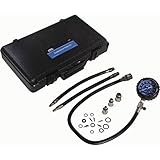
The best compression tester for a typical gas-engine owner is the DAYUAN Professional Petrol Engine Compression kit, which pairs a dual-scale gauge with 14 mm and 18 mm adapters and a stated range of 0 to 300 PSI. Those details make it a practical starting point for common car and motorcycle work, though the engine’s spark-plug thread and the vehicle maker’s procedure still determine whether it fits your job.




Some kits here are basic gasoline-engine gauges; others add adapters, a digital display, or a separate cylinder leakage function. This article may earn a commission from qualifying purchases through product links.
Compression tester picks by job
These tools measure pressure produced in an engine cylinder during cranking. They do not read OBD2 trouble codes, and a low reading alone does not identify the failed part. Use the service information for the specific engine to guide preparation, cranking conditions, and the acceptable pressure range. For electronic fault-code work, see our guide to the OBD2 scanner that covers multiple systems and resets.
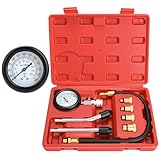
Best starting point for cars and motorcycles: DAYUAN Professional Petrol Engine Compression
DAYUAN describes this eight-piece kit as a petrol-engine gauge set for cars and motorcycles. Its 14 mm and 18 mm adapters cover two common thread sizes, while the dual PSI and bar scale lets you read in either unit. The stated 0 to 300 PSI range gives a broad scale for many gasoline-engine checks, but that range is not a pass/fail specification for any particular engine.
The kit is a budget option for someone who wants a straightforward analog reading and the two named adapter sizes. Its stated fit does not establish that it reaches every plug well or matches every spark-plug thread. Skip it if your engine needs a different adapter, a diesel-specific setup, or a leakage-down tool.
Best for small engines and mixed equipment: Clatoon 8pcs Petrol Engine Cylinder Compression
Clatoon names cars, motorcycles, outboards, snowmobiles, and chainsaws among the intended uses. The product title gives a 0 to 300 PSI scale, which can suit an owner moving between gasoline-powered equipment rather than focusing on one car. The broad use claim does not identify particular thread adapters, so equipment variety should not be mistaken for universal fit.
Its appeal is the range of engine types named in the product title. The tradeoff is that the available description does not identify the included fittings or gauge type. Skip it if your purchase depends on a confirmed adapter size or a clearly specified hose and release setup.
Best digital gauge option: AZUNO Compression Tester Automotive
AZUNO identifies this as a digital compression gauge for petrol engines and gives a 200 PSI capacity. A digital display may suit a buyer who prefers a numeric readout over a dial, but the stated ceiling is lower than the 300 PSI gauges elsewhere in this group. Check the service information for your engine’s expected range before choosing a 200 PSI instrument.
The digital format and included adapter and hose are the main differentiators. Its lower stated maximum narrows the range of readings it can display compared with 300 PSI options. Skip it if the engine’s specified pressure could exceed 200 PSI or if you need a diesel-oriented kit.
Best multi-scale budget kit: AUTOWN Professional Compression Tester Kit
AUTOWN names a triple-scale gauge, an eight-piece set, and a carrying case, with intended use spanning cars, trucks, ATVs, and small gas engines. Multiple scales can make unit conversion less of a chore, while the case gives the fittings a place to stay together. The product name does not identify the scales’ units or specific adapter threads, so those details should not be assumed.
This option makes sense if a case and a multi-scale dial matter more than a known set of thread sizes. Its visible specifications do not establish the adapter fit for a particular engine. Skip it when you need a confirmed thread size or a stated maximum pressure before buying.
Best for buyers who want manual pressure release: Mityvac MV5530 Engine Compression Test Kit
Mityvac specifies a manual pressure-release valve, a 2.75-inch Bourdon tube gauge, a quick-disconnect coupler, and threaded adapters for motorcycles, marine engines, and small engines. The release control gives the user a defined way to reset the gauge between readings. Its stated application list emphasizes motorcycles, marine engines, and small engines, rather than explicitly naming passenger cars.
The named gauge construction and release method offer more detail than many basic kit descriptions. This is a premium-priced choice, and its specified applications may not match a car-only buyer’s needs. Skip it if you need a clearly stated car-specific adapter set or want a basic budget gauge.
Best for compression and leakage diagnosis: 46PCS Compression and Leakage Test Kit Petrol
DUOYI describes a 46-piece kit combining petrol and diesel compression equipment with a cylinder leak-down tool. It names HDI, TDCi, and Pumpe Duse engines among its intended applications. That combination may suit a mechanic who needs both kinds of cylinder assessment, but the extra leakage-down function is unnecessary if you only want a basic gasoline compression gauge.
The kit’s breadth is its main advantage for a shop or experienced DIYer handling varied engine types. It is the most expensive option in this group, and a large mixed kit brings more parts to identify and store. Skip it if you only work on a gasoline engine and need a simple pressure reading.
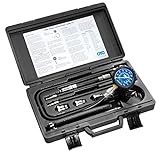
Best established brand option for gas engines: OTC 5606 Compression Tester Kit
OTC names domestic and import cars, trucks, SUVs, vans, motorcycles, ATVs, and UTVs as intended uses, and includes a storage case. That wide vehicle list may appeal to a home mechanic who works across several kinds of gas-powered vehicles. The available description does not spell out the gauge range or adapter sizes, which limits how specifically it can be matched to an engine.
The broad stated application and storage case make it a reasonable candidate for a mixed-vehicle garage. Its cost is premium, while key fit details are not identified here. Skip it if you need a documented pressure ceiling or a specific thread adapter before choosing.
Alternative color option: DAYUAN Professional Petrol Engine Compression
The blue-case DAYUAN set has the same stated eight-piece configuration, 14 mm and 18 mm adapters, dual PSI and bar scale, and 0 to 300 PSI range as the red-case version. It is therefore a color choice rather than a different capability based on the details available. Choose between them by case preference, not by assuming one measures differently.
The known advantage is a clearly named pair of adapter sizes and a dual-unit gauge. The limitation is that those two adapters do not establish fit for every engine. Skip it if your plug threads differ or your work calls for a leakage-down function.
Simple compact option: Lisle 20250 Compression Tester
Lisle identifies the 20250 as a compression tester, making it a straightforward brand-and-model option for buyers who do not need a combined leakage-down kit. The product name alone does not establish a gauge range, adapter selection, or intended engine types, so there is not enough basis to match it to a particular vehicle from those details.
Its appeal is simplicity in the product description and a mid-priced position among these choices. The tradeoff is that buyers cannot use the stated product details here to confirm range or fitting compatibility. Skip it if you need those specifics settled before purchase.
Basic eight-piece kit: Lyhubmh 8 pcs Compression Tester Kit
Lyhubmh describes an eight-piece petrol compression kit for cars and motorcycles, with a 0 to 300 PSI range and portable storage box. That gives a buyer a basic gasoline-oriented kit with a stated upper range and a place for the parts. The title does not name adapter sizes, so its broad vehicle wording is not proof that it fits every car or motorcycle.
This budget kit could suit a buyer who needs a basic gauge and storage box. Its thread compatibility is not clear from the stated details, which matters because an adapter that does not match the plug opening cannot make a useful connection. Skip it if you need a confirmed thread size or additional diesel and leakage-down functions.
What matters when choosing a compression gauge
Start with engine type and spark-plug thread, not the number of pieces in a case. The product names distinguish petrol or gas-engine sets from the DUOYI kit, which specifically includes petrol and diesel compression equipment. The DAYUAN kits identify 14 mm and 18 mm adapters; that is more useful for fit decisions than a general claim of broad vehicle coverage. It still does not cover every possible thread.
Next, compare the stated scale with the vehicle maker’s service procedure. A 300 PSI gauge offers a higher stated ceiling than AZUNO’s 200 PSI model, but a larger range does not make a reading more suitable for your engine by itself. Use the engine’s own specifications and the tool instructions. Compression readings can vary with procedure and engine condition, so avoid treating a single number as a diagnosis.
Finally, decide whether you need only a pressure gauge or a second diagnostic method. A compression gauge records cranking pressure. A leak-down tool is a separate way to assess cylinder leakage, and the DUOYI kit combines both functions. If your goal is only to compare cylinders, paying for a broad multi-function kit may add cost and parts without helping your immediate task.
Safe use and interpreting readings
Follow the vehicle service manual and the tool maker’s instructions for disabling ignition or fuel, removing plugs, and cranking the engine. Procedures vary by vehicle. Keep hands, clothing, and test leads clear of moving parts, and do not crank an engine in an enclosed space. Stop if you are unsure how to disable fuel or ignition safely.
Compare cylinders under the same procedure and use the manufacturer’s limits for that engine. A low or uneven result can point toward a mechanical issue, but it does not prove whether the cause is a valve, rings, head gasket, or another fault. A leak-down assessment or qualified diagnosis may be the next step. Avoid buying a gauge as a substitute for service information or repair expertise.
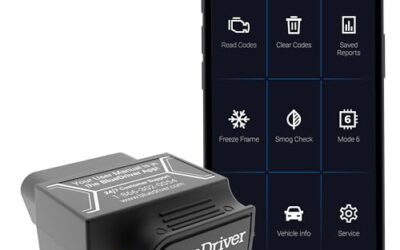
A compression gauge is not an OBD2 scanner. It cannot retrieve vehicle trouble codes or monitor data through the diagnostic connector. For code reading and system coverage, use a scan tool matched to the vehicle; our BlueDriver review covers a separate diagnostic approach for gas vehicles.
Who should skip these kits
Skip this guide if you need a diesel-only tool with confirmed injector or glow-plug adapters, a calibrated shop instrument with traceable accuracy specifications, or a repair diagnosis without the skills to follow the vehicle procedure. Look instead for a diesel-specific compression set matched to the engine’s access point, or have a qualified repair shop assess the concern. Do not infer a fault from one gauge reading.
Verdict: match the fittings before buying
For a general gasoline-engine purchase, DAYUAN’s dual-scale kit is the clearest starting choice because it names its 14 mm and 18 mm adapters and gives a 0 to 300 PSI range. Choose AZUNO if a digital readout matters and 200 PSI covers the engine’s specified range. Mityvac suits buyers who value its stated manual release and marine or small-engine applications, while DUOYI is the fit for someone who genuinely needs both compression and leakage-down functions. If none of the named adapters matches your engine, do not choose by brand breadth alone.