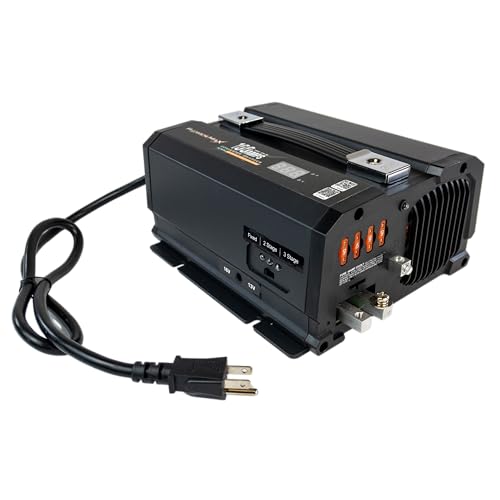
The best battery maintainer power supply for ECU flashing for most independent shops is the PowerMax PMBC-100-SE: it provides up to 100A, adjustable 13–16V output, and a fixed-voltage programming mode. Choose the 120A PowerMax if your procedures need more current, or AUTOOL if you want adjustable output and a dedicated programming mode with a stated three-minute 120A limit.

Pros
- Automatic charging and maintenance requires no manual operation
- 7.5A-fused ring-terminal harness supports permanent battery connection
- Compact 5.12 x 2.56 x 1.57-inch design
- Listed for cars, motorcycles, ATVs, RVs, boats, and other powersports applications
Cons
- 1.5A output may provide slower charging than higher-amperage chargers
Specifications
| Dimensions | 5.12 x 2.56 x 1.57 inches |
|---|---|
| Weight | 0.771617917 Pounds |
| Product Group | Toy |
| Binding | Automotive |
Best For / Avoid If
Best for buyers prioritizing
- Automatic charging and maintenance requires no manual operation
- 7.5A-fused ring-terminal harness supports permanent battery connection
- Compact 5.12 x 2.56 x 1.57-inch design
Consider another option if
- 1.5A output may provide slower charging than higher-amperage chargers

Pros
- Automatic 12V battery charging and maintenance
- Four-stage microprocessor-controlled charging program
- Reverse-polarity, short-circuit, overcharge, and spark-free protection features
- Compact 6.89 x 2.36 x 1.77-inch housing
- SAE quick-release connector design
Cons
- 2A output provides slower charging than higher-amperage chargers
- Charging stops when battery voltage is below 8 volts
Specifications
| Color | Black |
|---|---|
| Dimensions | 6.89 x 2.36 x 1.77 inches |
| Weight | 0.85759819918 pounds |
| Product Group | Tools |
| Binding | Automotive |
Best For / Avoid If
Best for buyers prioritizing
- Automatic 12V battery charging and maintenance
- Four-stage microprocessor-controlled charging program
- Reverse-polarity, short-circuit, overcharge, and spark-free protection features
Consider another option if
- 2A output provides slower charging than higher-amperage chargers
- Charging stops when battery voltage is below 8 volts

Pros
- 12V, 1.25-amp charging specification
- Float mode supports voltage maintenance
- Supports AGM and flooded batteries
- Compact listed dimensions of 1.5 x 5 x 3 inches
Cons
- Product data lists 2-pound weight without included accessory details
Specifications
| Color | Black/Green |
|---|---|
| Size | 12V @ 1.25 Amps |
| Dimensions | 1.5 x 5 x 3 inches |
| Weight | 2 Pounds |
| Product Group | Automotive Parts and Accessories |
| Binding | Automotive |
Best For / Avoid If
Best for buyers prioritizing
- 12V, 1.25-amp charging specification
- Float mode supports voltage maintenance
- Supports AGM and flooded batteries
Consider another option if
- Product data lists 2-pound weight without included accessory details
Pros
- 100A continuous output supports extended vehicle service procedures
- Adjustable voltage supports manufacturer-specific power requirements
- Smart 3-Stage mode provides 14.4V boost, 13.6V normal, and 13.2V storage profiles for compatible 12V lead-acid batteries
- 15ft cables provide reach across service bays, showrooms, and vehicle storage areas
- Temperature-controlled cooling fan manages heat during extended operation
Cons
- Requires 120V AC power
- 15-pound unit may be less convenient to move than smaller chargers
- Smart 3-Stage profile applies to compatible 12V lead-acid batteries
Specifications
| Color | Black |
|---|---|
| Size | 100 Amp |
| Dimensions | 11 x 8 x 4 inches |
| Weight | 15 Pounds |
| Product Group | Automotive Parts and Accessories |
| Binding | Electronics |
Best For / Avoid If
Best for buyers prioritizing
- 100A continuous output supports extended vehicle service procedures
- Adjustable voltage supports manufacturer-specific power requirements
- Smart 3-Stage mode provides 14.4V boost, 13.6V normal, and 13.2V storage profiles for compatible 12V lead-acid batteries
Consider another option if
- Requires 120V AC power
- 15-pound unit may be less convenient to move than smaller chargers
- Smart 3-Stage profile applies to compatible 12V lead-acid batteries

Pros
- High-current output supports ECU programming and vehicle diagnostics
- Multiple charging modes cover in-vehicle and external battery charging
- Supports several lead-acid battery types
- Includes nine listed protection functions
- Three-year warranty with lifetime technical support
Cons
- 120A maximum current lasts for 3 minutes
- IP21S enclosure is rated for dust and minor liquid splashes, not heavy water exposure
- Product weight is 21 pounds
Specifications
| Dimensions | 0.393700787 x 1.181102361 x 0.787401574 inches |
|---|---|
| Weight | 21 Pounds |
| Product Group | Automotive Parts and Accessories |
Best For / Avoid If
Best for buyers prioritizing
- High-current output supports ECU programming and vehicle diagnostics
- Multiple charging modes cover in-vehicle and external battery charging
- Supports several lead-acid battery types
Consider another option if
- 120A maximum current lasts for 3 minutes
- IP21S enclosure is rated for dust and minor liquid splashes, not heavy water exposure
- Product weight is 21 pounds
Pros
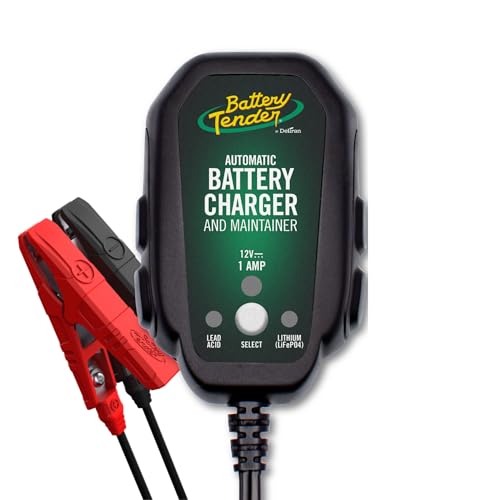
- Supports both lead-acid and LiFePO4 battery types
- Selectable battery chemistry with a push-button control
- Reverse-polarity detection and spark-proof lead connection
- Designed for motorcycles, ATVs, UTVs, personal watercraft, and scooters
Cons
- The listing do not include charging time or operating temperature requirements
Specifications
| Color | Black, Green |
|---|---|
| Size | 12V |
| Dimensions | 7.3 x 3.5 x 9.1 inches |
| Weight | 0.040625 pounds |
| Product Group | Automotive Parts and Accessories |
| Binding | Automotive |
Best For / Avoid If
Best for buyers prioritizing
- Supports both lead-acid and LiFePO4 battery types
- Selectable battery chemistry with a push-button control
- Reverse-polarity detection and spark-proof lead connection
Consider another option if
- The listing do not include charging time or operating temperature requirements

Pros
- High 120A output supports ECU coding, module flashing, diagnostics, and extended service procedures within rated capacity
- Three charging modes cover fixed-voltage support, boost and float charging, and Smart 3-Stage charging for compatible 12V lead-acid batteries
- Long 15ft cables support connections in service bays, showrooms, and vehicle storage areas
- 120V AC operation and a 2-year limited manufacturer’s warranty
Cons
- Requires 120V AC power
- Smart 3-Stage charging applies to compatible 12V lead-acid batteries
- 16-pound listed product weight may limit portability
Specifications
| Color | Black |
|---|---|
| Size | 120 Amp |
| Dimensions | 11 x 8 x 4 Inches |
| Weight | 16 pounds |
| Product Group | Electronics |
| Binding | Electronics |
Best For / Avoid If
Best for buyers prioritizing
- High 120A output supports ECU coding, module flashing, diagnostics, and extended service procedures within rated capacity
- Three charging modes cover fixed-voltage support, boost and float charging, and Smart 3-Stage charging for compatible 12V lead-acid batteries
- Long 15ft cables support connections in service bays, showrooms, and vehicle storage areas
Consider another option if
- Requires 120V AC power
- Smart 3-Stage charging applies to compatible 12V lead-acid batteries
- 16-pound listed product weight may limit portability

Pros
- Supports multiple battery chemistries, including LiFePO4 and Lead-Acid types
- Offers charging, maintenance, desulfation and recovery functions
- Includes 10ft heavy-duty cables and LED charging indicators
- Lists compatibility with cars, motorcycles, lawn mowers, ATVs, UTVs, tractors, trucks, SUVs, RVs and trailers
Cons
- 1.5A output may provide slower charging than higher-output chargers
Specifications
| Color | Gray |
|---|---|
| Size | 1.5A |
| Dimensions | 3.35 x 2.18 x 1.96 inches |
| Product Group | Electronics |
Best For / Avoid If
Best for buyers prioritizing
- Supports multiple battery chemistries, including LiFePO4 and Lead-Acid types
- Offers charging, maintenance, desulfation and recovery functions
- Includes 10ft heavy-duty cables and LED charging indicators
Consider another option if
- 1.5A output may provide slower charging than higher-output chargers

Pros
- Supports several common 12V lead-acid battery types, including AGM and gel cell
- Automatic charging and maintenance operation is designed for continuous connection
- Includes both ring terminal and alligator clamp harness options
- Compact case and up to 8.5-foot cables support storage and connection flexibility
Cons
- Detailed specifications were not listed beyond the listed product features
Best For / Avoid If
Best for buyers prioritizing
- Supports several common 12V lead-acid battery types, including AGM and gel cell
- Automatic charging and maintenance operation is designed for continuous connection
- Includes both ring terminal and alligator clamp harness options
Consider another option if
- Detailed specifications were not listed beyond the listed product features
Power supply or maintainer: what ECU flashing needs
ECU flashing can keep a vehicle’s electrical systems active for an extended service session. A weak battery or falling system voltage can interrupt that work. A low-current storage maintainer may keep a parked battery charged, but that job differs from supplying current during programming.
For flashing, prioritize a regulated power supply with a fixed-voltage or programming mode, sufficient current for the vehicle and service procedure, and a voltage range that matches the vehicle maker’s instructions. Current capacity matters because vehicle modules and accessories can draw power while the programming tool communicates with the ECU. The correct requirement varies by vehicle and procedure, so a higher amp rating alone does not establish compatibility.
This guide recommends three units whose listed functions expressly include programming, ECU coding, or module flashing. The other products in the list are lower-current chargers or maintainers, without a listed ECU programming power-supply function. They may suit storage or battery charging, but should not be treated as flashing supplies. CarTechTalk may earn a commission from qualifying purchases through product links.
Programming power supplies at a glance
| Model | Programming support | Maximum current | Output voltage |
|---|---|---|---|
| PowerMax PMBC-100-SE | ECU coding, module flashing, diagnostics | 100A continuous | Adjustable 13–16V |
| AUTOOL Flash Reprogramming Power Supply | ECU reprogramming, module coding, ADAS calibration | 120A for 3 minutes | Adjustable 10.8–16.0V |
| PowerMax PMBC-120-SE | Vehicle programming, ECU coding, module flashing | 120A continuous | Adjustable 13–16V |
Best choices for ECU flashing
PowerMax PMBC-100-SE: best fit for routine shop programming
The PMBC-100-SE pairs a 100A continuous output rating with adjustable 13–16V output and a fixed-voltage mode. That combination suits a shop that needs a dedicated power-support unit for ECU coding, module flashing, diagnostics, or other extended procedures, within the unit’s rated capacity. Its listing specifies less than 100mV AC ripple, a figure relevant to stable DC output, but vehicle makers’ voltage requirements still take priority.
An LCD shows output voltage and current, giving the technician a way to monitor the supply during work. The included 15-foot, 4 AWG cables offer reach around a service bay, while the unit operates from 120V AC. Its other modes support two-stage boost and float charging or a smart three-stage profile for compatible 12V lead-acid batteries.
The practical drawback is its 100A ceiling, below the 120A rating of the other two programming-focused options. Skip it if your vehicle or service procedure calls for more current, a voltage outside its 13–16V range, or a different power input. At a premium price position, it makes more sense for recurring shop use than occasional battery maintenance.
AUTOOL Flash Reprogramming Power Supply: best for adjustable voltage range
AUTOOL lists a 10.8–16.0V adjustable output and a maximum 120A programming output that can be sustained for three minutes. That broader voltage span may suit a procedure whose specified support voltage falls outside the PowerMax units’ 13–16V adjustment range. The three-minute limit matters: do not treat its peak rating as continuous current for a longer operation.
The display shows voltage, current, and temperature. The unit also offers charging settings for in-vehicle and external batteries, plus a maintenance mode. Its stated safeguards include short-circuit, reverse-polarity, overheat, overvoltage, undervoltage, and output overcurrent protection. The listing specifies a three-year warranty and lifetime technical support.
Its main limitation for long programming sessions is that 120A is specified for only three minutes; the listed information does not establish a continuous 120A rating. Skip it if your procedure may require that current for longer, or if the vehicle maker specifies a voltage outside its range. Its programming mode is more relevant than the repair and charging features for buyers focused only on flashing.
PowerMax PMBC-120-SE: best for continuous higher-current support
The PMBC-120-SE raises the listed continuous output to 120A while retaining adjustable 13–16V output and a fixed-voltage programming mode. It is the stronger fit when a shop’s documented vehicle or procedure requirement exceeds 100A but stays within the unit’s voltage range and rated capacity. The listing also gives a maximum rating of 1,776W.
Like the 100A PowerMax, it has an LCD for output voltage and current, 15-foot 4 AWG cables, and selectable fixed-voltage, two-stage, and smart three-stage modes. Its stated ripple is below 100mV AC. These shared features make the decision between the two PowerMax models mainly about required current, rather than a different programming voltage range.
The limitation is its 13V minimum adjustable output, which rules it out if a manufacturer procedure specifies a lower support voltage. It also costs more than the 100A model. Skip the higher-capacity unit if your work stays within 100A and does not justify paying for additional continuous current capacity.
How to match output to your vehicle and procedure
Start with the service information for the exact vehicle and programming task. Note the required voltage, current, battery type, and connection points. Then compare those requirements with the supply’s programming mode and ratings. Do not select a voltage simply because the power supply can produce it; use the vehicle maker’s specified value.
- Voltage: Both PowerMax units adjust from 13–16V. AUTOOL adjusts from 10.8–16.0V, but its 120A rating has a three-minute duration.
- Current: The PMBC-100-SE lists 100A continuous; the PMBC-120-SE lists 120A continuous. AUTOOL lists 120A for three minutes. Match the relevant rating to the procedure’s demand, not to a general preference for the largest number.
- Operating mode: Use a programming or fixed-voltage mode for ECU work when the procedure calls for one. Charging and float-maintenance modes have different purposes and should not be assumed equivalent.
- Power and reach: Both PowerMax units use 120V AC and include 15-foot cables. Check that the service bay’s outlet and cable routing fit the vehicle position. AUTOOL’s provided details do not establish the same cable length or AC input specification.
These units are 12V vehicle power supplies or chargers, not OBD2 scanners. The scan tool or programming interface still needs to support the specific vehicle, model year, module, and software operation. For scanner selection, see our guides to professional OBD2 Bluetooth scanners and Ford diesel scan tools.
Why ordinary battery maintainers are not flashing supplies
Several other listed products focus on charging or maintaining a battery at modest current. The Battery Tender Plus is rated at 1.25A, the MOTOPOWER MP00207A at 2A, and the MOTOPOWER MP00206A at 1.5A. Those ratings and their stated charging or float functions do not establish support for ECU programming loads. The same distinction applies to the 800mA Battery Tender Junior, 1A MOTOPOWER MP00205B, and 1.5A VibeXtr charger.
A maintainer can still be useful for a vehicle stored between jobs or for keeping a suitable battery charged. It is not a substitute for a regulated programming supply merely because both connect to a 12V battery. The Battery Tender Junior also has a selectable LiFePO4 setting, while several other small chargers list lead-acid battery support. Battery chemistry compatibility does not by itself make a charger suitable for flashing.
For details on choosing a storage charger by battery type, read our battery maintainer guide for a different vehicle application, and consult the battery maker’s instructions before using a charger. The 48V golf-cart topic is not a direct substitute for a 12V ECU power supply.
Who should skip these picks
Do not buy any unit here if your vehicle procedure requires a power supply outside the listed voltage range, a different system voltage, or a specific communication or charging setup these specifications do not establish. Look for a supply explicitly rated for that vehicle and procedure, then match its output to the service manual. Owners who only need winter storage maintenance should choose a battery maintainer matched to their battery chemistry and storage needs instead.
Verdict
For routine ECU flashing within a 13–16V range and up to 100A continuous, the PowerMax PMBC-100-SE is the balanced shop choice. Choose the PMBC-120-SE when the procedure calls for higher continuous current. AUTOOL fits buyers who need a wider adjustable voltage range and can work within its three-minute 120A limit. In every case, the vehicle maker’s procedure determines the required voltage and power support.
Sources and further reading
- Battery Council International (Battery Council International): Find general information about automotive batteries and battery care.