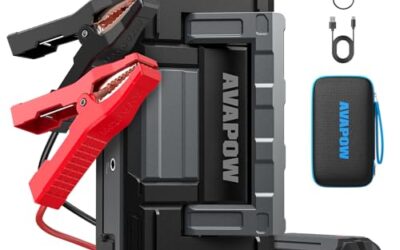
If you need the best 24V jump starter, start with system compatibility rather than the largest advertised amp number. A 24V vehicle may use two 12V batteries in series, and the booster must be connected and operated exactly as its instructions specify. The products below are listed as 12V/24V or 24V jump starters, but their output ratings, controls, battery formats, cables, charging features, and intended workloads differ substantially.
For most buyers, the choice comes down to three questions: how large the engine or equipment is, whether the pack will live in a professional fleet or an occasional-use vehicle, and whether emergency charging or lighting matters. NOCO’s GB251 is the most clearly documented commercial-grade option, while the lower-cost 8,000A and 10,000A models offer more approachable pricing on paper. The Primedura is aimed at unusually large engines and industrial equipment, but its price and size of the claimed capability make it a specialized purchase.
Affiliate disclosure: CarTechTalk may earn a commission from qualifying purchases made through links in this article, at no additional cost to you. Prices are observations provided for this comparison and can change; confirm the current price and specifications before buying.
Our Top Pick
- Best documented commercial option: NOCO Boost Max GB251: 3000A UltraSafe Jump Starter. The manufacturer lists 24V operation, support for engines up to 32L, spark-proof and reverse-polarity protection, a 56W charging adapter, and a protective case.
- Best for a lower-cost feature set: 8000A 12V/24V Jump Starter for Large Gas & Diesel. It combines 12V/24V support, a force-start mode, a digital display, USB charging, and an LED light at a substantially lower listed price than the commercial-focused NOCO.
- Best for large stated engine coverage: 30000A 1S Startup Truck Jump Starter Heavy. Primedura lists diesel support up to 50.0L and gasoline support up to 99L, but the unit costs much more than the other budget-oriented options.
- Best for a traditional heavy-duty design: Clore Automotive Jump-N-Carry JNC1224 3400/1700. Its listed features include 46-inch 2 AWG welding cable leads, industrial-grade clamps, automatic charging, and separate 12V and 24V output figures.
Choosing Factors for Jump Starters
This editorial comparison uses only the published manufacturer-listed specifications, stated compatibility, included accessories, listed pricing, and warranty information. The displayed marketplace ratings were therefore not used or repeated.
The primary filter was direct support for a 24V starting system. We then considered the clarity of the output specification, stated engine or vehicle compatibility, control features that may help with low-voltage batteries, cable and clamp information, charging options, portability details where supplied, and secondary functions such as USB power or lighting. A high peak-current claim is not by itself proof that a pack will start every engine in every condition. Battery condition, engine size, temperature, cable quality, connection quality, and the vehicle’s starting system all affect the outcome.
Sizing, Fitment, and Setup Notes
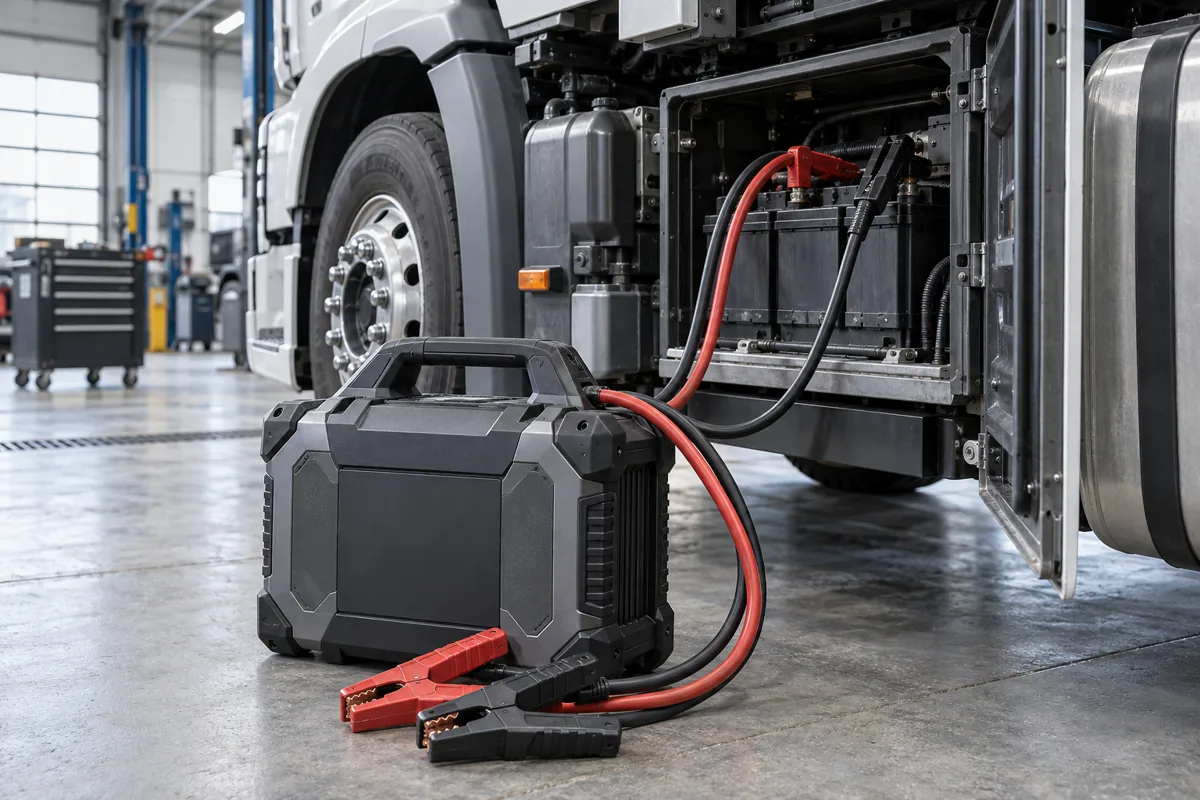
A 24V label is necessary but not sufficient. Confirm whether the vehicle uses a true 24V system, where the batteries are located, and whether the booster requires a manual 12V/24V selection. Do not guess the voltage from vehicle size: many trucks, RVs, boats, and heavy machines still use 12V systems. Connecting a 24V source to a 12V electrical system can cause serious damage.
Also check the engine-size guidance, if provided. Only the NOCO and Primedura listings in this group provide explicit maximum engine displacement figures. For the others, “all gas and diesel engines” is a broad manufacturer claim, not a substitute for a model-specific starting-current requirement. If the battery is physically damaged, frozen, leaking, or has a serious electrical fault, a jump starter may not be an appropriate solution.
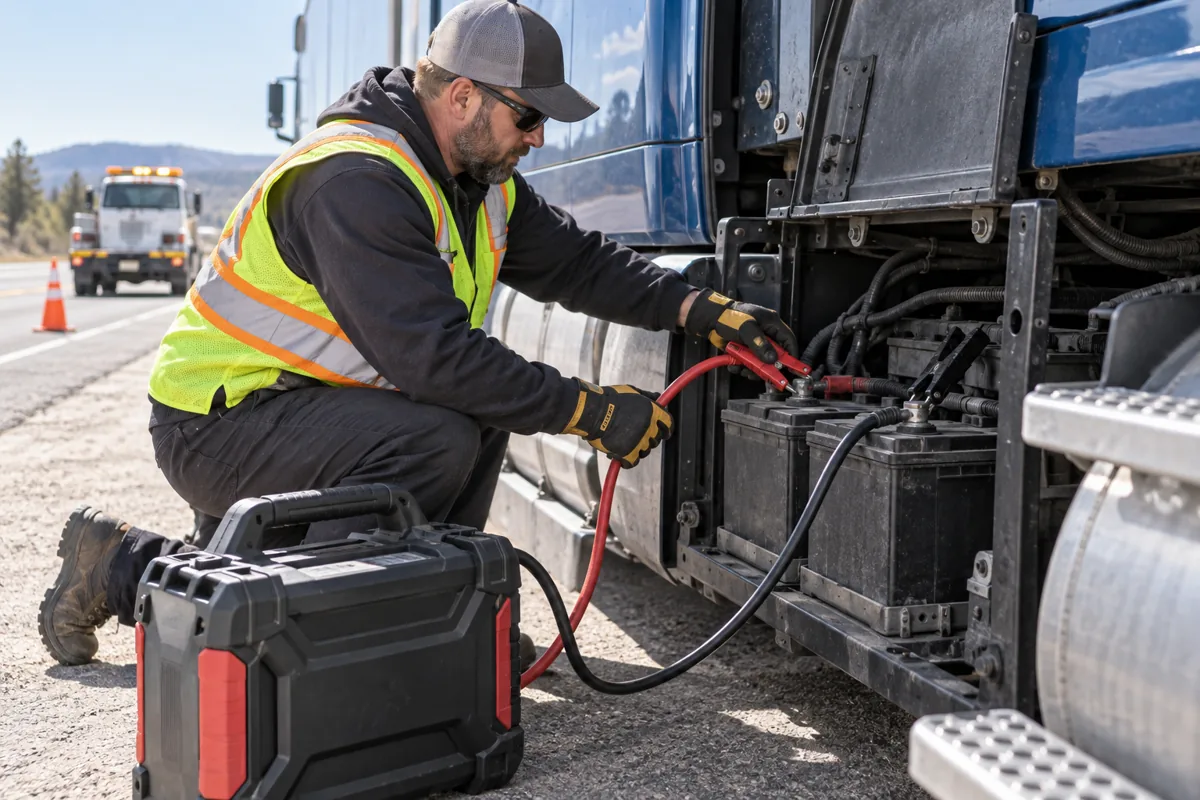
Look beyond peak amps. Rated or instant current, cable gauge and length, clamp design, force-start behavior, voltage selection, battery capacity, recharge time, operating-temperature claims, and warranty terms may matter more for repeated fleet use. Keep the pack charged according to its manual, inspect clamps and cables before use, and store lithium equipment within the manufacturer’s stated temperature and charging limits. The vehicle’s owner manual should control the connection order and any requirement to disable sensitive accessories.
Narrowing Down the Best 24V Jump Starter
- Match the voltage first. Choose a model explicitly listed for 24V use, and verify whether it also supports 12V equipment.
- Size it for the hardest start. Use the largest engine or most demanding machine in your use case, not the average vehicle in the driveway.
- Choose controls based on battery condition. Force-start modes may be useful for low-voltage batteries, but they can bypass some normal safeguards. Use them only as directed.
- Prioritize hardware for repeated work. Long, heavy-gauge leads and robust clamps can be more valuable to a service operator than USB ports or a flashlight.
- Consider ownership logistics. A lighter lithium pack is easier to carry, while a larger professional unit may provide more capability but cost considerably more. Confirm charging accessories, storage requirements, warranty coverage, and replacement support.
- Treat extra outlets as secondary. USB ports, AC inverters, and LED lights are useful emergency features, but they do not establish the unit’s ability to start a particular engine.
Next step: Jump Starter Size Guide for Cars and Trucks, Portable Jump Starter Buying Guide and Best Commercial Jump Starter.
Answers to Common Questions
Can a 24V jump starter start a 12V vehicle?
Some products in this guide are explicitly listed as 12V/24V models, including the FlyAuto, Clore, MyAnts, and YESPER options. Use the correct mode and connection procedure. A 24V-only setting should not be connected to a 12V system.
Is the highest amp rating automatically the best choice?
No. Peak amperage is only one manufacturer-listed figure. Engine displacement, rated current, battery condition, cable and clamp design, temperature, and correct connection all influence whether a start is possible. The 30,000A Primedura has the largest stated peak figure here, but that does not make it the right purchase for every vehicle.
Which 24V jump starter is best for commercial equipment?
The NOCO GB251 has the clearest listed commercial positioning and a stated 32L engine limit. The Primedura lists substantially larger engine coverage and may suit specialized industrial equipment. Confirm the equipment requirements before relying on either product.
Do I need an AC inverter?
Only if you specifically need to power compatible small AC loads. The Scatach is the only product in this set whose listed features include a 400-watt inverter with two 110V outlets. An inverter adds functionality but does not replace a properly sized starting system.
Our Verdict
The best 24V jump starter depends on the consequence of failure and the equipment you need to start. Choose the NOCO Boost Max GB251 when documented commercial coverage, protection features, and included accessories justify the high price. Choose the FlyAuto 8000A 12V/24V when force start and a display are useful but your budget is much lower. Choose the Primedura 30000A only when its unusually large stated engine coverage matches a real requirement. For a more traditional shop-oriented package, the Clore JNC1224 stands out for its listed cables and clamps.
Before ordering, verify the current listing, exact voltage procedure, engine-size guidance, charging method, and warranty. The most defensible purchase is not the one with the biggest number on the box; it is the one whose documented specifications fit your vehicle, operating environment, and ownership needs.