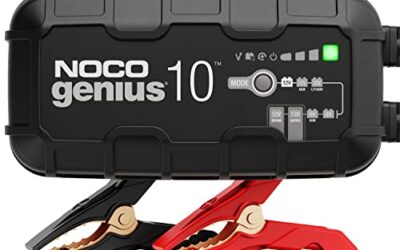
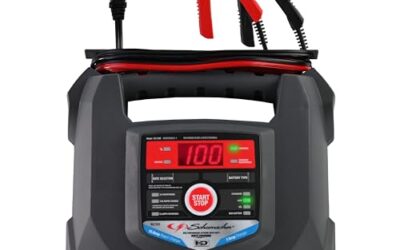
The best battery tester for deep cycle batteries depends first on battery chemistry. For a general-purpose pick, the Battery Tender Battery Load Tester is the strongest documented match because the manufacturer explicitly lists support for 6V and 12V deep-cycle batteries and provides a controlled load test. Owners of serviceable flooded lead-acid batteries may learn more about individual cells from the Mighty Max hydrometer, while the lower-cost Figpade hydrometer covers the same basic diagnostic role.
Do not choose solely by voltage or a tester’s state-of-health display. A starting-battery analyzer may accept the battery’s voltage and chemistry without having a documented deep-cycle test method. Lithium batteries also require a tester and procedure appropriate to their particular chemistry and battery-management system.
Quick verdict: Choose Battery Tender for a documented loaded-performance check of 6V or 12V deep-cycle batteries. Choose a hydrometer only for accessible flooded lead-acid cells, not sealed AGM, gel, or lithium batteries.
Affiliate disclosure: CarTechTalk may earn a commission from qualifying purchases made through product links, without changing the price you pay. Prices listed in the published data are observations and can change, so confirm the current price and specifications before ordering.

Pros
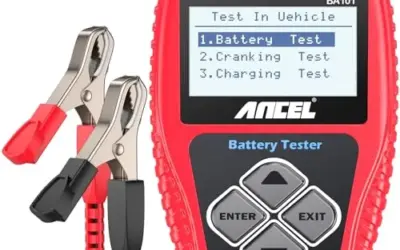
- Covers multiple battery condition and vehicle charging-system checks
- Supports several battery types and global rating standards
- Backlit black-and-white display has adjustable contrast
- Compatible with cars, trucks, boats, RVs, ATVs, lawnmowers, golf carts, and motorbikes over 30Ah
Cons
- Not compatible with lithium or non-12V batteries
- Not intended for motorcycles below 30Ah
Specifications
| Color | Red |
|---|---|
| Size | BA101 |
| Dimensions | 9.5 x 7 x 2 inches |
| Weight | 0.3125 Pounds |
| Product Group | Automotive Parts and Accessories |
| Binding | Automotive |
Best For / Avoid If
Best for buyers prioritizing
- Covers multiple battery condition and vehicle charging-system checks
- Supports several battery types and global rating standards
- Backlit black-and-white display has adjustable contrast
Consider another option if
- Not compatible with lithium or non-12V batteries
- Not intended for motorcycles below 30Ah

Pros
- Covers several common 12V lead-acid battery types
- Combines battery, cranking, and charging-system testing
- Compact design can be stored in a glove box or center console
- Does not require charging the tester before use
Cons
- Limited to 12V batteries
- The listing does not list detailed specifications beyond the stated battery compatibility and testing functions
- The tester powers on only after it is properly attached to a battery
Best For / Avoid If
Best for buyers prioritizing
- Covers several common 12V lead-acid battery types
- Combines battery, cranking, and charging-system testing
- Compact design can be stored in a glove box or center console
Consider another option if
- Limited to 12V batteries
- The listing does not list detailed specifications beyond the stated battery compatibility and testing functions
- The tester powers on only after it is properly attached to a battery

Pros
- Covers multiple battery voltages and battery types
- Provides several battery condition readings, including SOH, SOC, voltage and internal resistance
- Supports in-vehicle and out-of-vehicle testing
- Reverse-connection protection is included
Cons
- Not suitable for deep-cycle batteries
- The corresponding CCA value must be entered for the battery being tested
- The screen may flicker if the clips are not properly clamped
Specifications
| Color | Black |
|---|---|
| Size | BM550-1.8IN |
| Dimensions | 4.88 x 2.74 x 0.89 Inches |
| Product Group | Automotive Parts and Accessories |
| Binding | Tools & Home Improvement |
Best For / Avoid If
Best for buyers prioritizing
- Covers multiple battery voltages and battery types
- Provides several battery condition readings, including SOH, SOC, voltage and internal resistance
- Supports in-vehicle and out-of-vehicle testing
Consider another option if
- Not suitable for deep-cycle batteries
- The corresponding CCA value must be entered for the battery being tested
- The screen may flicker if the clips are not properly clamped

Pros
- Covers cars, motorcycles, trucks, SUVs, boats, ATVs, and lawnmowers
- Supports CCA, JIS, EN, DIN, SAE, IEC, and GB testing standards
- Identifies battery, starter, and alternator-related conditions through separate test functions
- Runs directly from the battery under test without requiring internal batteries
Cons
- The device is powered by the battery under test and does not have an internal battery
- Free software updates are specified for use through a Windows PC
Specifications
| Color | Red |
|---|---|
| Dimensions | 6.46 x 0.94 x 3.39 inches |
| Weight | 0.604375 Pounds |
| Product Group | BISS |
Best For / Avoid If
Best for buyers prioritizing
- Covers cars, motorcycles, trucks, SUVs, boats, ATVs, and lawnmowers
- Supports CCA, JIS, EN, DIN, SAE, IEC, and GB testing standards
- Identifies battery, starter, and alternator-related conditions through separate test functions
Consider another option if
- The device is powered by the battery under test and does not have an internal battery
- Free software updates are specified for use through a Windows PC

Pros
- Supports both 12V and 6V battery systems
- Designed for batteries in cars, pickup trucks, SUVs, motorcycles, RVs, boats, and ATVs
- Single toggle switch and clearly marked color-coded display
- Specified for vehicles with up to 1,000 cranking amps
Specifications
| Color | Black |
|---|---|
| Size | 11.8 inches |
| Dimensions | 3.36 x 6.75 x 11.8 inches |
| Weight | 2.1 pounds |
| Product Group | Automotive Parts and Accessories |
| Binding | Electronics |
Best For / Avoid If
Best for buyers prioritizing
- Supports both 12V and 6V battery systems
- Designed for batteries in cars, pickup trucks, SUVs, motorcycles, RVs, boats, and ATVs
- Single toggle switch and clearly marked color-coded display

Pros
- Covers 12V and 24V systems and multiple lead-acid and lithium battery types
- Provides more than basic voltage readings, including battery health, cranking, charging, and ripple-voltage diagnostics
- Does not require separate batteries or external connections because it draws power from the battery under test
- Includes a color display, QR reporting, and eight language options
- Specified operating temperature range is -4°F to 158°F
Cons
- The tester is designed for 12V and 24V systems and does not list compatibility with other system voltages
Specifications
| Color | Black and Orange |
|---|---|
| Size | 2.64 x 6.69 x 3.66 inches |
| Dimensions | 6.692913379 x 2.6377952729 x 3.6614173191 inches |
| Weight | 0.881849048 pounds |
| Product Group | Automotive Parts and Accessories |
| Binding | Tools & Home Improvement |
Best For / Avoid If
Best for buyers prioritizing
- Covers 12V and 24V systems and multiple lead-acid and lithium battery types
- Provides more than basic voltage readings, including battery health, cranking, charging, and ripple-voltage diagnostics
- Does not require separate batteries or external connections because it draws power from the battery under test
Consider another option if
- The tester is designed for 12V and 24V systems and does not list compatibility with other system voltages

Pros
- Covers multiple battery voltages, chemistries, capacities, and CCA ranges
- Combines battery, starter, alternator, charging, and waveform diagnostics
- QR cloud reporting can be accessed without an app or printer
- Supports starter lithium batteries, including lithium iron phosphate batteries
- Portable design is intended for home users, repair shops, fleet managers, and mobile repairs
Cons
- The listed source data does not include detailed connector specifications or a product description
Best For / Avoid If
Best for buyers prioritizing
- Covers multiple battery voltages, chemistries, capacities, and CCA ranges
- Combines battery, starter, alternator, charging, and waveform diagnostics
- QR cloud reporting can be accessed without an app or printer
Consider another option if
- The listed source data does not include detailed connector specifications or a product description
Pros
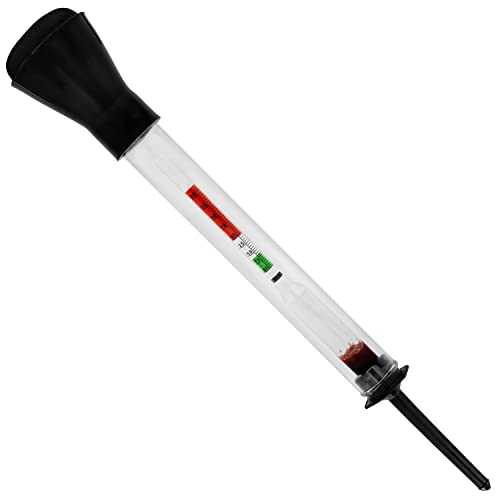
- Supports golf cart and deep cycle battery testing
- Measures battery acid specific gravity
- Compact handheld format
Best For / Avoid If
Best for buyers prioritizing
- Supports golf cart and deep cycle battery testing
- Measures battery acid specific gravity
- Compact handheld format
Pros
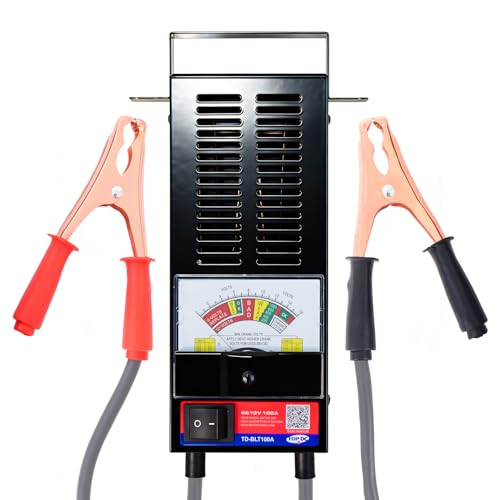
- Covers cars, motorcycles, RVs, boats, ATVs, and other vehicles
- Supports both 6V and 12V battery testing
- Combines battery and charging-system checks in one device
- Shock-resistant meter and color-coded clips support convenient operation
Cons
- Uses an analog dial display rather than a stated digital display
- CCA measurement range is limited to 100-1000 CCA
Specifications
| Color | Black |
|---|---|
| Size | TD-BLT100A |
| Dimensions | 11.8 x 6.7 x 3.2 inches |
| Weight | 2 pounds |
| Product Group | BISS |
Best For / Avoid If
Best for buyers prioritizing
- Covers cars, motorcycles, RVs, boats, ATVs, and other vehicles
- Supports both 6V and 12V battery testing
- Combines battery and charging-system checks in one device
Consider another option if
- Uses an analog dial display rather than a stated digital display
- CCA measurement range is limited to 100-1000 CCA

Pros
- Supports electrolyte-density checks across 6V, 12V, and 24V vehicle batteries
- Includes a clear scale with color-coded reading ranges
- Supplied instructions describe a straightforward fluid-suction measurement process
- The product listing states that readings can help indicate battery condition
Cons
- The product is intended for electrolyte-density measurement; no electrical testing functions are specified
Specifications
| Color | Black |
|---|---|
| Size | 11.02 x 2.83 x 1.9 inches |
| Dimensions | 11.02 x 2.83 x 1.9 inches |
| Weight | 0.15625 Pounds |
| Product Group | Automotive Parts and Accessories |
| Binding | Tools & Home Improvement |
Best For / Avoid If
Best for buyers prioritizing
- Supports electrolyte-density checks across 6V, 12V, and 24V vehicle batteries
- Includes a clear scale with color-coded reading ranges
- Supplied instructions describe a straightforward fluid-suction measurement process
Consider another option if
- The product is intended for electrolyte-density measurement; no electrical testing functions are specified
Comparison of the Documented Deep-Cycle Matches
| Product | Test method | Listed voltage scope | Deep-cycle use |
|---|---|---|---|
| Battery Tender Battery Load Tester | Electrical load and voltage | 6V and 12V | Explicitly listed |
| Mighty Max Battery Hydrometer | Electrolyte specific gravity | – | Explicitly listed |
| Figpade Hydrometer | Electrolyte specific gravity | 6V, 12V, and 24V applications | Explicitly listed |
Prices are based only on the listed observations and may change. Confirm current pricing and compatibility before purchase.
Choosing Factors for Battery Chargers & Testers
CarTechTalk evaluated the published manufacturer-listed specifications rather than conducting laboratory or road evaluation. We prioritized an explicit deep-cycle application, battery chemistry, voltage, test method, diagnostic limitations, and safety information. We then separated electrical load testers from hydrometers because they answer different questions.
Ten products were provided for consideration. Only three explicitly document deep-cycle use in the available information, so only those three are recommended.
The other seven products were not automatically treated as deep-cycle testers merely because they support boats, RVs, golf carts, broad amp-hour ranges, or common lead-acid chemistries. Those applications can contain either starting or deep-cycle batteries, and compatibility with one does not prove a validated test method for the other.
Compatibility and Buying Guidance
Why several digital analyzers were not selected
The ANCEL BA101, TOPDON BT100, Acclope BT60 Pro, TOPDC 100A, KONNWEI KW341, and ANCEL BT410 have useful manufacturer-listed capabilities, but the published descriptions do not explicitly establish a deep-cycle testing application. Most emphasize CCA, cranking, or automotive starting-system analysis. CCA is primarily a starting-battery rating and may not appear on a deep-cycle battery labeled mainly in amp-hours or reserve capacity.
The KINGBOLEN BM550 is an especially clear exclusion: its published specifications expressly state that it is not suitable for deep-cycle batteries. Its 6V, 12V, and 24V coverage therefore does not make it an appropriate recommendation for this search intent.
A digital conductance tester may still provide voltage, internal resistance, or trend data when its manufacturer confirms compatibility with the exact battery. However, an algorithm that requests a CCA value can be awkward or misleading when the battery has no legitimate CCA rating. Do not invent an input value or convert amp-hours to CCA using an unsupported formula.
Test individual batteries, not an assembled bank
Deep-cycle systems often connect batteries in series or parallel. A 24V bank might consist of multiple 6V or 12V batteries, but that does not mean a 24V tester should be applied indiscriminately across the full bank. Follow the tester and battery manufacturers’ procedures. Testing batteries individually can help expose imbalance that a single bank-level voltage reading masks.
Before disconnecting a bank, shut down charging sources and loads and follow the equipment maker’s isolation sequence. Series and parallel wiring can deliver dangerous fault current even at relatively low voltage. If the installation is unfamiliar, use a qualified battery technician or electrician.
Selecting a Deep-Cycle Battery Tester
- Identify the chemistry. Flooded lead-acid batteries may support hydrometer testing. AGM and gel batteries are sealed and require a compatible electrical tester. Lithium batteries need chemistry-appropriate equipment and may be affected by the battery-management system’s state.
- Match nominal voltage. Confirm whether the tool supports each individual battery’s voltage, not merely the combined bank voltage.
- Decide what you need to learn. A voltmeter shows electrical potential, a hydrometer checks flooded-cell specific gravity, a load tester observes voltage under demand, and a capacity test measures delivered energy over time. These methods are not interchangeable.
- Check the battery’s rating label. Do not buy a CCA-based analyzer unless the battery has a supported rating or the tester documents an appropriate amp-hour mode for deep-cycle use.
- Consider repeatability. Trend readings under consistent charge state, rest period, temperature, and connection conditions. A single result should not automatically trigger replacement when charging history or surface charge may distort it.
- Plan for safe access. Hydrometers involve corrosive electrolyte. High-current load testers generate heat. Both require correct polarity, secure connections, ventilation, and adherence to the included instructions.
Before you buy, it is worth reading Best Battery Tester for Solar Batteries, Battery Tester Buying Guide for Beginners and Battery Tester For Button Batteries.
Answers to Common Questions
Can a regular car battery tester check a deep-cycle battery?
Only when the tester manufacturer documents compatibility with the battery’s chemistry, voltage, rating system, and intended application. A tester designed around automotive CCA can produce a reading, but that does not necessarily establish deep-cycle capacity or suitability.
Is a hydrometer better than a load tester?
Neither is universally better. A hydrometer can compare individual cells in an accessible flooded lead-acid battery. A load tester evaluates how battery voltage behaves under a specified electrical load. Using both can provide complementary evidence on compatible flooded batteries.
Can these testers measure amp-hour capacity?
No published specification for the three recommended products documents a complete amp-hour capacity test. Measuring usable capacity normally requires a controlled discharge procedure with appropriate monitoring and cutoff limits. A state-of-health estimate, specific-gravity reading, or short load test is not the same measurement.
Can I use a hydrometer on an AGM battery?
No. AGM batteries are sealed and do not provide service access for drawing an electrolyte sample. Use an electrical tester explicitly compatible with AGM batteries and the intended deep-cycle application.
What should I do with conflicting results?
Fully charge the battery using a compatible charger, follow the manufacturer’s rest and testing instructions, verify clean connections, and repeat the test under comparable conditions. Persistent cell imbalance, rapid voltage collapse, physical damage, leakage, swelling, or unusual heat warrants professional assessment. Do not continue testing a visibly damaged battery.
Our Verdict
For most owners seeking the best battery tester for deep cycle batteries, the Battery Tender Battery Load Tester is the most defensible choice from the products covered. It explicitly supports 6V and 12V deep-cycle batteries and applies a defined electrical load, making it suitable for a practical condition check, though not a full capacity measurement.
Choose the Mighty Max hydrometer when individual-cell diagnosis on a serviceable flooded battery matters most. The Figpade hydrometer is the budget alternative, but its readings require careful interpretation and temperature awareness. Owners of AGM, gel, sealed, lithium, or 24V bank configurations should skip the hydrometers and confirm explicit deep-cycle compatibility with the tester and battery manufacturers before purchasing.