Replace a leaking floor jack if it sinks under load, leaks again after an approved repair, or has damaged parts that affect safe lifting. A small oil mark can signal a failing seal, but the jack’s manual and its behavior determine whether service is allowed or replacement is the safer choice.
Key takeaways
- Do not lift a vehicle with a jack that leaks, creeps down, or behaves unpredictably.
- Never work beneath a vehicle supported only by a floor jack. Use correctly rated jack stands at vehicle-approved support points.
- Some jacks allow owner maintenance or professional seal repair; others do not. Follow the exact jack manual.
- Replace a jack with cracked, bent, badly corroded, or otherwise compromised structural parts.
- Hydraulic fluid on the floor is a warning sign, not proof of which seal or part has failed.
When to replace a leaking floor jack
Replace the jack, or stop using it until an authorized repair is completed, if hydraulic fluid leaks from the ram, pump, reservoir, or connections. Replacement becomes the prudent choice when the jack cannot hold a load, the leak returns after permitted service, or repair parts and procedures are not supported for that model.
Leak size alone cannot establish safety. A few drops may come from a seal beginning to fail, while fluid left from maintenance may have another explanation. Either way, do not test a suspect jack under a vehicle. Check for a fresh leak with the jack unloaded, then consult its manual or the manufacturer’s service channel.
A floor jack lifts a vehicle; it does not provide a dependable long-term support. If a vehicle is already raised and the jack begins leaking or sinking, keep clear of the vehicle’s path and do not reach underneath to investigate. Follow the vehicle and jack manuals for safe lowering or support. Call a qualified shop or roadside professional if you cannot lower it safely.
Warning signs that mean stop using the jack
| Symptom | Possible concern | Action |
|---|---|---|
| Fresh hydraulic fluid appears after cleaning and inspection | Seal, valve, reservoir, or connection leak | Do not lift a vehicle. Check the manual for approved service. |
| Jack slowly lowers under a load | Internal leakage, valve trouble, or another hydraulic fault | Stop using it. Never rely on it to hold a vehicle. |
| Jack will not raise, raises unevenly, or behaves inconsistently | Hydraulic fault, air in the system, damage, or incorrect setup | Stop and follow model-specific troubleshooting instructions. |
| Frame, arm, saddle, wheels, or handle socket is bent, cracked, or badly corroded | Structural damage or compromised movement | Replace the jack unless the manufacturer approves a specific repair. |
| Jack makes unusual noises or the saddle shifts during lifting | Possible wear, damage, or unstable positioning | Lower the load only if safe, then stop using the jack pending inspection. |
These symptoms can have more than one cause. For example, a jack that will not rise may have low fluid, trapped air, a blocked passage, or a damaged part. The symptom alone does not identify a repair. Use the troubleshooting steps for that model, not a procedure copied from another jack.
Is the fluid leak definitely from the jack?
Not always. Engine oil, transmission fluid, coolant, and other vehicle fluids can collect near a jack after service or a vehicle leak. Hydraulic jack oil is also not always easy to identify by appearance alone. Do not touch unknown fluid with bare hands or assume its type from color.
With the jack unloaded and away from a raised vehicle, wipe its exterior using a method allowed by the manual. Look for fresh fluid around the jack itself after moving it to a clean, dry surface. Do not open the reservoir or loosen hydraulic fittings just to locate a leak. Pressurized fluid can escape, and incorrect reassembly can make the jack unsafe.
If the fluid source remains unclear, have a qualified service provider inspect it. A fluid spill near the jack does not establish that the jack is the source, but uncertainty is not a reason to use a jack that shows signs of failure.
Can a leaking floor jack be repaired?
Some floor jacks can be serviced with manufacturer-approved seals, fluid, or replacement parts. Others may not have an owner-serviceable hydraulic system. The permitted repair depends on the jack’s make, model, condition, and instructions. A general seal kit or a procedure for a similar-looking jack does not establish compatibility.
Check the model label and manual for maintenance instructions, fluid type, parts support, and repair limits. If the manual directs the owner to an authorized service center, follow that direction. Do not substitute automotive brake fluid, power-steering fluid, or another hydraulic fluid unless the jack manufacturer specifically calls for it.
After any approved repair, use the model’s prescribed inspection and test procedure without placing yourself under a vehicle. If the jack still leaks, will not hold, or acts unpredictably, retire it. Do not keep using it because it can still raise an unloaded saddle.
A practical replace-or-service decision
- Stop lifting. Keep the jack out of service if you see fresh hydraulic fluid, sinking, uneven movement, or damage.
- Check the source. With no vehicle supported, inspect for fresh fluid on the jack and note where it appears. Do not dismantle hydraulic parts.
- Find the exact instructions. Use the model label to locate the correct manual or contact the manufacturer. Similar jack designs can use different fluids and service procedures.
- Decide from the allowed repair path. Use an approved service provider or repair process if the manufacturer supports one. Replace the jack if repair is unsupported, structural damage exists, or safe operation cannot be restored.
- Choose a suitable replacement. Match rated capacity, minimum and maximum lifting height, saddle fit, and intended vehicle use to the vehicle and lifting task. A higher capacity rating alone does not guarantee that the jack fits beneath the vehicle or reaches its approved lift points.
Vehicle weight and clearance vary by model and configuration. For planning a jack purchase, see our guides to floor jacks for SUVs and floor jacks for pickup trucks. Use the vehicle manual to identify approved lift points and the jack manual to confirm the jack’s operating limits.
Common mistakes
- Using the jack because the leak looks small. Leak size does not show whether the jack will hold a load. Stop use until the fault is assessed.
- Adding any available fluid. The wrong fluid can damage seals or affect operation. Use only the type specified for that jack.
- Opening a valve by guesswork. Valve settings and bleeding steps differ by model. Do not copy a turn count or procedure from another jack.
- Trusting the jack as vehicle support. A jack can lose pressure or shift. Support a raised vehicle with correctly rated stands installed at vehicle-approved points.
- Judging capacity by vehicle weight alone. Lift-point location, load distribution, clearance, and jack geometry also matter. Follow the vehicle and tool manuals rather than applying a universal weight-percentage rule.
- Keeping a damaged jack for occasional use. Infrequent use does not reverse corrosion, deformation, or a hydraulic fault.
For safe support after lifting, read our guide to jack stands and vehicle support. Stands are separate support equipment, not a repair for a leaking jack.
When to get professional help
Ask the manufacturer or a qualified hydraulic-equipment service provider when you cannot identify the leak, the manual does not cover the fault, or the jack needs internal repair. Professional inspection also makes sense after a drop, overload, collision with another object, or visible frame damage.
Get help immediately if a vehicle is raised and the jack is sinking, unstable, or leaking. Stay out from beneath the vehicle and keep others clear. Do not try to catch, reposition, or repair a failing jack while it supports a vehicle. If safe lowering is unclear, contact a qualified professional.
Dispose of a retired jack and any hydraulic fluid according to local waste rules. Keep leaking fluid away from drains, soil, and children or pets. The correct disposal route can vary by location and fluid type.
Gear that can help
If you need floor jacks or jack stands for this job, these picks already appear in our floor jacks guides. Check the full guide for fit and who should skip each one.
Pros
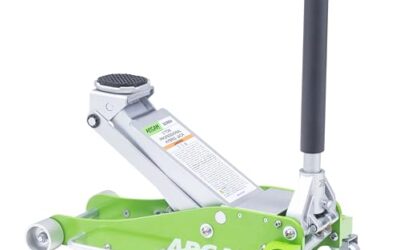
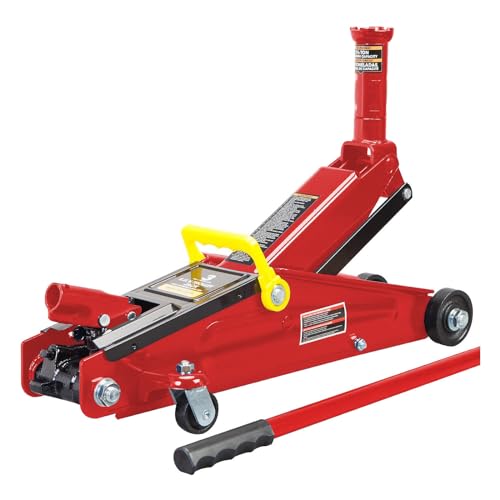
- High 20-7/8-inch maximum lift height for SUVs and extended-height trucks
- 6,000-pound capacity is listed for cars, trucks, vans, and SUVs
- 360-degree swivel casters support maneuverability
- Includes a limited one-year manufacturer warranty
Cons
- The listed minimum lifting height is 5-7/8 inches, so lower-clearance compatibility is not established
- The manufacturer warranty is limited to one year
- The listing does not include a detailed specifications array
Best For / Avoid If
Best for buyers prioritizing
- High 20-7/8-inch maximum lift height for SUVs and extended-height trucks
- 6,000-pound capacity is listed for cars, trucks, vans, and SUVs
- 360-degree swivel casters support maneuverability
Consider another option if
- The listed minimum lifting height is 5-7/8 inches, so lower-clearance compatibility is not established
- The manufacturer warranty is limited to one year
- The listing does not include a detailed specifications array

Pros
- Low-profile design supports access under vehicles with limited ground clearance
- Extended reach is intended for sports cars, lowered vehicles, and modified vehicles
- Steel construction and 3-ton capacity are suited to home and workshop vehicle maintenance
- Dual-piston RAPID PUMP technology is designed to reduce the number of pump strokes
Cons
- Color is provided randomly
Specifications
| Color | Random Color |
|---|---|
| Size | 3 Ton |
| Product Group | Automotive Parts and Accessories |
Best For / Avoid If
Best for buyers prioritizing
- Low-profile design supports access under vehicles with limited ground clearance
- Extended reach is intended for sports cars, lowered vehicles, and modified vehicles
- Steel construction and 3-ton capacity are suited to home and workshop vehicle maintenance
Consider another option if
- Color is provided randomly
Pros
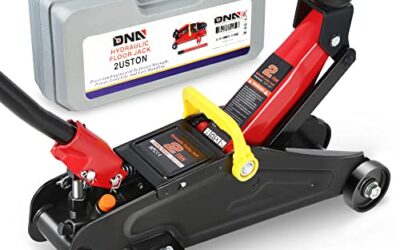
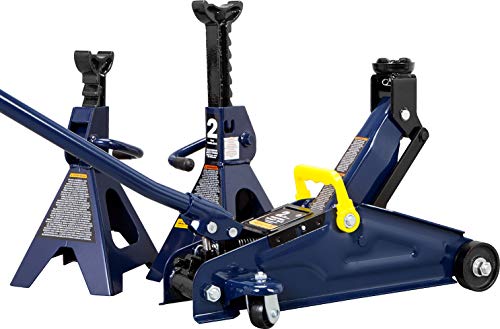
- Combines a floor jack and two jack stands in one package
- Adjustable jack stands have wide pyramidal bases and large saddle surfaces
- Heavy-duty steel construction is specified for the jack and stands
- The floor jack includes a built-in carry handle for portability
Cons
- Not recommended for SUVs or trucks
- The 2-ton capacity limits the product to vehicles within the stated load rating
- The listing does not include a detailed specifications array or product description
Best For / Avoid If
Best for buyers prioritizing
- Combines a floor jack and two jack stands in one package
- Adjustable jack stands have wide pyramidal bases and large saddle surfaces
- Heavy-duty steel construction is specified for the jack and stands
Consider another option if
- Not recommended for SUVs or trucks
- The 2-ton capacity limits the product to vehicles within the stated load rating
- The listing does not include a detailed specifications array or product description
Frequently asked questions
Can I use a floor jack that leaks only a few drops?
No, not to lift a vehicle. A small leak can still point to a failing seal or hydraulic fault. Stop use and check the exact model’s service instructions.
Can I repair a floor jack myself?
Only if the manufacturer permits owner service and provides instructions for that model. Use specified parts and fluid. Do not improvise seals, fittings, or bleeding steps.
How do I know whether fluid came from the jack or the vehicle?
Inspect the unloaded jack on a clean, dry surface and look for fresh fluid on its body. Fluid appearance alone may not identify its source. If the source is unclear, have it checked before using the jack.
Should I replace a jack that lowers slowly?
Stop using it. Slow lowering under load means it cannot be trusted to hold a vehicle. Replace it or have it repaired through a manufacturer-approved service path, then follow the specified inspection procedure.
Can jack stands make a leaking jack safe?
No. Stands support a vehicle after it has been raised; they do not repair a jack or make a faulty lift safe. Use sound lifting equipment and stands according to both manuals.
Sources and further reading
- Safety Standard for Portable Automotive Service Equipment (ASME): Read about the safety standard covering portable automotive service equipment, including lifting equipment.