Why wheel chocks matter when lifting a car comes down to one risk: a vehicle can roll while a jack raises one end. Chocks help restrain the tires that remain on the ground, but they do not replace a level work area, a properly placed jack, or jack stands.
Key takeaways
- Chocks limit tire movement while a vehicle is being raised or lowered.
- Place chocks at the wheels that will remain on the ground, following the vehicle and chock instructions.
- Set the parking brake and transmission or gear selector as directed by the vehicle manual; chocks are an added restraint, not a substitute.
- Use a floor jack only to lift. Support the vehicle with correctly positioned jack stands before working underneath it.
- Do not lift a vehicle on soft, sloped, loose, or unstable ground.
Why wheel chocks matter when lifting a car
A jack changes how the vehicle’s weight rests on its tires. As a wheel lifts, the tires still touching the ground become the vehicle’s remaining contact points. If the vehicle rolls, shifts, or settles, the jack can move out of position or the vehicle can fall. Chocks help resist rolling at the tires that stay on the ground.
That restraint matters during both lifting and lowering. A vehicle can move when the jack first takes weight, when a tire leaves the ground, or when the jack lowers the vehicle. A transmission setting and parking brake can help, but they are not a reason to skip chocks. Their effectiveness depends on the vehicle, surface, and setup.
Chocks do not keep a vehicle from tipping, prevent every kind of movement, or hold it up if a jack fails. They also do not make an unsuitable surface safe. Treat them as one part of a lifting procedure, not as a device that makes any setup secure.
Where should you place wheel chocks?
Chock the tires that will stay on the ground. The exact placement depends on which end you are lifting and what the vehicle and chock instructions say. A common approach is to secure a grounded tire on the opposite end from the lift, but do not treat that as a universal rule for every vehicle or task.
For example, when lifting the front of a vehicle, the rear tires remain on the ground. Chocks placed at the rear tires can help resist rolling, with placement and number guided by the vehicle and chock instructions. When lifting the rear, the front tires remain grounded, so the relevant chocking points change. If raising one side, consider which grounded tires could allow the vehicle to roll in either direction.
Position a chock snugly against the tire tread rather than leaving a visible gap. If instructions call for chocking both sides of a tire, place one at the front and one at the rear. Do not crawl under a vehicle to adjust a chock after lifting begins. Stop and lower the vehicle safely if placement needs correction.
Vehicle layout affects the work. A front-wheel-drive car, rear-wheel-drive truck, all-wheel-drive vehicle, or vehicle with an unusual parking-brake arrangement may respond differently to a gear setting or brake. The owner’s manual and service information take priority over a general example. Model year and configuration can matter, so use instructions that match the vehicle.
Safe lifting sequence: chocks, jack, and stands
Use this sequence as a planning checklist, not as a substitute for the vehicle or equipment manuals. Those instructions determine approved lift points, support points, equipment limits, and any model-specific steps.
- Choose a suitable work area. Park on firm, level ground away from traffic. Do not lift on a slope, soft soil, gravel that shifts, or a surface that cannot support the jack and vehicle.
- Secure the vehicle before lifting. Follow the owner’s manual for parking-brake use and transmission or gear-selector position. Remove occupants and loose items that could shift.
- Place chocks at grounded tires. Use the position and number directed by the chock instructions and applicable vehicle procedure. Check that each chock sits firmly against the tread.
- Use the correct lift point. Find the vehicle’s approved jack point in its manual or service information. A pinch weld, subframe, or other visible structure is not automatically a safe lift point.
- Raise the vehicle with a suitable jack. Keep clear of the vehicle’s path and watch for movement. If a chock shifts, the jack leans, or the vehicle moves, stop. Lower it if that can be done safely, then reassess the setup.
- Support the vehicle with jack stands. Place stands only at approved support points and follow their instructions. Lower the vehicle onto the stands as directed, then check that it rests securely before working near or beneath it.
- Lower the vehicle under control. Remove tools and people from the hazard area. Follow the jack instructions, keep the chocks in place until the tires are back on the ground, and remove them only after the vehicle is secure.
A floor jack supports a vehicle during lifting; it is not a substitute for stands during under-vehicle work. For help comparing equipment capacity and lift range, see our floor jack guide for SUVs and guide to jack stands. Those guides do not replace vehicle-specific lift-point instructions.
What makes a chock suitable?
A chock needs to fit the tire and suit the surface. A small chock may not contact a larger tire in a useful way. A chock that is damaged, cracked, badly worn, or unstable on the floor may not hold as intended. Check its instructions for tire size, surface conditions, placement, and care.
Material and shape alone do not prove that a chock is suitable for a particular vehicle. Tire diameter, tread width, vehicle weight, slope, and floor surface all affect how the chock meets the tire and resists movement. Do not assume that a chock intended for a trailer or light vehicle is suitable for a heavier car or truck.
Inspect chocks before use. Replace a damaged unit rather than trying to repair it for lifting work. Keep the contact area clear of oil, dirt, and debris, and store chocks as their instructions specify. If the chock moves or deforms during use, stop the lift and reassess the entire setup.
Common mistakes
- Relying on the parking brake alone. Brake design and which wheels it acts on vary. Use chocks at the grounded tires as part of the procedure.
- Chocking the wheels that are about to leave the ground. Chocks restrain grounded tires. Plan placement around the lift being performed.
- Using a rock, brick, or loose piece of wood. Improvised objects can roll, break, or slip. Use purpose-made chocks suited to the tire and surface.
- Working under a vehicle held only by a jack. A jack can fail or shift. Use properly rated stands at approved support points before going under the vehicle.
- Assuming chocks fix a poor work surface. They cannot make a slope, soft ground, or unstable floor safe for lifting.
- Placing chocks after the vehicle is already raised. Chock before lifting. Do not reach beneath or around an unstable vehicle to correct placement.
- Using a generic lift point. Vehicle structure and approved points vary by model and year. Follow the matching vehicle instructions.
When to get professional help
Stop and ask a qualified technician if the vehicle has no clear approved lift points, the specified procedure is unfamiliar, or the vehicle’s condition makes support uncertain. Rust, collision damage, modified suspension, unusual bodywork, or a loaded vehicle can change what is safe.
Get help if the surface cannot support stable lifting, the jack or stands do not fit the approved points, or the vehicle shifts during setup. Do not try to catch or stabilize a moving vehicle. Move away from the hazard and lower it only if doing so is safe and follows the equipment instructions.
Gear that can help
If you need floor jacks or jack stands for this job, these picks already appear in our floor jacks guides. Check the full guide for fit and who should skip each one.

Pros
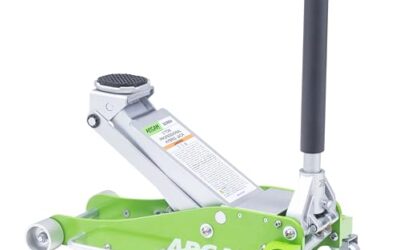
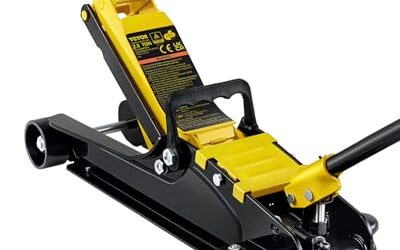
- High 3-ton lifting capacity for home, repair-shop, and fleet-maintenance use
- Low-profile lifting range covers the listed sedan, SUV, and light-truck compatibility claims
- Includes dual-piston lifting, overload protection, and controlled lowering features
- Steel frame is described as resistant to deformation under pressure
Specifications
| Color | GREEN |
|---|---|
| Dimensions | 28.3464 x 13.58265 x 6.2992 inches |
| Weight | 70 Pounds |
| Product Group | Automotive Parts and Accessories |
Best For / Avoid If
Best for buyers prioritizing
- High 3-ton lifting capacity for home, repair-shop, and fleet-maintenance use
- Low-profile lifting range covers the listed sedan, SUV, and light-truck compatibility claims
- Includes dual-piston lifting, overload protection, and controlled lowering features

Pros
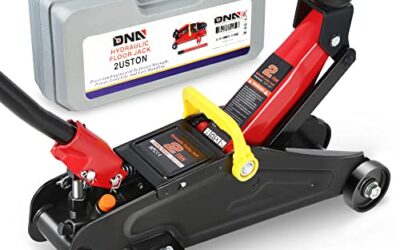
- Low-profile design supports access under low-clearance vehicles
- 5,000-pound capacity is suited to tire changes, brake repairs, and general garage maintenance
- Swivel casters and steel wheels support movement and positioning
- Built-in overload protection is included
Cons
- The 14.57-inch maximum lift height may limit compatibility with some vehicles
Specifications
| Color | ORANGE |
|---|---|
| Dimensions | 20 x 8.7 x 3.35 inches |
| Weight | 31.40043997666 Pounds |
| Product Group | Automotive Parts and Accessories |
| Binding | Automotive |
Best For / Avoid If
Best for buyers prioritizing
- Low-profile design supports access under low-clearance vehicles
- 5,000-pound capacity is suited to tire changes, brake repairs, and general garage maintenance
- Swivel casters and steel wheels support movement and positioning
Consider another option if
- The 14.57-inch maximum lift height may limit compatibility with some vehicles
Pros
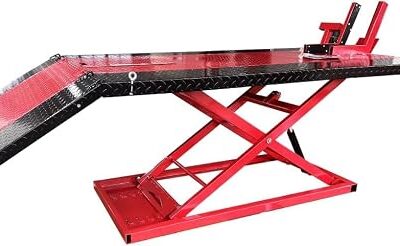
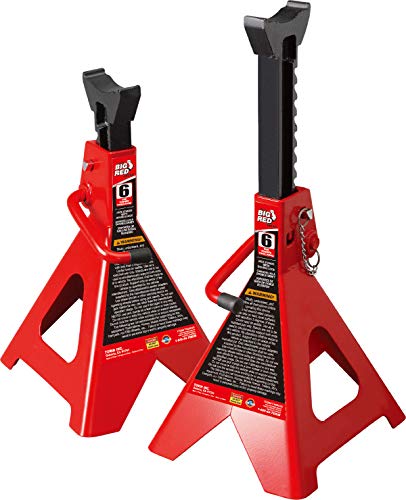
- Secondary locking pin mechanism adds redundant support layer
- Large base footprint provides stable ground contact
- Wide height range suits small cars, ATVs, and UTVs
Cons
- Unit weight is 18 pounds, heavy to reposition
- Manufacturer warranty term limited to 1 year
Specifications
| Color | RED |
|---|---|
| Size | 6 Ton |
| Dimensions | 11.7 x 10 x 18.6 inches |
| Weight | 18 Pounds |
| Product Group | Automotive Parts and Accessories |
| Binding | Automotive |
Best For / Avoid If
Best for buyers prioritizing
- Secondary locking pin mechanism adds redundant support layer
- Large base footprint provides stable ground contact
- Wide height range suits small cars, ATVs, and UTVs
Consider another option if
- Unit weight is 18 pounds, heavy to reposition
- Manufacturer warranty term limited to 1 year
Frequently asked questions
Do I need wheel chocks if the parking brake is on?
Yes, use chocks as an additional restraint when the lifting procedure calls for them. A parking brake may not restrain every wheel, and its arrangement varies by vehicle. Follow the vehicle manual and chock instructions.
Should chocks go in front of or behind the tire?
Placement depends on the lift, the direction the vehicle could roll, and the equipment instructions. Some procedures call for chocking both sides of a grounded tire. Use the vehicle and chock instructions rather than assuming one position works for every job.
Can wheel chocks replace jack stands?
No. Chocks help limit rolling at tires that remain on the ground. They do not support the raised part of the vehicle. Use stands at approved points before working underneath it.
Can I lift a car on a driveway?
Only if the surface is firm, level, and suitable for the jack and vehicle. A sloped or soft driveway can let the jack or chocks shift. If the surface is not stable, do not lift there.
Sources and further reading
- Safety Standard for Portable Automotive Service Equipment (ASME): Information on the safety standard covering portable automotive service equipment, including lifting equipment.