To inspect jack stands before use, check each stand for damage, confirm its locking parts work, and match its capacity and contact point to your vehicle. Do this before lifting, on a stable work surface, and follow both vehicle and stand manuals.
- Reject stands with cracks, serious rust, bent parts, damaged welds, or loose feet.
- Test the ratchet, pin, or other locking system without a load.
- Use stands as a matched pair when the job and instructions call for a pair.
- Never work beneath a vehicle supported only by a floor jack.
- Stop if you cannot tell whether damage affects the stand’s strength or locking action.
What to check before using jack stands
A jack stand must have an intact frame, stable base, and working lock. Its rated capacity and height range must suit the job, and its saddle must fit the vehicle’s approved support point. A stand can look sound but still be unsafe if its lock slips or the vehicle contact point is wrong.
Inspect stands in good light before every use. Check them after storage, transport, a drop, or any unusual load as well. A previous successful job does not show that a stand remains safe today.
Use the vehicle owner’s manual or service information to identify approved lift and support points. Stand capacity labels and rating conventions can vary. Read the stand instructions and do not assume a rating printed on one stand means the same thing as the pair’s combined capacity.
How to inspect jack stands before use: numbered steps
- Read the labels and instructions. Check the stand’s rated capacity, operating range, and setup instructions. Make sure the labels are readable and the stands are intended for automotive support. If the rating is missing or unreadable, do not guess.
- Check the base and feet. Look for cracks, bends, deep corrosion, missing feet, or feet that are loose or uneven. The stand must sit flat on a firm, level surface. Do not use a stand with a damaged or unstable base.
- Inspect the frame and welds. Look over the legs, post, handle, and welded joints. Watch for cracks, splits, distorted metal, separated welds, or heavy rust that has eaten into the structure. Surface discoloration alone may not show the full condition; if corrosion has changed the metal or left its strength uncertain, retire the stand.
- Examine the saddle. Check the top support for cracks, deformation, or a loose part. Its shape must suit the vehicle’s approved support point. Do not add improvised blocks or alter the saddle to make a poor fit work.
- Test the height adjustment. Raise and lower the post or adjuster through its intended range. It should move as the manual describes, without binding, wobble beyond normal operation, or visible damage. Keep fingers clear of pinch points.
- Test the lock. Engage and release the ratchet, pin, or locking device according to its instructions. Confirm it seats fully and stays engaged during the unloaded check. A lock that sticks, slips, has a missing part, or does not seat completely is a stop-use condition.
- Check the pair. Compare the stands for matching type, height range, condition, and rating. Do not combine unlike stands unless their instructions and the job explicitly allow it. A mismatched pair can support the vehicle unevenly.
- Check the work area and vehicle fit. Confirm the floor is firm and level, the stand can reach the correct support point, and the vehicle manual permits that point. Do not use stands on soft ground, a slope, or an improvised surface.
Jack stand inspection checklist
| Area | Pass check | Stop-use sign |
|---|---|---|
| Labels and capacity | Rating and instructions are readable and suit the job | Missing label or unclear capacity |
| Base and feet | Base sits flat; feet are secure | Cracked, bent, loose, or unstable base |
| Frame and welds | No visible structural damage or severe corrosion | Crack, distortion, separated weld, or metal loss |
| Adjustment | Moves as instructed and holds its intended position | Binding, damage, or excessive looseness |
| Lock | Engages fully and remains engaged in unloaded test | Slip, incomplete engagement, missing part, or sticking |
| Saddle and fit | Intact and suitable for the vehicle’s approved support point | Damaged saddle or uncertain contact point |
After inspection: set up and load stands safely
A visual inspection cannot prove a stand’s full load capacity. It can catch visible defects and basic operating problems, but it cannot replace the maker’s rating, instructions, or correct vehicle support points.
Before lifting, secure the vehicle as directed by its manual. Work on a firm, level surface, keep people clear, and use wheel chocks where the vehicle instructions call for them. Raise the vehicle with a suitable floor jack, place stands at approved support points, and lower the vehicle carefully onto them. Do not put any part of your body under a vehicle while positioning stands.
Once supported, check that each stand sits flat and that its lock remains engaged. If the vehicle shifts, a stand tilts, or contact looks uncertain, move clear. Do not crawl under the vehicle to adjust a loaded stand. Use the jack to lift the vehicle clear before repositioning, following the equipment instructions.
A floor jack and jack stands have different jobs. The jack raises the vehicle; stands hold it after the load is transferred. For help choosing lifting equipment for a particular vehicle type, see our guides to floor jacks for SUVs and floor jacks for pickup trucks.
When to retire a jack stand
Remove a stand from service if you find a crack, bent leg, damaged weld, unstable foot, failed lock, or other defect that could affect support. Do not straighten, weld, drill, or modify a stand unless its maker gives an approved repair procedure. A repair can change how the stand carries load.
Also stop using a stand after a severe impact or overload when its condition is uncertain, even if damage is not obvious. Mark it so nobody mistakes it for usable equipment, and follow local disposal guidance. Do not pass a questionable stand to another person.
For more context on stand types and capacity selection, see our jack stand guide. The right choice still depends on the stand’s instructions, vehicle support points, and the specific lifting job.
Common mistakes
- Checking only the outside. Inspect the lock and adjustment mechanism too. A clean frame does not prove that the lock works.
- Assuming two ratings combine automatically. Rating labels and instructions differ. Follow the stand maker’s stated capacity and use limits.
- Using stands on a poor surface. A sound stand can tip or sink if its base is not fully supported on a suitable surface.
- Choosing a support point by appearance. Use vehicle-specific instructions. A strong-looking panel may not be an approved support point.
- Relying on a jack as backup support. A floor jack is not a substitute for stands when working beneath a vehicle.
- Using damaged stands because the job seems small. The consequence of a support failure does not depend on how short the repair is.
When to get professional help
Do not use the stands if their capacity, condition, or locking action is uncertain. Ask the stand maker or a qualified equipment professional about a questionable unit. If the vehicle manual does not make its support points clear, have a qualified technician identify them before lifting.
Get professional help if the vehicle cannot sit level on the intended stands, has unusual suspension or structural modifications, or requires a lift procedure you cannot follow safely. Some vehicles have model-year-specific lift points, underbody panels, or battery enclosures that affect where support equipment can go. Do not assume instructions for another model apply.
Gear that can help
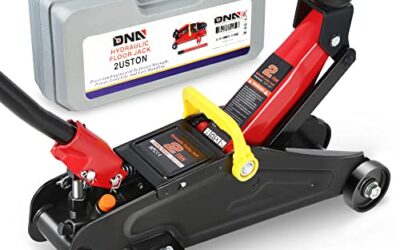
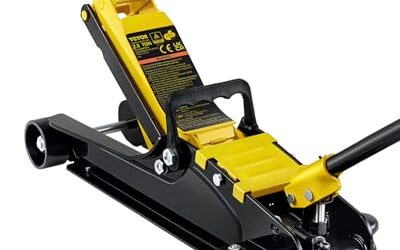
If you need jack stands or floor jacks for this job, these picks already appear in our jack stands guides. Check the full guide for fit and who should skip each one.

Pros
- Provides a 4,000-pound capacity for automotive lifting applications
- Includes jack stands with the trolley floor jack
- Heavy-duty steel construction and rear swivel casters are specified
- Includes an integrated bypass safety valve
- Backed by a one-year warranty for material and workmanship
Cons
- The lifting capacity is limited to 4,000 pounds
- The maximum lifting height is 13 inches
Specifications
| Color | Red |
|---|---|
| Size | 2 Ton Combo |
| Dimensions | 19 x 12 x 8 inches |
| Weight | 32 pounds |
| Product Group | Automotive Parts and Accessories |
| Binding | Automotive |
Best For / Avoid If
Best for buyers prioritizing
- Provides a 4,000-pound capacity for automotive lifting applications
- Includes jack stands with the trolley floor jack
- Heavy-duty steel construction and rear swivel casters are specified
Consider another option if
- The lifting capacity is limited to 4,000 pounds
- The maximum lifting height is 13 inches
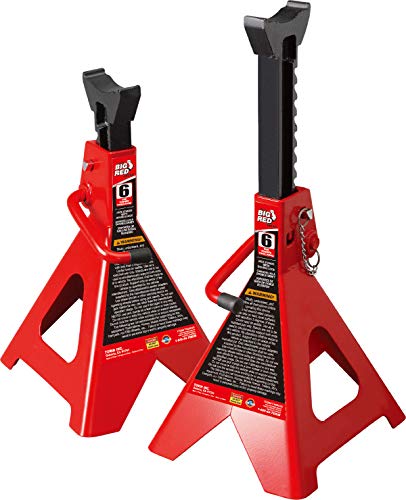
Pros
- Secondary locking pin mechanism adds redundant support layer
- Large base footprint provides stable ground contact
- Wide height range suits small cars, ATVs, and UTVs
Cons
- Unit weight is 18 pounds, heavy to reposition
- Manufacturer warranty term limited to 1 year
Specifications
| Color | RED |
|---|---|
| Size | 6 Ton |
| Dimensions | 11.7 x 10 x 18.6 inches |
| Weight | 18 Pounds |
| Product Group | Automotive Parts and Accessories |
| Binding | Automotive |
Best For / Avoid If
Best for buyers prioritizing
- Secondary locking pin mechanism adds redundant support layer
- Large base footprint provides stable ground contact
- Wide height range suits small cars, ATVs, and UTVs
Consider another option if
- Unit weight is 18 pounds, heavy to reposition
- Manufacturer warranty term limited to 1 year
FAQ
How often should I inspect jack stands?
Inspect them before every use. Repeat the check after a drop, impact, unusual load, or storage condition that could have caused damage.
Can I use jack stands with surface rust?
Light surface discoloration may not indicate structural damage, but rust that causes pitting, metal loss, a weakened weld, or uncertain strength is a reason to stop using the stand. Follow the maker’s inspection guidance.
Should I test a jack stand by loading it?
Do not invent a load test or exceed the maker’s instructions. Perform the unloaded function checks described in the manual. A visual and operation check does not certify capacity.
Can I use one jack stand for a vehicle repair?
Use the support arrangement required by the vehicle and stand instructions. Many repairs need more than one support point for stability. Never work beneath a vehicle held only by a floor jack.
Sources and further reading
- Safety Standard for Portable Automotive Service Equipment (ASME): Information about the safety standard covering portable automotive service equipment, including lifting equipment.