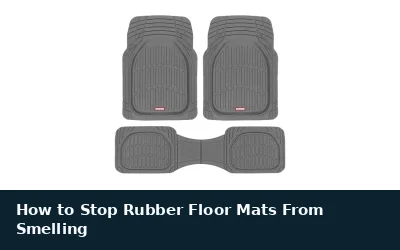
To remove mildew smell from car floor mats, take the mats out, clean them with a material-safe method, and dry them completely before putting them back. If the smell returns, inspect the carpet and padding underneath; wet mats may be a symptom of water entering or staying inside the vehicle.
- Remove mats from the car before washing them.
- Check the care instructions because carpet, rubber, and molded mats need different cleaning methods.
- Do not reinstall a mat until it is dry on both sides.
- Find and fix the moisture source if the odor returns or the vehicle carpet feels damp.
Why car floor mats smell like mildew
Mildew odor usually points to moisture that remained on or beneath a mat long enough to create a stale, musty smell. Rainwater, snow, spilled drinks, wet shoes, or water tracked in during cleaning can all leave a mat damp. Moisture can also collect underneath a mat, where airflow is limited.
The smell alone cannot show exactly where the moisture came from. A mat may be the source, or it may be holding water from damp carpet below. If the odor is strongest near one footwell, check that area and nearby carpet before focusing only on the mat.
What you need before cleaning
Gather a vacuum, clean water, mild detergent or a cleaner labeled for the mat material, soft brushes or cloths, and a place with good airflow for drying. A wet-dry vacuum can help extract water from carpet mats, but it does not replace thorough drying.
Read the vehicle and mat care instructions first. Some mats have backing or coatings that may be harmed by harsh chemicals, high heat, or aggressive scrubbing. If the care instructions call for a particular cleaner or method, follow them instead of using a general recipe.
Work outside the vehicle when practical. Keep cleaning products away from children and pets, and follow product-label directions. Never mix cleaners. In particular, do not combine bleach with ammonia or acidic products; dangerous gases can form.
How to remove mildew smell from car floor mats
- Take out every removable mat. Remove mats from the vehicle before cleaning. This keeps dirty wash water out of the cabin and lets you inspect the floor underneath. Keep track of each mat’s position so it goes back in the correct place.
- Check the underside and the floor. Look for dampness, dirt, visible growth, or water stains on both sides of each mat. Press a clean paper towel against the carpet and check whether it picks up moisture. Do not assume a dry-looking mat means the floor below is dry.
- Remove loose dirt. Shake out loose debris outdoors, then vacuum carpet mats. Brush off loose dirt from rubber mats. Removing grit first reduces abrasion when you scrub, and helps the cleaner reach the material.
- Choose a method for the mat material. For carpet mats, use a carpet-safe cleaner or mild detergent diluted as its label directs. Work it into the fibers with a soft brush, without soaking the backing. For rubber or molded mats, wash with mild soap and water, then rinse away residue. Avoid solvent-based cleaners unless the mat maker approves them.
- Rinse or wipe away cleaner. Follow the cleaner’s directions. Rinse washable rubber mats thoroughly so soap does not leave a slippery film. For carpet mats, use only enough clean water to remove residue, then extract as much water as possible. Excess water can prolong drying and reach the backing.
- Dry both sides completely. Stand mats where air can circulate around them. Allow both surfaces and the backing to dry before reinstalling. A fan can help move air, but avoid direct high heat that could warp rubber or damage backing. Drying time depends on material, moisture, airflow, and conditions.
- Clean and dry the floor area. If the carpet underneath is damp, blot or extract water and allow the area to dry. Keep the mats out while the floor dries. Do not cover damp carpet with a clean mat; trapped moisture can bring the odor back.
- Reinstall mats safely. Put each mat in its intended position and check that it lies flat and uses its proper retention points, if equipped. A mat that can slide or interfere with the pedals is a safety concern. Follow the vehicle manual’s instructions for mat placement.
Choose cleaning method by mat type
| Mat type | Cleaning approach | Watch for |
|---|---|---|
| Carpet or fabric | Vacuum, apply carpet-safe cleaner as directed, gently brush, extract or blot moisture, and air-dry. | Soaking the backing can make drying take longer. Check both sides before reinstalling. |
| Rubber | Wash with mild soap and water, rinse well, and air-dry. | Cleaner residue can leave a slick surface. Avoid harsh solvents unless approved for that mat. |
| Molded all-weather material | Use the mat maker’s care instructions; wash and rinse if permitted. | Coatings and surface texture vary. Do not assume every molded mat tolerates the same chemicals or heat. |
If the smell comes back, find the moisture source
A clean mat cannot solve continuing moisture under the carpet. Check whether the floor feels wet, whether the odor is limited to one area, and whether it returns after rain or washing the vehicle. These clues can help separate a dirty mat from a recurring water leak, but they do not identify the leak by themselves.
Look for obvious water on the carpet and signs of dampness around nearby trim, but do not remove interior panels or disturb wiring to investigate. Water may enter through a door seal, window, drain, or another area, and the source can be difficult to locate without inspection. Vehicle layout and drain locations vary by model and year.
If the cabin carpet or padding is wet, remove standing water promptly and arrange proper drying. Padding can hold moisture even when carpet surface feels nearly dry. Persistent dampness can damage interior materials and may affect electrical components located under seats or carpet. Avoid probing wet areas around wiring or connectors.
For routine protection after the source is fixed, choose mats that fit the vehicle and stay secured. Fit and coverage vary by vehicle model and model year. The guide to floor mat fitment for an F-350 crew cab explains why cabin configuration matters when selecting replacement mats.
Common mistakes
- Putting mats back while damp. Moisture gets trapped beneath them, and the musty odor can return.
- Cleaning only the visible surface. The underside, backing, and carpet below may still hold moisture or residue.
- Using too much water on carpet mats. Wet backing dries slowly and can transfer moisture to the vehicle floor.
- Masking odor with fragrance. Scent does not remove moisture or residue, so the original smell may remain underneath.
- Using bleach or mixing cleaners. These choices can damage materials or create hazardous fumes. Follow cleaner labels and never mix products.
- Using strong heat without checking instructions. Heat can deform some mats or harm backing. Airflow is the safer default unless the mat maker says otherwise.
- Ignoring a damp footwell. Repeated cleaning will not address water that continues to enter or remains under the carpet.
When to get professional help
Ask an automotive detailer or repair shop for help when odor persists after the mats and floor area are dry, when carpet padding is soaked, or when water returns after rain or washing. A professional can assess the affected interior and help locate a recurring leak. The right repair depends on where water enters and how the vehicle is built.
Get help sooner if water is near electrical connectors, under-seat electronics, or other wiring. Do not unplug components or remove trim unless the vehicle service information gives the correct procedure. If you see extensive growth or have health concerns about cleaning it, avoid disturbing the affected area and seek qualified cleanup advice.
Related reading: Car Floor Mat Buying Guide and Best Car Floor Mats Under $25 for Budget Interior Protection.
Gear that can help
If you need all-weather floor mats and liners for this job, these picks already appear in our all-weather floor mats and liners guides. Check the full guide for fit and who should skip each one.

Pros
- All-weather design is intended to help protect vehicle carpets from spills, dirt, and snow
- Front and rear mats can be cut to the desired size
- Specified dimensions are provided for both front and rear mats
Cons
- Universal fit may require trimming for a suitable vehicle-specific fit
- Mats may have slight creases after packaging that need tidying or exposure to sunlight to disappear
Specifications
| Color | BLack Red |
|---|---|
| Dimensions | 27.2 x 17.3 x 2 inches |
| Product Group | Automotive Parts and Accessories |
Best For / Avoid If
Best for buyers prioritizing
- All-weather design is intended to help protect vehicle carpets from spills, dirt, and snow
- Front and rear mats can be cut to the desired size
- Specified dimensions are provided for both front and rear mats
Consider another option if
- Universal fit may require trimming for a suitable vehicle-specific fit
- Mats may have slight creases after packaging that need tidying or exposure to sunlight to disappear

Pros
- Waterproof and stain-resistant materials support easier cleaning
- Heavy nibbed backing helps reduce mat movement
- Four-piece set covers front and rear footwells
Cons
- Universal-fit design may require measurement before installation
- Exact binding type is listed as unknown
Specifications
| Color | All Black |
|---|---|
| Dimensions | 25.1968 x 17.3228 x 0.15748 inches |
| Weight | 3.99918543268 pounds |
| Product Group | Automotive Parts and Accessories |
| Binding | Unknown Binding |
Best For / Avoid If
Best for buyers prioritizing
- Waterproof and stain-resistant materials support easier cleaning
- Heavy nibbed backing helps reduce mat movement
- Four-piece set covers front and rear footwells
Consider another option if
- Universal-fit design may require measurement before installation
- Exact binding type is listed as unknown

Pros
- Provides all-weather coverage for dirt and debris
- Trim-to-fit design allows adjustment for different vehicle floors
- Deep profile is designed to contain water, snow, mud, and road salt
- Listing states the mats are designed for resistance to cracking, deforming, curling, and hardening
Cons
- Universal design requires checking dimensions and may require trimming
Specifications
| Color | all black |
|---|---|
| Size | Universal Fit |
| Dimensions | 27.5 x 18.7 x 1 inches |
| Product Group | Automotive Parts and Accessories |
Best For / Avoid If
Best for buyers prioritizing
- Provides all-weather coverage for dirt and debris
- Trim-to-fit design allows adjustment for different vehicle floors
- Deep profile is designed to contain water, snow, mud, and road salt
Consider another option if
- Universal design requires checking dimensions and may require trimming
FAQ
Can baking soda remove mildew smell from car floor mats?
Baking soda may help absorb some surface odor on a dry mat, but it does not remove the moisture source or clean deep contamination. Vacuum it away fully and use a material-safe cleaning method when needed.
Can I wash car floor mats in a washing machine?
Only if the mat maker says machine washing is allowed. Backing, trim, and molded sections may be damaged by machine agitation or heat. Check care instructions before washing.
How long should floor mats dry before I put them back?
There is no single drying time for every mat. Material, thickness, airflow, and how wet the mat became all matter. Wait until both sides and the backing feel dry, and check again before reinstalling.
Why does my car still smell musty after I clean the mats?
Moisture may remain in the carpet padding, or water may still be entering the cabin. Check the floor beneath each mat. If the smell returns or the carpet is damp, have the vehicle inspected for the source.