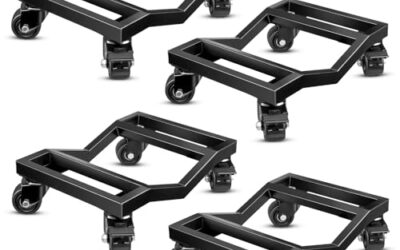
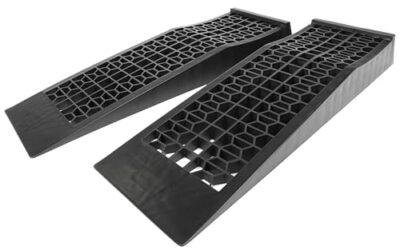
The reason why you should not use a floor jack on gravel is simple: loose stones can shift or sink under the jack’s wheels and base. If the jack cannot roll and stay level as it lifts, it can tilt, slip off the vehicle’s lift point, or let the vehicle fall.
Do not try to solve this with a thin board, a few pavers, or a larger jack. Those fixes can also shift, crack, or tip. Move the vehicle to a firm, level surface and follow the vehicle and jack manuals. If no suitable surface is available, do not lift the vehicle there.
Key takeaways
- Gravel is unstable because loose stones can move under load.
- A floor jack needs firm, level support and room to roll during lifting.
- A board or paving stone on gravel is not automatically a safe base.
- Use jack stands only on a suitable surface and at vehicle-approved support points.
- If the jack or vehicle shifts, stop. Do not reach under the vehicle or try to catch it.
Why you should not use a floor jack on gravel
A floor jack does more than push a vehicle upward. As its lifting arm rises, the jack’s body and wheels usually need to move along the floor. That movement helps keep the jack aligned with the lift point. The exact movement depends on the jack design, but a floor jack still needs stable support under its base.
Gravel can fail in several ways. Small stones may roll away, larger stones may tip, and the ground beneath them may compress. Any of these changes can tilt the jack or reduce contact between its base and the ground. The jack may then bind instead of rolling smoothly.
At the same time, the vehicle’s weight is concentrated at the lifting point. If the jack leans, its saddle can move off that point. The vehicle may drop suddenly or shift sideways. A person nearby can be struck or trapped.
There is no reliable way to judge a gravel patch by appearance alone. Packed gravel may seem firm but still contain loose material or soft ground beneath it. Rain, thawing, uneven grading, or recent vehicle traffic can also change how well a spot supports a load.
What can happen when a floor jack sinks or shifts?
| Ground problem | What may happen | Why it matters |
|---|---|---|
| Loose stones move | Jack base or wheels lose stable contact | Jack may tilt or fail to roll as intended |
| Ground compresses | One side of the jack sinks | Saddle can move away from lift point |
| Jack binds | Jack cannot follow its normal path during lifting | Load may shift or the jack may become unstable |
| Support material tips or breaks | Jack drops or leans suddenly | Vehicle can fall or move without warning |
These risks remain even if the vehicle rises only a short distance. A small lift can still create a dangerous pinch point, and a wheel or component can shift when the vehicle is unsupported.
Can a board or plywood make gravel safe?
Not by itself. A board may spread some of the load, but loose gravel can move beneath it. The board can also bend, split, or slide. A small board that supports the jack’s center but not its full base can create a tipping edge.
Do not treat a thick plank, plywood sheet, paving stone, or concrete block as a guaranteed fix. Material strength, size, condition, ground support, jack design, and vehicle load all affect the result. A rigid slab can crack or tip if the ground beneath it is uneven. A broad sheet can still move over loose stones.
Only use a support surface or lifting method if the equipment maker’s instructions cover that use and the surface is stable, level, and capable of supporting the load. If the instructions do not establish that the setup is suitable, choose another location rather than guessing.
What surface should you use instead?
Use a hard, firm, level surface that supports the jack without settling. A properly maintained concrete floor is a common example, but its condition matters. Cracked, sloped, crumbling, or damaged concrete may not be suitable. Asphalt can soften in heat or deform under concentrated loads, so do not assume every paved driveway is safe.
Check the jack manual for surface requirements and the vehicle manual for approved lift points. The vehicle manual may also give instructions for roadside tire changes, including where to place the supplied jack. A floor jack and its lift points may differ from the equipment and procedures supplied with the vehicle.
For vehicle-specific lifting and capacity considerations, see our guides to floor jacks for SUVs and floor jacks for pickup trucks. Those guides do not replace the vehicle manual or make gravel suitable for lifting.
What to do if you are parked on gravel
- Do not start lifting. Keep people clear of the vehicle and jack.
- Look for a suitable location. Move to firm, level ground if you can do so safely. If a tire problem or other fault makes moving unsafe, contact roadside assistance.
- Follow the correct lifting instructions. Use the vehicle manual’s lift points and the jack manual’s operating limits. Do not assume one vehicle’s instructions fit another model year or trim.
- Use stands for work beneath the vehicle. A jack alone is not a support for working underneath. Place stands only on a stable surface and at vehicle-approved support points, following both manuals.
- Stop if anything moves. If the jack tilts, sinks, or shifts, do not reach under the vehicle or try to reposition the jack while the vehicle is raised. Keep clear and get qualified help.
Wheel chocks can help limit vehicle movement when used as the vehicle manual directs, but they do not stabilize a floor jack on gravel. Likewise, a jack stand does not fix an unstable base beneath the jack or stand.
Common mistakes
- Assuming compacted gravel is solid. Surface appearance does not show whether stones or soil will shift under load.
- Using a small piece of wood as a foundation. It may slide, split, or sink with the gravel.
- Setting the jack on one large stone. The stone can roll or tip, and contact may be uneven.
- Using the parking brake as a substitute for stable ground. A brake helps limit vehicle movement; it does not prevent a jack from sinking or tipping.
- Relying on jack capacity alone. Rated capacity does not make an unstable surface safe, and the vehicle’s lifting instructions still apply.
- Crawling underneath while the vehicle rests on a jack. A floor jack can lose support or fail. Use correctly placed stands on a suitable surface for under-vehicle work.
When to get professional help
Call roadside assistance or a qualified technician if the vehicle cannot reach firm, level ground safely. Get help if the jack has sunk, tilted, or shifted, or if the vehicle’s lift points are damaged, corroded, or unclear. Do not try to stabilize a raised vehicle by pushing it, stacking loose materials, or placing a stand on gravel.
Professional help also makes sense when you cannot tell whether a driveway, shop floor, or other surface can support the vehicle and lifting equipment. For general equipment safety information, consult the ASME safety standard for portable automotive service equipment. Follow the specific jack and vehicle manuals for actual use.
Gear that can help
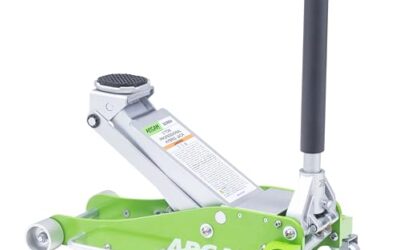
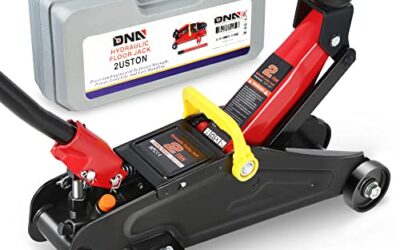
If you need floor jacks or jack stands for this job, these picks already appear in our floor jacks guides. Check the full guide for fit and who should skip each one.
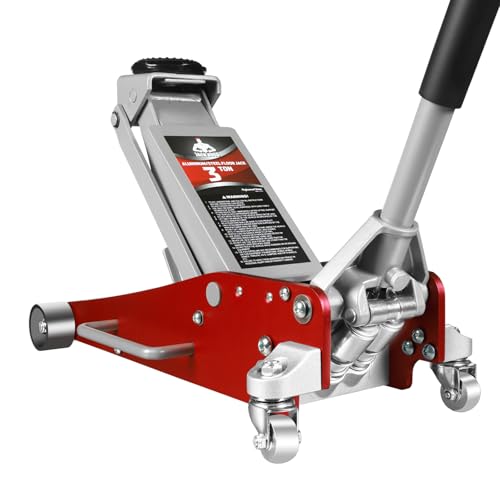
Specifications
| Color | Red |
|---|---|
| Size | 3 Ton Aluminum |
| Dimensions | 23.6 x 11.8 x 6.3 inches |
| Weight | 58.5 pounds |
| Product Group | Automotive Parts and Accessories |
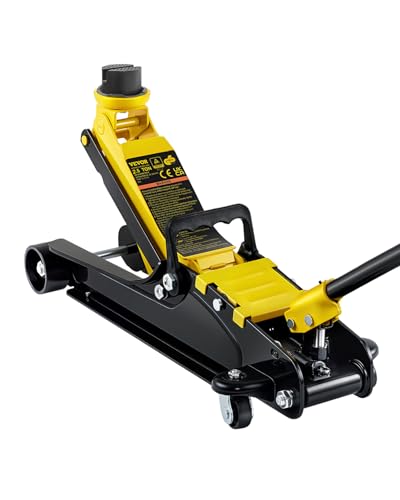
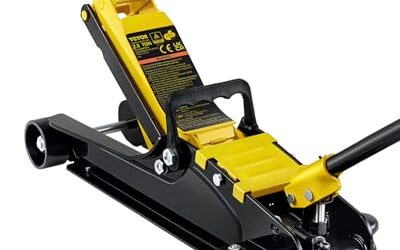
Specifications
| Color | yellow |
|---|---|
| Size | 2.5T |
| Dimensions | 22.2 x 8.7 x 5.2 Inches |
| Weight | 29.982867632 pounds |
| Product Group | Automotive Parts and Accessories |
| Binding | Automotive |

Pros
- 3-ton capacity is specified for lifting SUVs and other supported vehicles
- Double locking system combines a handle-adjustment locking ratchet bar with metal safety pins
- Large base and top saddle are designed to provide stable support
- Ductile-iron ratchet bar is forged in one piece
- Product description states that the stands meet US safety standards
Cons
- The listing does not identify the exact vehicle models or weight limits beyond the 6,600-pound capacity
- Amazon rating and review count are inconsistent in the listing, listed as 4.5 from 0 reviews
Specifications
| Color | yellow |
|---|---|
| Size | 3 ton double locking and upgraded base |
| Dimensions | 8.59 x 14.5 x 8 Inches |
| Weight | 16.23043172844 Pounds |
| Product Group | Automotive Parts and Accessories |
| Binding | Automotive |
Best For / Avoid If
Best for buyers prioritizing
- 3-ton capacity is specified for lifting SUVs and other supported vehicles
- Double locking system combines a handle-adjustment locking ratchet bar with metal safety pins
- Large base and top saddle are designed to provide stable support
Consider another option if
- The listing does not identify the exact vehicle models or weight limits beyond the 6,600-pound capacity
- Amazon rating and review count are inconsistent in the listing, listed as 4.5 from 0 reviews
Frequently asked questions
Can I use a floor jack on packed gravel?
Do not assume packed gravel is safe. Stones and underlying soil can still shift or compress. Use a surface that meets the jack and vehicle instructions, or get assistance.
Can I put plywood under a floor jack on gravel?
Plywood does not automatically create stable ground. It can slide, bend, or break, and gravel beneath it can settle. Do not rely on it unless equipment instructions specifically support the setup and the base remains stable.
Can jack stands go on gravel?
Do not place jack stands on loose or shifting gravel. Stands need firm, level support, as well as vehicle-approved support points. A stand on unstable ground can tip or sink.
What if I only need to change a tire?
Use the vehicle manual’s roadside procedure and supplied lifting equipment where appropriate. If the vehicle is on gravel and you cannot establish stable support, do not lift it there. Contact roadside assistance if moving the vehicle is unsafe.
Sources and further reading
- Safety Standard for Portable Automotive Service Equipment (ASME): Information about safety standards for portable automotive lifting equipment.