There is no universal waiting period after clearing codes before an emissions test. Readiness depends on the vehicle’s supported monitors, required operating conditions and applicable inspection rules. Check actual monitor status rather than assuming that a fixed number of days or miles is enough.
Do not clear a code to hide a fault before inspection. Fix the cause first, then drive the vehicle through the monitor conditions listed in its service information. A scan tool can show whether monitors are ready before you pay for an emissions test.
Key takeaways
- Code clearing resets emissions readiness monitors.
- The check engine light can stay off while monitors remain incomplete.
- Drive cycles vary by vehicle model, engine, transmission, fuel level, temperature, and fault.
- Some states allow limited incomplete monitors. Others require all or nearly all required monitors ready.
- A short drive around town may not complete catalyst, oxygen sensor, EGR, EVAP, or other tests.
- Repairing the fault matters more than waiting a fixed number of miles.
How long after clearing codes before emissions test?
There is no universal waiting period. Many vehicles need a few normal drive cycles, while some need longer because an emissions monitor requires specific conditions. A drive cycle can include a cold start, warm-up, steady cruising, deceleration, and stop-and-go driving. EVAP testing may need a particular fuel level and a long soak after parking.
Use readiness status, not elapsed time, as the deciding measure. Scan the vehicle after repairs and check each required monitor. If all required monitors show ready, and no new fault code appears, the vehicle may be ready for inspection. Local rules still control the final result.
Why clearing codes causes a readiness problem
The engine control module stores test results for emissions systems. Clearing diagnostic trouble codes also erases, or resets, many of those results. The module must run its built-in tests again before it can report complete monitors.
This creates two separate questions:
- Is the fault repaired? The check engine light should remain off after normal driving.
- Are monitors ready? The vehicle must complete required self-tests.
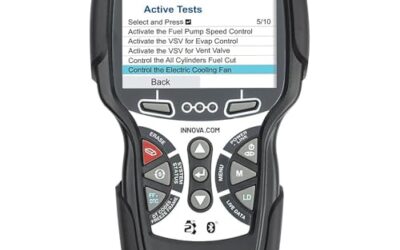
A scanner can answer both questions. Basic OBD2 scanners often show readiness icons or text. More advanced diagnostic tools can display pending codes, permanent codes, freeze-frame data, and live data. Read more about OBD2 scanners with live data for fuel trim if you need to understand fuel and oxygen sensor readings.
What determines readiness monitor time?
Vehicle model year and control strategy
Model-year rules and manufacturer software change monitor behavior. Two vehicles with similar engines may use different test conditions. Older vehicles may have different monitor requirements than newer vehicles, and hybrid vehicles use different engine operating patterns.
Vehicle communication also matters. Most 1996 and newer US light-duty vehicles use OBD2, but connector access, supported tests, and scan-tool coverage can vary. Some vehicles need enhanced manufacturer data beyond generic OBD2 functions.
Fault type and repair quality
A repaired oxygen sensor fault may clear after a few suitable warm-up and cruise events. An EVAP fault may take longer because the system checks for leaks under narrow temperature, fuel-level, and pressure conditions.
If the cause remains, the monitor may never complete or may complete and turn the warning light back on. Clearing the code again only repeats the delay. It does not repair wiring, a vacuum leak, a failed catalyst, a weak sensor, or a damaged fuel cap.
Battery power and recent service
Disconnecting a battery can reset readiness data on many vehicles. A weak battery can also interrupt testing or create new low-voltage codes. Battery replacement, electrical work, and some software procedures may require another full readiness cycle.
Keep battery voltage stable during diagnosis. Do not use a charger or power supply unless its instructions support vehicle electronics and the connection method fits your vehicle.
Weather and fuel level
Ambient temperature affects cold-start and evaporative-emissions tests. Fuel level also matters. Many EVAP monitors will not run with a nearly empty or completely full tank, but the exact range differs by vehicle.
Read the owner manual or service information for fuel-level guidance. Avoid topping off after the pump clicks because spilled fuel can create an EVAP problem.
Readiness monitors that may need to run
Monitor names vary by scanner and vehicle. Common monitors include:
| Monitor | What it checks | Why timing varies |
|---|---|---|
| Catalyst | Whether catalytic converter performance meets the control system threshold | Often needs warmed engine operation, steady speed, and specific load changes |
| Oxygen sensor and oxygen sensor heater | Sensor response and heater operation | Needs engine temperature, exhaust conditions, and electrical stability |
| EVAP | Fuel vapor control and leak detection | Often depends on fuel level, temperature, soak time, and tank pressure |
| EGR or variable valve timing | Exhaust gas flow or valve operation | Needs certain speed, load, and temperature conditions |
| Misfire and fuel system | Combustion quality and fuel control | Can run during many conditions but may set a code quickly if a fault remains |
| Oxygen sensor response | How quickly sensors react to changing exhaust conditions | Needs closed-loop operation and suitable engine temperature |
Some monitors are continuous. Others are noncontinuous and need a narrow test window. A scanner may show a monitor as ready, not ready, incomplete, or unsupported. Unsupported does not always mean a fault. It can mean that vehicle does not use that monitor.
How to prepare for an emissions test after clearing codes
- Repair the original fault. Use the stored code, freeze-frame data, inspection results, and vehicle service information. A code identifies a system or condition, not always a failed part.
- Clear codes only after repairs. Record codes and freeze-frame details first. Clearing erases useful diagnostic context on many vehicles.
- Check for pending and permanent codes. A pending code can become confirmed after another test. A permanent code may remain until the control module verifies the repair.
- Drive normally through varied conditions. Use cold starts, city traffic, steady highway speed, moderate acceleration, and closed-throttle deceleration when safe and legal.
- Let the vehicle sit when required. Some EVAP tests need a cold soak. Parking overnight may help, but it does not guarantee completion.
- Scan readiness again. Check every required monitor before scheduling inspection. Do not rely on a dashboard light alone.
- Check local inspection rules. The allowed number of incomplete monitors can depend on vehicle model year, fuel type, and state or local program.
Follow traffic laws and avoid aggressive driving. Do not attempt monitor procedures on public roads if they require unsafe speeds, unusual maneuvers, or close attention to a handheld scanner.
Simple decision tree before the test
- Check engine light on? Do not schedule the test. Diagnose the active fault first.
- Light off, monitors not ready? Continue suitable driving and inspect for conditions blocking the monitor.
- One or more monitors incomplete? Check local rules and the vehicle service procedure. A test station may reject the vehicle even without a warning light.
- Monitors ready, no active or pending fault? The vehicle may be ready, subject to local inspection rules and other test requirements.
- Permanent code remains? Continue driving only after repair. The module must confirm the fix through its own test cycle.
Can you pass with incomplete monitors?
Sometimes, but rules vary. Some inspection programs allow a limited number of incomplete monitors based on vehicle model year or fuel type. Other programs require every applicable monitor to be ready. A vehicle can therefore pass in one jurisdiction and fail or receive a rejection in another.
Do not assume that a successful code scan equals an inspection pass. A scan tool may show no active codes while the inspection computer sees incomplete readiness data. Contact the official inspection program or review its current requirements before testing.
Federal emissions inspection and maintenance programs differ by state and local area. The US Environmental Protection Agency explains how state and local I/M programs operate in its Vehicle Emissions Inspection and Maintenance resource.
Common mistakes
Clearing codes immediately before inspection
This usually resets monitors and creates a readiness failure. It also removes freeze-frame information that can help identify the cause.
Driving only short trips
Short trips may not warm the engine long enough for catalyst, oxygen sensor, or EVAP testing. Repeated cold starts can leave the same monitor incomplete.
Assuming highway driving completes every monitor
Highway speed can help some tests, but EVAP and other monitors may need different conditions. More driving does not fix an active fault.
Replacing parts based only on code number
A code can result from wiring, air leaks, exhaust leaks, fuel pressure, software, or a failed component. Test the system before buying parts.
Ignoring permanent codes
Permanent codes can remain after a repair and may affect inspection results. They clear only after the control module verifies that the fault no longer exists.
Using a phone scanner without checking coverage
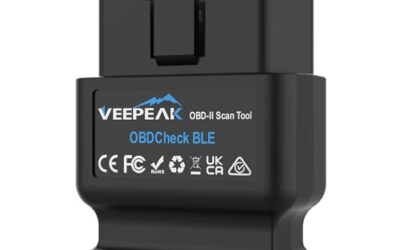
Phone-based tools depend on adapter hardware, app support, phone OS, vehicle protocol, and sometimes subscription features. A generic reader may show basic codes but not manufacturer-specific data or full readiness details.
When to get professional help
Get diagnostic help when a monitor stays incomplete after several varied drive cycles, a fault returns, or the vehicle has multiple codes. Professional diagnosis can check fuel trims, oxygen sensor activity, EVAP pressure, ignition performance, exhaust leaks, and control-module communication.
Seek help sooner when the check engine light flashes, the engine runs rough, power drops, fuel smell appears, or the vehicle overheats. A flashing light can indicate a misfire that may damage the catalytic converter. Stop driving when continued operation creates a safety risk.
Advanced vehicle systems may need brand-specific access. Our guide to professional car diagnostic tools explains why generic code reading does not cover every repair task.
Gear that can help
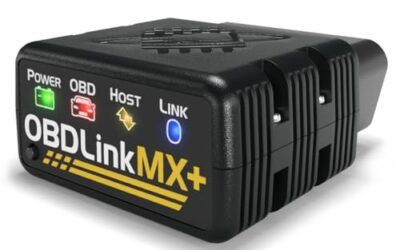
If you need OBD2 scanners for this job, these picks already appear in our OBD2 scanners guides. Check the full guide for fit and who should skip each one.
Pros
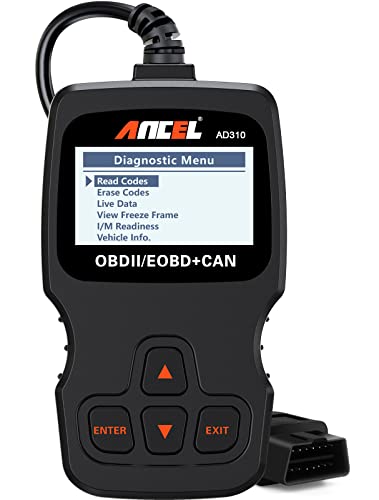
- Supports multiple common OBDII protocols, including CAN
- Provides more than basic code reading with live data, freeze-frame, and readiness information
- Powered through the vehicle, so no separate battery or charger is required
- Compact design and 12-ounce weight support portability
Cons
- Limited to emission-related diagnostics
- Requires a vehicle with an OBDII interface and does not diagnose OBDI vehicles, even with an adapter
- Vehicle compatibility should be confirmed before purchase
Specifications
| Color | Black |
|---|---|
| Dimensions | 4.9212598375 x 2.755905509 x 0.8661417314 inches |
| Product Group | Automotive Parts and Accessories |
| Binding | Automotive |
Best For / Avoid If
Best for buyers prioritizing
- Supports multiple common OBDII protocols, including CAN
- Provides more than basic code reading with live data, freeze-frame, and readiness information
- Powered through the vehicle, so no separate battery or charger is required
Consider another option if
- Limited to emission-related diagnostics
- Requires a vehicle with an OBDII interface and does not diagnose OBDI vehicles, even with an adapter
- Vehicle compatibility should be confirmed before purchase

Pros
- Includes live-data graphing and logging for supported OBD2 vehicles
- Offers emissions-readiness, O-2 sensor, and EVAP monitoring functions
- Supports common OBD2 protocols and many 1996-plus US gasoline vehicles
- Does not require a separate charging setup
Cons
- Does not scan ABS, SRS, EPB, A/C, battery, or other non-engine systems
- Compatibility and available functions vary by vehicle year, make, model, and VIN
Specifications
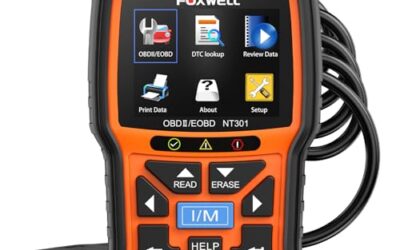
| Color | NT301 OBD2 Scanner |
|---|---|
| Size | NT301 Code Reader |
| Dimensions | 8.66 x 3.15 x 6.69 inches |
| Weight | 0.3527396192 Pounds |
| Product Group | Automotive Parts and Accessories |
| Binding | Automotive |
Best For / Avoid If
Best for buyers prioritizing
- Includes live-data graphing and logging for supported OBD2 vehicles
- Offers emissions-readiness, O-2 sensor, and EVAP monitoring functions
- Supports common OBD2 protocols and many 1996-plus US gasoline vehicles
Consider another option if
- Does not scan ABS, SRS, EPB, A/C, battery, or other non-engine systems
- Compatibility and available functions vary by vehicle year, make, model, and VIN

Pros
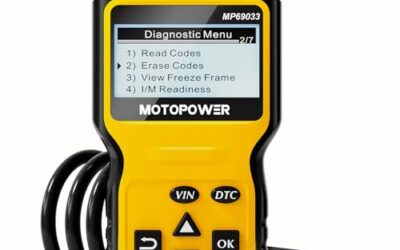
- Broad basic OBD2 diagnostic function set
- Built-in code definitions can help explain fault codes
- Supports major protocols including CAN, ISO9141, KWP2000, J1850 VPW and J1850 PWM
- Color display, multilingual support and on-screen code definitions
Cons
- Limited to engine and emission-related codes
- Does not support ABS, SRS, transmission, bidirectional control or service reset functions
- Vehicle compatibility should be checked before purchase
Specifications
| Color | yellow |
|---|---|
| Dimensions | 9 x 6.3 x 1.6 inches |
| Weight | 0.66 Pounds |
| Product Group | Automotive Parts and Accessories |
| Binding | Automotive |
Best For / Avoid If
Best for buyers prioritizing
- Broad basic OBD2 diagnostic function set
- Built-in code definitions can help explain fault codes
- Supports major protocols including CAN, ISO9141, KWP2000, J1850 VPW and J1850 PWM
Consider another option if
- Limited to engine and emission-related codes
- Does not support ABS, SRS, transmission, bidirectional control or service reset functions
- Vehicle compatibility should be checked before purchase
FAQ
How many miles should I drive after clearing codes?
No fixed mileage works for every vehicle. Drive until required monitors show ready, using suitable cold-start, warm-up, cruise, and stop-and-go conditions. The owner manual or service procedure gives better guidance than a mileage guess.
Can I pass an emissions test if the check engine light is off?
Maybe. The light can be off while one or more readiness monitors remain incomplete. The inspection program may reject the vehicle or allow only a limited number of incomplete monitors.
Does disconnecting the battery reset readiness monitors?
Often, yes. Battery disconnection can erase readiness data and stored diagnostic information. It can also affect radio settings, learned values, and some vehicle functions.
Why does EVAP stay incomplete?
EVAP testing depends on fuel level, temperature, pressure, and time parked. A fuel leak, loose cap, purge fault, vent fault, or wiring problem can also prevent completion.
Can a scanner force readiness monitors to run?
Some professional tools offer special tests, but they cannot bypass inspection rules or repair a fault. Follow vehicle-specific procedures and avoid unsafe road tests.
Sources and further reading
- Vehicle Emissions Inspection and Maintenance (I/M) (US EPA): Explains state and local emissions inspection programs.
- J1979 E/E Diagnostic Test Modes standard (SAE International): Covers diagnostic data and test modes used by OBD systems.