Ancel AD410 review findings point to one clear fit: this corded scanner suits drivers who need basic engine and emissions diagnosis without Bluetooth, an app, or a subscription. It reads and clears trouble codes, shows live data, checks I/M readiness, and works with most US-based OBD2 vehicles from 1996 onward. Its main limit matters just as much: it does not diagnose ABS, SRS, transmission, or service reset systems.

Pros
- Broad basic OBD2 diagnostic function set
- Built-in code definitions can help explain fault codes
- Supports major protocols including CAN, ISO9141, KWP2000, J1850 VPW and J1850 PWM
- Color display, multilingual support and on-screen code definitions
Cons
- Limited to engine and emission-related codes
- Does not support ABS, SRS, transmission, bidirectional control or service reset functions
- Vehicle compatibility should be checked before purchase
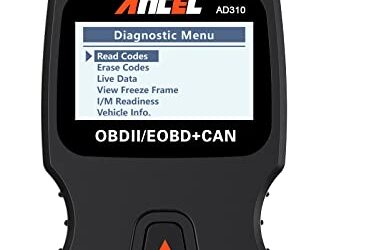
The ANCEL AD410 is an OBD2 code reader designed for engine and emission-related diagnostics. It can read and clear fault codes, show code definitions, display live data, provide freeze-frame information, check I/M readiness, and perform O2 sensor and EVAP tests.
The scanner is powered through the vehicle's 16-pin OBD2 port and includes a 2.4-inch color display. It supports CAN, ISO9141, KWP2000, J1850 VPW and J1850 PWM protocols. Compatibility is listed for most 1996 and newer U.S.-based OBD2 cars, SUVs and light trucks, as well as many 2000 and newer EU and Asian OBD2 vehicles.
The AD410 does not support ABS, SRS, transmission, bidirectional control or service reset functions. Product dimensions are 9 x 6.3 x 1.6 inches, and listed weight is 0.66 pounds.
Specifications
| Color | yellow |
|---|---|
| Dimensions | 9 x 6.3 x 1.6 inches |
| Weight | 0.66 Pounds |
| Product Group | Automotive Parts and Accessories |
| Binding | Automotive |
Detailed Review
Key features:
- Reads and clears engine-related fault codes
- Includes more than 42,000 built-in DTC definitions
- Displays available live data such as RPM, coolant temperature, fuel trim and oxygen sensor readings
- Provides I/M readiness information for emissions inspection preparation
- Supports freeze frame, O2 sensor, EVAP and vehicle information functions
- Works with most 1996 and newer U.S.-based OBD2 cars, SUVs and light trucks, plus many 2000 and newer EU and Asian OBD2 vehicles
Best For / Avoid If
Best for buyers prioritizing
- Broad basic OBD2 diagnostic function set
- Built-in code definitions can help explain fault codes
- Supports major protocols including CAN, ISO9141, KWP2000, J1850 VPW and J1850 PWM
Consider another option if
- Limited to engine and emission-related codes
- Does not support ABS, SRS, transmission, bidirectional control or service reset functions
- Vehicle compatibility should be checked before purchase
The ANCEL AD410 Enhanced OBD2 Scanner is an entry-level wired code reader for engine and emissions systems. The manufacturer lists support for reading and clearing codes, viewing code definitions, checking freeze-frame data, reading live data, checking MIL status, and reviewing vehicle information.
That feature set covers the first questions many drivers have after a check engine light appears: Which code triggered it? What conditions existed when the fault appeared? Are emissions monitors ready? Has the warning returned after a repair?
The scanner includes more than 42,000 built-in DTC lookups, according to the product description. That database can help translate a code into plain language on the vehicle screen. A code definition remains a starting point, not a confirmed failed part. Several faults can produce similar symptoms, and diagnosis still depends on wiring, sensors, mechanical condition, and vehicle-specific service information.
Live data adds useful context. Available readings include engine speed, coolant temperature, fuel trims, oxygen sensor readings, and other supported parameters. These values can help a driver share better information with a repair shop. They can also help a capable DIY owner compare readings before and after a repair.
The scanner has a 2.4 inch color display and multilingual support. It receives power through the vehicle’s 16 pin OBD2 connector, so no separate battery, charger, phone, or Bluetooth connection is needed. That makes setup direct, though the cable leaves the device physically connected to the vehicle during use.
Vehicle compatibility and connection limits
Per the product listing, the AD410 supports most US-based cars, SUVs, and light trucks from model year 1996 onward. It also supports many European and Asian OBD2 vehicles from model year 2000 onward. The listed protocols include CAN, ISO9141, KWP2000, J1850 VPW, and J1850 PWM.
Model year alone does not answer every compatibility question. A vehicle must use a supported OBD2 system, and regional versions can differ. The scanner’s stated coverage focuses on engine and emission-related OBD2 functions. It is not a general scan tool for every control module in a vehicle.
Connection requires access to the 16 pin diagnostic port. The scanner draws power from that port after connection. The basic process is simple: connect the plug, switch the ignition on, and select the required function from the menu. Running the engine may be useful for live data, but the correct ignition state depends on the function and vehicle procedure.
Clear codes only after recording them and understanding the reason for the warning. Erasing a code can remove useful diagnostic information and reset emissions monitors to incomplete. A cleared warning also does not repair the fault that caused it.
What the AD410 can diagnose
Engine and emissions codes
The strongest use case is a check engine light linked to the powertrain or emissions system. The AD410 can read stored fault codes and clear them after a repair. It can display code definitions, but those definitions should not replace a repair manual or professional diagnosis for complex faults.
Freeze-frame data records operating conditions captured when a fault occurred. That information can help show engine speed, temperature, or other conditions around the event. It may narrow the diagnostic path, especially when a warning appears intermittently.
Live data for basic troubleshooting
Live data helps move beyond code replacement. A driver can view supported parameters while the engine runs and compare changes after maintenance. Fuel trim and oxygen sensor readings can point toward possible mixture or sensor concerns, but interpretation requires knowledge of normal ranges for the vehicle.
Not every vehicle exposes every parameter through standard OBD2. The displayed information depends on vehicle support and the available data stream. A scanner cannot create readings that the vehicle does not transmit.
Readiness before emissions inspection
The I/M readiness function shows whether emissions monitors have completed their drive-cycle checks. This helps a driver avoid arriving at an inspection station immediately after clearing codes or disconnecting the battery.
Readiness status does not prove that the vehicle will pass inspection. Rules vary by jurisdiction, and a monitor can remain incomplete until the vehicle completes the correct driving conditions. The function gives useful status information, not an inspection result.
What the AD410 cannot do
The product description states that the AD410 does not support ABS, SRS, transmission, bidirectional control, or service reset functions. Those limits define its buyer profile.
ABS and SRS faults belong to braking and airbag systems, not standard engine code reading. A driver with an airbag warning, traction control warning, or ABS light needs a scanner with the correct module coverage. Transmission diagnosis may also require a tool that communicates with the transmission control module.
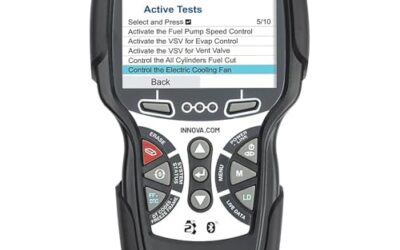
Bidirectional control is absent as well. That means this scanner is not intended to command components for active diagnosis, such as switching a fan or actuator through the scan tool. Service reset functions are absent, so buyers seeking oil, battery, steering, or other maintenance resets should choose a different device.
These are functional boundaries, not small omissions. Buying the AD410 for a check engine light makes sense. Buying it as the only scanner for a modern vehicle creates a likely mismatch.
Best uses for the ANCEL AD410 Enhanced OBD2 Scanner
Best for drivers who want code information before visiting a shop
The AD410 fits drivers who want to read a warning code, understand its general meaning, and bring useful information to a technician. Its built-in definitions reduce the need to search every code on a separate device. The wired design avoids pairing problems and phone compatibility concerns.
It also suits households that maintain several compatible vehicles. Support for common OBD2 protocols gives it broad intended coverage across many US-market cars, SUVs, and light trucks. Compatibility still depends on the vehicle’s diagnostic system and model year.
Best for emissions readiness checks
Drivers preparing for an emissions inspection can use the I/M readiness screen to see whether monitors have completed. This is especially useful after a code clear, battery disconnect, or repair that affects emissions operation.
Readiness checking works best before the inspection visit, not at the inspection lane. The vehicle may need a specific drive cycle, and local inspection rules control the final result.
Best for basic DIY live data
The AD410 gives a beginner an entry point into live engine data. RPM, coolant temperature, fuel trims, and oxygen sensor readings provide more context than a warning light alone. A mechanically confident owner can use those values to ask better questions and compare conditions over time.
That benefit depends on interpretation. A displayed value outside a common range does not identify one failed component by itself. Use vehicle-specific repair information before replacing parts.
Who should skip this scanner
Skip the AD410 if the main problem involves ABS, airbags, transmission electronics, or a service reset. Its engine and emissions scope cannot replace a full-system diagnostic tool.
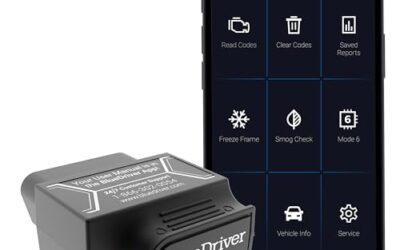
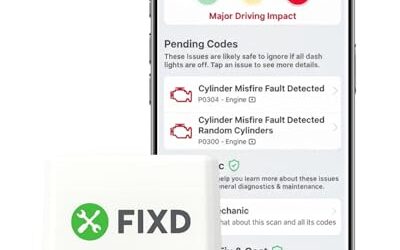
It is also a poor fit for buyers who want wireless use, a phone app, remote data storage, or active component controls. The scanner needs a physical connection to the OBD2 port and operates through its built-in display.
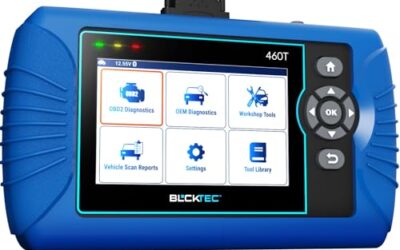
Buyers who need advanced module access should look for a tool that names the required systems and functions, such as ABS, SRS, transmission, bi-directional control, or service resets. The professional automotive diagnostic tool guide covers that broader class of equipment.
AD410 ownership considerations
The direct OBD2 connection removes charging and battery management. That helps occasional users who may store the scanner for long periods. It also means the device must remain within reach of the cable and diagnostic port during operation.
The manufacturer states that free software updates are available and that ANCEL support can help with compatibility questions, setup, updates, and product use. Update access matters because code databases and vehicle coverage can change. Follow the manufacturer’s update process rather than disconnecting the scanner during an update.
Code clearing carries an ownership tradeoff. It can turn off a warning after a repair, but it may also erase freeze-frame details and reset readiness monitors. Record codes first. Keep repair invoices and symptoms with those codes so a technician can see the full timeline.
Storage is another practical point. Keep the unit and cable protected from heat, moisture, and physical damage when not in use. The product description does not establish a weatherproof rating, so treat it as an interior diagnostic device.
How it compares with broader scan tools
A basic code reader and a professional scanner serve different repair stages. The AD410 handles standard engine and emissions questions. A broader scan tool can access more modules, run active commands, and perform service functions, but those added capabilities usually bring more setup and learning demands.
Use the AD410 when the warning is a check engine light and the goal is information. Choose a broader tool when multiple warning systems appear or when a repair requires module-level commands. The live data scan tool guide is a useful next step for buyers who need deeper real-time information.
Drivers who want a simple home scanner can also review the OBD2 scanners and diagnostic tools guide. It places basic readers in context with tools aimed at more advanced work.
Final verdict on the Ancel AD410
The ANCEL AD410 Enhanced OBD2 Scanner is a sensible budget choice for one defined job: reading and understanding engine and emissions codes on compatible OBD2 vehicles. Live data, freeze-frame information, I/M readiness, built-in code lookups, and direct plug-in operation give beginners useful capability without an app.
Its limitations should guide the purchase. The scanner does not cover ABS, SRS, transmission, bidirectional control, or service reset functions. Choose it when check engine diagnosis and emissions readiness are the priority. Skip it when the vehicle needs full-system access, wireless operation, or advanced repair commands.