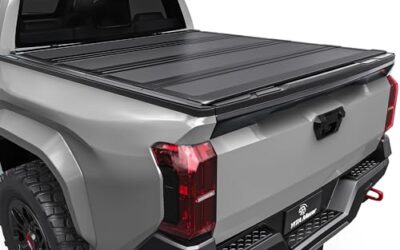
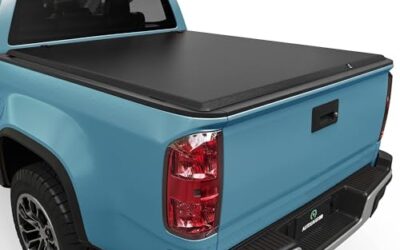
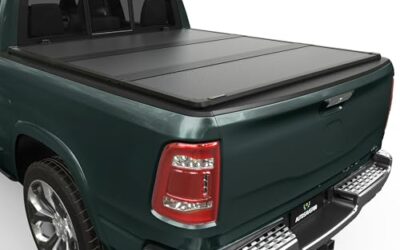
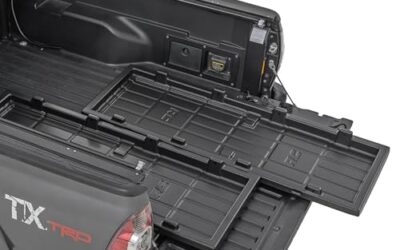
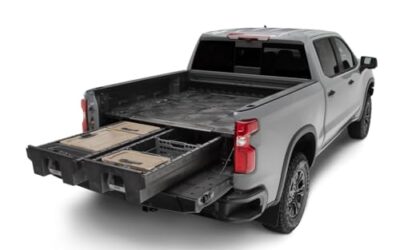
To secure cargo under a tonneau cover, attach suitable restraints to approved truck-bed tie-down points and keep every item from sliding, rolling, or tipping. Check the truck and cover manuals first: a closed cover conceals cargo, but it does not hold cargo in place or make an unsuitable load safe.
- Use truck-bed anchors, not the cover, as restraint points unless the cover maker specifically rates an attachment for cargo loads.
- Choose straps and other restraints for the cargo’s weight, shape, and movement risk.
- Keep cargo below the cover’s moving parts and within truck payload and axle limits.
- Recheck restraints after loading and during longer trips.
What you need before loading
Start with the truck owner’s manual and tonneau cover instructions. Bed layouts, tie-down points, payload limits, and cover mechanisms vary by vehicle model year and cover design. A factory anchor on one truck may not be present or rated the same way on another.
Identify approved bed anchors and inspect them for damage, looseness, or obstruction. If using installed rails, cleats, or a cargo management system, check its instructions for compatible accessories and load limits. Do not assume an accessory fits because it slides into a similar-looking track.
Check the cargo itself. Note its weight, dimensions, center of gravity, and whether it can roll, leak, shift, or break. Keep the combined load within the truck’s stated payload and axle limits. Payload includes more than bed cargo, so account for occupants and other carried items as directed in the owner’s manual.
How to secure cargo under a tonneau cover
- Plan the load. Place heavy items low and distribute weight as the truck manual directs. Keep cargo from pressing against the cab, bed sides, or cover panels. Leave clearance for the cover’s hinges, rails, latches, and operation.
- Separate items that can move. Use a bed mat, dividers, or suitable blocking to limit sliding and rolling. A mat can add friction, but it is not a substitute for a restraint. For more on bed-floor protection, see our truck bed mat guide.
- Choose restraint points. Connect straps or other restraints to approved bed anchors. Select anchor positions that control movement in the directions the load could shift. Do not attach cargo to a tonneau panel, latch, drain tube, or cover rail unless the cover maker explicitly approves that use.
- Fit restraints to the item. Use a strap arrangement that holds the load down and prevents it from sliding or tipping. Protect sharp edges that could cut webbing. For loose or small cargo, use a secured cargo net or closed container that cannot move freely.
- Tighten without damaging cargo. Remove slack and check that cargo stays in position when pushed by hand. Do not overtighten around fragile items or crush packaging. Follow restraint instructions, including any working-load limits and inspection guidance.
- Check the cover path. Close the cover slowly while watching for contact. Cargo must not block latches, pinch seals, interfere with folding or rolling sections, or bear against the cover. If the cover will not close normally, reposition the load instead of forcing it.
- Recheck before driving. Confirm anchors remain secure, straps are not loose, and the cover latches as its instructions describe. Stop in a safe place and inspect the load if you hear movement or suspect a restraint has shifted.
Match restraint to cargo
| Cargo type | Useful approach | Watch for |
|---|---|---|
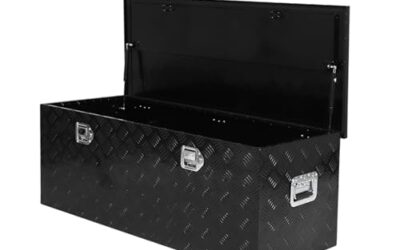
| Tool cases and bins | Secure each case or group in a closed, anchored container. | Cases can slide even when their contents are closed. |
| Long boards or trim | Support and restrain them at suitable points so they cannot slide or rotate. | Check bed and cover clearance. Do not let material press on the cover. |
| Round or rolling items | Use blocking or a holder, plus restraints attached to approved bed anchors. | A strap alone may not stop an item from rolling out of position. |
| Soft bags and loose gear | Group items in a closed container or secure cargo net. | Loose items can migrate toward latches or become difficult to retrieve. |
| Fragile cargo | Cushion it, limit movement, and use moderate restraint tension. | Straps can damage corners or crush the item if pulled too tight. |
This table is a planning aid, not a load rating. The safe method depends on the cargo, anchors, restraint, truck, and cover. Follow each applicable manual where instructions differ.
Can a tonneau cover hold cargo in place?
No, not unless its manufacturer specifically identifies a component as a cargo restraint and gives instructions for that use. Most covers provide a bed barrier or weather protection, not a load-rated tie-down system. A cover can also be damaged by cargo pressing upward or striking it as the truck moves.
A closed cover can hide cargo from view, but it should not be treated as a theft-proof lockbox. Security depends on the cover, tailgate, truck, and how the items are stored. Keep valuables out of sight when practical, and do not leave them in the bed solely because the cover is closed.
Cover and truck compatibility limits
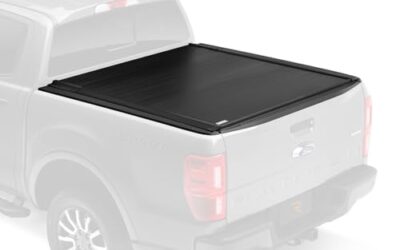
Tonneau covers vary by truck bed length, cab and bed configuration, model year, mounting system, and cover type. A hard folding, retractable, and soft roll-up cover can have different clearance and access limits. Check the cover instructions for the exact truck fitment and cargo clearance. A cover that fits one model year or bed configuration may not fit another.
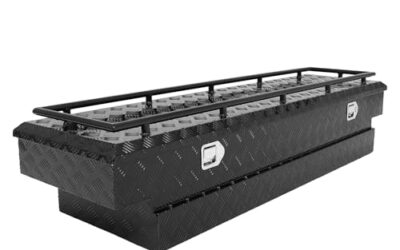
Toolboxes and bed accessories can change both cover fit and usable cargo space. If a toolbox is part of the setup, see our F-150 tonneau cover and toolbox fit guide. For model-specific fitment considerations, our GMC Sierra 1500 tonneau cover guide covers bed and fit details.
Do not drill the bed, alter cover rails, or add attachment hardware based on a generic diagram. The truck’s wiring, bed construction, accessories, and cover mounting can differ. Use instructions for the exact vehicle and cover, and ask the maker or a qualified installer if the proposed change affects mounting or operation.
Common mistakes
- Using the cover as a tie-down. Panels and latches may not be built for cargo forces. Anchor cargo to approved bed points instead.
- Relying on friction alone. A bed mat can reduce sliding, but abrupt vehicle movement can still shift cargo. Add suitable restraints.
- Using one strap for every load. Shape and movement matter. A round object, a tall case, and a flat board need different restraint plans.
- Ignoring the cover’s moving parts. Cargo can block rails, hinges, latches, seals, or a retracting canister. Keep the operating path clear.
- Overloading anchors or restraints. The weakest part of the setup limits the whole arrangement. Check ratings and instructions for anchors, straps, and accessories.
- Assuming a closed cover means secure cargo. The cover does not stop cargo from shifting inside the bed, and it does not guarantee theft protection.
- Skipping a recheck. Straps can loosen as cargo settles. Recheck when safely stopped, especially after an early part of the trip or a noticeable change in load position.
When to get professional help
Ask the truck or cover manufacturer, or a qualified installer, if you cannot identify approved anchors, need to add or modify mounting points, or cannot close the cover without cargo contact. Get help when the load exceeds the truck’s stated limits, the anchor or bed structure looks damaged, or cargo shape makes stable restraint uncertain.
Do not drive with a cover forced shut, a damaged anchor, or a load that can move into the cab or interfere with vehicle operation. Follow the vehicle manual and applicable restraint instructions for the specific setup.
Gear that can help
If you need tonneau covers for this job, these picks already appear in our tonneau covers guides. Check the full guide for fit and who should skip each one.

Pros
- Uses heavy-duty 24oz marine-grade vinyl with aluminum support frames
- Fold-up crossbars allow full bed access when needed
- No-drill installation design
- 5-year US customer warranty
Cons
- Not compatible with 2019 Silverado 1500 LD, Sierra 1500 Limited, CarbonPro beds, or factory side storage boxes
- Over-the-bedrail bedliners require small holes to be cut for clamp installation
- Installing the cover interferes with the power tailgate
Specifications
| Color | Black |
|---|---|
| Size | 5.9ft Bed |
| Dimensions | 71 x 27 x 4 inches |
| Weight | 25.24 pounds |
| Product Group | Automotive Parts and Accessories |
| Binding | Automotive |
Best For / Avoid If
Best for buyers prioritizing
- Uses heavy-duty 24oz marine-grade vinyl with aluminum support frames
- Fold-up crossbars allow full bed access when needed
- No-drill installation design
Consider another option if
- Not compatible with 2019 Silverado 1500 LD, Sierra 1500 Limited, CarbonPro beds, or factory side storage boxes
- Over-the-bedrail bedliners require small holes to be cut for clamp installation
- Installing the cover interferes with the power tailgate

Pros
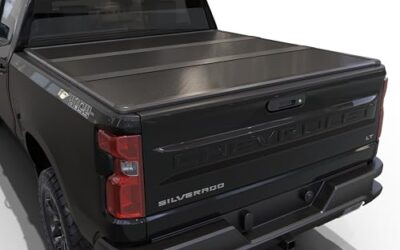
- Broad stated fitment covering 2007-2026 Silverado and Sierra 1500 models
- No-drill installation design
- Hard fiberglass construction with reinforced hinges and latches
- Includes a 60-month warranty
Cons
- Not compatible with CarbonPro beds
- Limited to 5.8-foot beds on the specified Silverado and Sierra 1500 models
Specifications
| Color | Black |
|---|---|
| Size | 5.8ft for 07-26 1500 |
| Product Group | Automotive Parts and Accessories |
Best For / Avoid If
Best for buyers prioritizing
- Broad stated fitment covering 2007-2026 Silverado and Sierra 1500 models
- No-drill installation design
- Hard fiberglass construction with reinforced hinges and latches
Consider another option if
- Not compatible with CarbonPro beds
- Limited to 5.8-foot beds on the specified Silverado and Sierra 1500 models

Pros
- Broad listed compatibility across 2009-2026 Ford F-150 short-bed models
- No-drilling installation design
- Includes installation hardware, weather stripping, and a manual
- Vinyl tarp and aluminum frame construction
Cons
- The listing requires buyers to measure the truck bed length and confirm the model before ordering
- The compatibility information is limited to a 5.5-foot short-bed Fleetside configuration
Specifications
| Color | 2015-2022 Ford F-150 |
|---|---|
| Size | 5.5 FT |
| Product Group | Automotive Parts and Accessories |
| Binding | Automotive |
Best For / Avoid If
Best for buyers prioritizing
- Broad listed compatibility across 2009-2026 Ford F-150 short-bed models
- No-drilling installation design
- Includes installation hardware, weather stripping, and a manual
Consider another option if
- The listing requires buyers to measure the truck bed length and confirm the model before ordering
- The compatibility information is limited to a 5.5-foot short-bed Fleetside configuration
FAQ
Can I strap cargo to tonneau cover rails?
Only if the cover maker identifies those rails as suitable cargo attachment points and provides limits and instructions. Otherwise, use approved truck-bed anchors.
Does a bed mat secure cargo by itself?
No. A mat may add friction, but it does not restrain cargo against all movement. Use suitable restraints attached to approved anchors.
Can I carry cargo that touches the underside of the cover?
Avoid contact unless the cover instructions explicitly allow it. Movement can load or damage panels, hinges, seals, and latches, and may prevent normal operation.
Should I recheck straps during a trip?
Yes. Stop somewhere safe and inspect restraints if cargo may have settled, a strap looks loose, or you hear movement. Follow the restraint maker’s inspection guidance.