The Quick Answer
The best 3.7 volt battery charger depends first on the battery’s physical format. For removable cylindrical cells, the manufacturer-listed specifications make the IMREN 18650 Battery Charger,21700 Battery Charger the most versatile option here: it has four independent bays, selectable 0.5A, 1A, and 2A charging, USB-C input, and support for numerous 3.7V lithium-ion and 1.2V nickel-based cells.
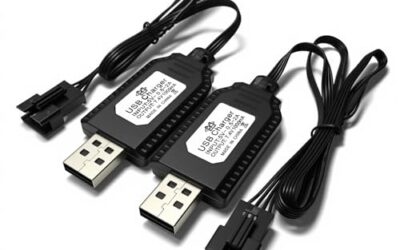
Choose the Swanlake two-bay model if you want an LCD with more charging information, or the Tokeyla if you need an inexpensive four-bay charger exclusively for cylindrical lithium-ion cells. The VGGUBKZ cable is the appropriate specialist choice for compatible 1S RC battery packs with an SM-2P connector, but it cannot replace a charger for loose 18650 or 21700 cells.
CarTechTalk may earn a commission from qualifying purchases made through product links. Recommendations are based on the published manufacturer-listed specifications, not first-hand evaluation. Prices were observed between $5.79 and $19.99 and can change, so confirm the current price before buying.

Pros
- Four charging bays support flexible battery quantities
- Single-battery charging can be used without charging batteries in pairs
- Broad compatibility across listed Li-ion, Ni-MH, and Ni-Cd battery sizes
- Selectable charging current up to 2A
Cons
- Only rechargeable batteries are supported; non-rechargeable batteries should not be charged
- A USB power source is required, and the included cable is the only power accessory listed
Specifications
| Color | Black |
|---|---|
| Dimensions | 6.2992 x 6.33857 x 1.85039 inches |
| Weight | 0.370625 pounds |
| Product Group | Electronics |
| Binding | Electronics |
Best For / Avoid If
Best for buyers prioritizing
- Four charging bays support flexible battery quantities
- Single-battery charging can be used without charging batteries in pairs
- Broad compatibility across listed Li-ion, Ni-MH, and Ni-Cd battery sizes
Consider another option if
- Only rechargeable batteries are supported; non-rechargeable batteries should not be charged
- A USB power source is required, and the included cable is the only power accessory listed

Pros
- Supports both lithium-ion and Ni-MH/Ni-Cd rechargeable batteries
- Compatible with several common cylindrical battery sizes
- Includes multiple integrated safety protections
- Lightweight design listed at 100g
Specifications
| Color | Black |
|---|---|
| Dimensions | 1.5 x 2.55 x 5.2 inches |
| Product Group | Toy |
Best For / Avoid If
Best for buyers prioritizing
- Supports both lithium-ion and Ni-MH/Ni-Cd rechargeable batteries
- Compatible with several common cylindrical battery sizes
- Includes multiple integrated safety protections

Pros
- Four-bay design supports simultaneous charging of compatible batteries
- USB charging can connect to a laptop or other USB device
- Supports multiple listed lithium-ion battery sizes
- Includes charging-status indicators and advertised safety protections
Cons
- Batteries are not included
- Not compatible with AA, AAA, or NiMH batteries
- Designed for 3.7V lithium-ion rechargeable batteries
Specifications
| Color | Black |
|---|---|
| Size | 5.71x3.94x1.38 in |
| Dimensions | 1.4 x 3.7 x 5.8 inches |
| Product Group | Electronics |
Best For / Avoid If
Best for buyers prioritizing
- Four-bay design supports simultaneous charging of compatible batteries
- USB charging can connect to a laptop or other USB device
- Supports multiple listed lithium-ion battery sizes
Consider another option if
- Batteries are not included
- Not compatible with AA, AAA, or NiMH batteries
- Designed for 3.7V lithium-ion rechargeable batteries

Pros
- Broad compatibility across listed lithium-ion, Ni-MH, Ni-Cd, and battery sizes
- LCD provides multiple charging-status details
- Independent bay charging helps prevent charging interference between slots
- Built-in circuit protections are listed for short circuit and over-voltage conditions
Cons
- Batteries are not included
- The charger has two bays
- Ni-MH charging is limited to 0.5A; adjustable charging current applies only to lithium batteries
Specifications
| Color | 2-slot |
|---|---|
| Size | 2-slot Fit 3.7v &1.2v |
| Dimensions | 4.82 x 2.34 x 1.1 Inches |
| Product Group | Electronics |
Best For / Avoid If
Best for buyers prioritizing
- Broad compatibility across listed lithium-ion, Ni-MH, Ni-Cd, and battery sizes
- LCD provides multiple charging-status details
- Independent bay charging helps prevent charging interference between slots
Consider another option if
- Batteries are not included
- The charger has two bays
- Ni-MH charging is limited to 0.5A; adjustable charging current applies only to lithium batteries

Pros
- Four independent charging bays
- Slot-specific LCD monitoring
- Supports multiple listed Li-ion, NiMH, and Ni-Cd battery sizes
- Includes a USB-C cable and user manual
Specifications
| Color | Black |
|---|---|
| Size | 4 Slot |
| Dimensions | 3.78 x 1.18 x 4.72 Inches |
| Product Group | BISS |
Best For / Avoid If
Best for buyers prioritizing
- Four independent charging bays
- Slot-specific LCD monitoring
- Supports multiple listed Li-ion, NiMH, and Ni-Cd battery sizes

Pros
- Broad compatibility with listed lithium-ion battery sizes and AA/AAA rechargeable batteries
- Automatic battery-type detection and charging-current allocation
- Includes faulty and non-rechargeable battery detection
- Provides a 0V activation function for certain over-discharged protected batteries
Cons
- Charging current varies by battery chemistry and charging configuration
- The product data lists an Amazon rating of 4.3 from 0 reviews, so no review count is available to evaluate customer feedback
Specifications
| Color | Black |
|---|---|
| Dimensions | 4.8 x 1.78 x 3 inches |
| Product Group | Electronics |
| Binding | Electronics |
Best For / Avoid If
Best for buyers prioritizing
- Broad compatibility with listed lithium-ion battery sizes and AA/AAA rechargeable batteries
- Automatic battery-type detection and charging-current allocation
- Includes faulty and non-rechargeable battery detection
Consider another option if
- Charging current varies by battery chemistry and charging configuration
- The product data lists an Amazon rating of 4.3 from 0 reviews, so no review count is available to evaluate customer feedback

Pros
- Two cables are included in the package
- Supports 3.7V batteries with the specified SM-2P plug
- The listing includes charging-time estimates for 500mAh and 1000mAh batteries
- Designed for mini RC cars, boats, trucks, bubble guns, and small toys
Cons
- Compatibility is limited to the listed battery types, capacities, and SM-2P connector
- The listing states that it is not for batteries rated at 1500mAh or higher
- Charging a 1000mAh battery is listed as taking 6–7 hours
Specifications
| Dimensions | 3.72 x 1.48 x 0.7 inches |
|---|---|
| Product Group | Toy |
Best For / Avoid If
Best for buyers prioritizing
- Two cables are included in the package
- Supports 3.7V batteries with the specified SM-2P plug
- The listing includes charging-time estimates for 500mAh and 1000mAh batteries
Consider another option if
- Compatibility is limited to the listed battery types, capacities, and SM-2P connector
- The listing states that it is not for batteries rated at 1500mAh or higher
- Charging a 1000mAh battery is listed as taking 6–7 hours

Pros
- Supports two 26650 batteries simultaneously
- Offers selectable 1A and 2A charging currents
- Accommodates a broad list of lithium-ion and Ni-MH/Ni-Cd battery sizes
- USB-C power input supports multiple USB power sources
Cons
- Batteries are not included
- Non-rechargeable batteries must not be charged
Specifications
| Color | Black |
|---|---|
| Dimensions | 3.0314960599 x 5.8267716476 x 1.3385826758 inches |
| Weight | 0.24 Pounds |
| Product Group | Electronics |
| Binding | Electronics |
Best For / Avoid If
Best for buyers prioritizing
- Supports two 26650 batteries simultaneously
- Offers selectable 1A and 2A charging currents
- Accommodates a broad list of lithium-ion and Ni-MH/Ni-Cd battery sizes
Consider another option if
- Batteries are not included
- Non-rechargeable batteries must not be charged

Pros
- Supports multiple Li-ion and NiMH battery types
- Independent slots allow two batteries to be charged separately
- LCD displays provide voltage, current, and battery-type information
- USB-C input and portable design support travel use
Cons
- Limited to two charging slots
Specifications
| Dimensions | 1.18 x 2.36 x 4.8 inches |
|---|---|
| Weight | 0.1763698096 Pounds |
| Product Group | Electronics |
Best For / Avoid If
Best for buyers prioritizing
- Supports multiple Li-ion and NiMH battery types
- Independent slots allow two batteries to be charged separately
- LCD displays provide voltage, current, and battery-type information
Consider another option if
- Limited to two charging slots
Evaluation Criteria for Battery Chargers & Testers
We evaluated all nine chargers using the published specifications, emphasizing verified battery chemistry, cell sizes, connector type, independent charging, current options, status information, and USB power requirements. Compatibility received more weight than feature count because a charger that fits the wrong chemistry, cell length, or connector is unusable and potentially unsafe.
Manufacturer safety claims are noted where relevant, but they are not treated as independent certification or a performance guarantee.
Compatibility at a Glance
| Product | Intended battery format | Bay or cable count | Input | Status information |
|---|---|---|---|---|
| IMREN four-bay | Cylindrical Li-ion and Ni-MH/Ni-Cd | 4 bays | USB-C | – |
| TRAELY | Cylindrical Li-ion and Ni-MH/Ni-Cd | – | USB | – |
| Tokeyla | Cylindrical Li-ion only | 4 bays | 5V USB | Red/green LEDs |
| Swanlake | Cylindrical Li-ion and nickel-based rechargeable cells | 2 bays | USB cable; connector not provided | LCD |
| IMREN two-bay | Cylindrical Li-ion and Ni-MH/Ni-Cd | 2 bays | USB-C | – |
| WANGDAJIEDIAN | Cylindrical Li-ion and Ni-MH/Ni-Cd | 4 bays | USB-C cable supplied | LCD |
| EBL | Cylindrical Li-ion and Ni-MH/Ni-Cd | – | – | LEDs |
| Easife | Cylindrical Li-ion and Ni-MH | 2 bays | USB-C | LCD |
| VGGUBKZ | 1S battery pack with SM-2P plug | 2 cables | USB | – |
What to Verify Before You Buy
“3.7V” Does Not Establish Compatibility
A nominal 3.7V label is only the starting point. Confirm the chemistry, physical dimensions, terminal style, and whether the battery is a loose cylindrical cell or a wired pack. A charger designed for an 18650 cell is not interchangeable with an SM-2P RC cable, even though both batteries may be marked 3.7V.
Likewise, a 1.2V Ni-MH AA battery requires explicit nickel-battery support. Do not place it in the lithium-only Tokeyla model. Never charge disposable alkaline cells or any battery the charger does not expressly support.
Check Length, Not Just the Cell Number
Protected circuits and button-top terminals can make a cylindrical cell longer than another battery with the same basic designation. The listed limits include 75 mm for the IMREN four-bay model and 70 mm for the WANGDAJIEDIAN and Easife chargers. Measure unusually long cells and compare that measurement with the charger’s stated range.
USB-C Does Not Automatically Mean Maximum Speed
USB-C describes the connector, not the guaranteed charging rate. Actual current depends on the charger’s controls, number of occupied bays, battery type, and the connected USB power source. Use a suitable, undamaged adapter and cable; several products list a cable but do not list a wall adapter.
Buying Factors That Matter
- Identify the battery format: Choose a spring-loaded bay charger for loose cylindrical cells or the exact matching cable for a wired pack.
- Confirm chemistry: Look for explicit support for lithium-ion, Ni-MH, or Ni-Cd as applicable.
- Measure the cell: Check length and width, especially for protected, button-top, 21700, or 26650 batteries.
- Select capacity: Four bays suit larger rotations; two bays are smaller and may be sufficient for occasional charging.
- Choose status detail: LEDs provide basic progress, while an LCD can show listed voltage, current, time, or detected chemistry.
- Consider current control: Selectable current can be useful when charging different cell capacities. Do not assume the highest listed rate applies to every bay or chemistry.
Common Buying Questions
Can one charger handle 18650, 21700, and 26650 batteries?
Several listed models explicitly support all three, including both IMREN chargers, the TRAELY charger, the WANGDAJIEDIAN model, and the EBL model. Physical length and terminal design still need to fit the charger.
Can I charge AA batteries in a 3.7V charger?
Only if the charger explicitly supports the AA battery’s chemistry. Several models detect 1.2V Ni-MH or Ni-Cd cells, but the Tokeyla charger is listed for lithium-ion batteries only. Disposable AA batteries must not be charged.
Is a 2A setting always better?
No. A higher current can reduce charging time when both the charger and battery support it, but it is not appropriate for every cell. Follow the battery manufacturer’s charging limit and use a lower selectable current when required.
Can I charge a damaged or deeply discharged lithium battery?
Do not charge a battery that is swollen, leaking, physically damaged, unusually hot, or corroded. Although some manufacturers list activation or recovery functions, those features do not establish that a compromised battery is safe to reuse. When in doubt, isolate the battery away from combustible material and seek qualified disposal guidance.
Closing Recommendation
For the broadest everyday mix of loose cylindrical cells, the IMREN four-bay model is the strongest specification-led recommendation because it combines independent slots, multiple current settings, USB-C input, and wide listed chemistry and size support. Choose the Swanlake when a detailed LCD matters more than four-bay capacity, or the Tokeyla for four-bay lithium-only charging at a lower observed price.
For an RC toy battery, do not buy a cylindrical-cell charger: the VGGUBKZ cable set is suitable only when the pack is a compatible 1S battery with the correct SM-2P connector and polarity. Whatever model you choose, verify chemistry, dimensions, connector, polarity, and current requirements on the battery itself before charging.