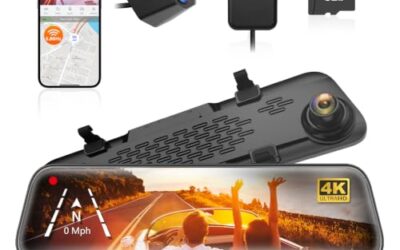
The best blind spot monitoring system aftermarket for most 12V drivers is BlueDex Blind Spot Monitoring, which lists a 24GHz radar range of 1 to 32.8 feet and gives turn-signal-linked LED and buzzer alerts. Its key tradeoff is installation: the maker recommends professional fitting, and radar sensors cannot work through metal surfaces.

Pros
- Combines blind spot alerts with lane change and rear traffic warnings
- Provides both buzzer and light alerts
- IP67 rating and ABS housing
Cons
- Operates at 12V
- Maximum detection range is 15 meters
- Requires sensors on both sides of the rear bumper
Specifications
| Product Group | Automotive Parts and Accessories |
|---|
Best For / Avoid If
Best for buyers prioritizing
- Combines blind spot alerts with lane change and rear traffic warnings
- Provides both buzzer and light alerts
- IP67 rating and ABS housing
Consider another option if
- Operates at 12V
- Maximum detection range is 15 meters
- Requires sensors on both sides of the rear bumper
Pros
- Combines blind-spot, lane-change and rear cross-traffic alert functions
- Provides visual and audible alerts
- Listed compatibility includes cars, SUVs, MPVs, pickups, trucks and vans
Cons
- Does not alert to stationary objects
- Vehicles longer than 4.8m require an extension cable, according to the product listing
Specifications
| Color | 77GHz 021-universal LED |
|---|---|
| Size | Max cable length: ~6.8m |
| Dimensions | 15 x 11 x 3 Inches |
| Product Group | Wireless |
| Binding | Electronics |
Best For / Avoid If
Best for buyers prioritizing
- Combines blind-spot, lane-change and rear cross-traffic alert functions
- Provides visual and audible alerts
- Listed compatibility includes cars, SUVs, MPVs, pickups, trucks and vans
Consider another option if
- Does not alert to stationary objects
- Vehicles longer than 4.8m require an extension cable, according to the product listing

Pros
- Uses both visual LED warnings and audible buzzer alerts.
- Offers multiple alert behaviors based on turn-signal and hazard-light status.
- Includes an alignment tool for sensor setup.
Cons
- Requires DC 12V power, limiting compatibility with vehicles using other power systems.
- Radar sensors cannot penetrate metal surfaces, so sensor placement matters.
- Professional installation is recommended.
Specifications
| Color | Black |
|---|---|
| Product Group | Automotive Parts and Accessories |
| Binding | Electronics |
Best For / Avoid If
Best for buyers prioritizing
- Uses both visual LED warnings and audible buzzer alerts.
- Offers multiple alert behaviors based on turn-signal and hazard-light status.
- Includes an alignment tool for sensor setup.
Consider another option if
- Requires DC 12V power, limiting compatibility with vehicles using other power systems.
- Radar sensors cannot penetrate metal surfaces, so sensor placement matters.
- Professional installation is recommended.

Pros
- Uses dual radar sensors for rear-quarter monitoring.
- Provides visual and audible alerts.
- Listing gives a detection range of 1 to 32.8 ft.
- Listed for 12V sedans, SUVs and pickup trucks.
Cons
- Requires a 12V vehicle.
- Provides monitoring alerts; listing describes no steering or braking intervention.
Specifications
| Color | Black |
|---|---|
| Dimensions | 9.5 x 2.5 x 7.5 inches |
| Weight | 0.8 pounds |
| Product Group | Wireless |
| Binding | Electronics |
Best For / Avoid If
Best for buyers prioritizing
- Uses dual radar sensors for rear-quarter monitoring.
- Provides visual and audible alerts.
- Listing gives a detection range of 1 to 32.8 ft.
Consider another option if
- Requires a 12V vehicle.
- Provides monitoring alerts; listing describes no steering or braking intervention.
Aftermarket blind spot monitor picks
| System | Power | Radar band | Listed alert functions |
|---|---|---|---|
| BlueDex Blind Spot Monitoring | 12V DC | 24GHz | Blind spot warning, lane change alert |
| BY-J 77GHz BSD Blind Spot Monitoring System | DC 9–16V | 77GHz | BSD, LCA, AOA, B-pillar alert, RCTA, DOW |
| Astibym Blind Spot Detection Monitoring System | 12V | 24GHz | Blind spot warning, lane change warning, rear traffic alert, door opening reminder |
| ZYNJ 24 GHz Blind Spot Detection Monitoring System | 12V | 24GHz | Blind spot warning, lane change warning |
Best fit by vehicle and installation needs
BlueDex: clearest setup guidance for 12V cars and pickups
BlueDex is the practical pick for a driver who wants stated sensor range and a defined warning sequence. Its dual 24GHz radar sensors cover a listed distance of 1 to 32.8 feet. With the turn signal off, the matching LED stays lit when a vehicle enters the monitored area. With the signal on, the LED flashes and the buzzer sounds three times. That distinction helps the driver understand whether a vehicle is nearby or a lane change may bring it into conflict.
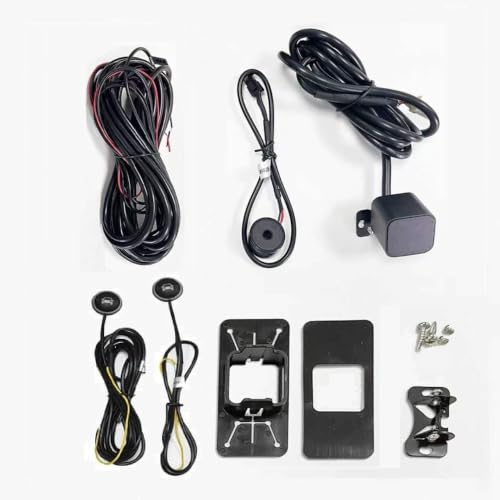
The kit is listed for most 12V sedans, SUVs, and pickup trucks. The maker recommends professional installation and includes an installation manual and radar angle alignment tool. Sensor height, angle, position, and wiring matter to the system’s stated operation, so this is not a strong choice for someone who wants a quick plug-in accessory. Metal blocks radar, which rules out mounting the sensors behind a metal bumper surface.
Best for: A 12V vehicle owner who wants a defined LED and buzzer sequence and is prepared for careful mounting or professional installation. Skip it if: Your vehicle is not a 12V sedan, SUV, or pickup, or you cannot place its radar sensors where they have a clear path through a suitable bumper area.
BY-J: widest stated feature set, with a vehicle-length limit
BY-J is the feature-focused option. Its 77GHz system lists blind spot detection, lane change assist, an overtaking alert, a B-pillar alert, rear cross-traffic alert, and a door-opening warning. That range of functions may suit a driver who wants warnings during reversing and before opening a door, not only while changing lanes. The system responds to moving objects, according to its description; stationary objects do not trigger alerts.
The stated operating range is DC 9–16V, and the maker lists cars, SUVs, MPVs, pickups, trucks, and vans up to 4.8 meters long. Longer vehicles need an extension cable, so the listed fit is not universal for every truck or van. Its claimed detection area is 3.5 by 70 meters, but buyers should treat that as a manufacturer specification, not as a guarantee of detection in every vehicle or mounting position. The kit uses LED and buzzer alerts and is described as starting with the engine and shutting off when it stops.
Best for: A driver whose vehicle fits the 9–16V range and 4.8-meter limit, and who wants RCTA and door-opening alerts alongside lane-change warnings. Skip it if: Your vehicle exceeds that length and you do not want to contact the seller about an extension cable, or you need alerts for stationary objects.
Astibym: extra alerts and an IP67 housing claim
Astibym adds rear traffic alert and a door-opening reminder to blind spot and lane-change warnings. The listing describes side-mounted rear bumper sensors, sound and light alerts, 12V operation, and an IP67 rating for the housing. It also states a maximum detection range of 15 meters. Those claims make the kit worth considering for a driver who values several warning modes and weather-rated sensor housing.
The listing does not identify a specific vehicle-length limit or provide the detailed mounting and alignment instructions that BlueDex describes. Its “all vehicles” wording should not outweigh the 12V requirement or the need to place radar sensors correctly. IP67 is a housing rating claim; it does not establish how well the system detects vehicles in every weather, bumper, or traffic condition.
Best for: A 12V driver who wants rear traffic and door-opening reminders in addition to blind spot alerts. Skip it if: You need documented fitment for a particular vehicle or prefer a kit with explicit alignment guidance before installation.
ZYNJ: lower-cost 12V option with simple alert behavior
ZYNJ is the budget pick among these four. Its 12V dual-radar kit lists a range of 1 to 32.8 feet and a basic warning pattern: the LED stays steady when a vehicle enters the blind zone, then flashes with an audible buzzer when the turn signal is on. That gives a driver a straightforward lane-change cue without the broader feature set listed for BY-J or Astibym.
The product description says the sensors mount at the rear bumper corners and describes fit for 12V sedans, SUVs, and pickups. Its marketing also says it will not interfere with internal wiring, but buyers still need to plan installation and wiring for their own vehicle. The feature information does not describe functions such as rear cross-traffic alert or door-opening warnings, so do not choose it expecting those additions.
Best for: A budget-conscious owner of a 12V sedan, SUV, or pickup who wants basic blind spot and turn-signal alerts. Skip it if: You need rear cross-traffic or door-opening alerts, or your vehicle’s power system falls outside 12V.
How to choose an aftermarket blind spot monitor
Start with voltage and vehicle fit
Check the vehicle’s electrical system before comparing radar features. Three kits here specify 12V operation. BY-J lists DC 9–16V and a maximum vehicle length of 4.8 meters unless an extension cable is used. That makes it the only option in this group with a stated voltage range beyond a single 12V label and an explicit length boundary.
“Universal” or “all vehicles” language does not remove installation limits. These systems need powered sensors, a route for wiring, and a suitable place at each rear corner. Confirm that your bumper construction and shape allow the sensors to face the intended detection area. BlueDex explicitly warns that radar cannot penetrate metal. A metal bumper or metal reinforcement in the sensor path can make an otherwise compatible voltage match irrelevant.
Choose alerts for the driving situations you face
For lane changes, indicator behavior matters: BlueDex and ZYNJ describe a steady LED with the turn signal off and a flashing LED plus buzzer with it on. Astibym adds rear traffic and door-opening reminders. BY-J lists the broadest set, including RCTA and DOW. Those names describe intended warning functions, not automatic braking or steering. The driver remains responsible for checking mirrors, looking over the shoulder, and deciding whether a maneuver is safe.
There is also a meaningful difference in object behavior. BY-J says it reacts to moving objects and does not alert to stationary objects. That may reduce warnings from objects that are not moving, but it also means the system should not be treated as a parking sensor for stationary obstacles. The other descriptions do not establish the same behavior, so do not assume their warning logic matches.
Budget for installation, not only the kit
Radar alignment and mounting position affect what the sensors can observe. BlueDex recommends professional installation and includes an angle tool. Its instructions emphasize position, height, angle, and wiring. For the other systems, the product descriptions identify rear bumper mounting, but provide less detail about alignment. If you are not comfortable removing trim, routing wires, or making vehicle electrical connections, include installer labor in your decision rather than treating a low kit price as the full cost.
Keep sensor placement away from metal surfaces that block radar, and follow the instructions for the specific kit and vehicle. Avoid routing wires near airbag components or moving parts. If installation requires disturbing safety-system wiring or you cannot identify a safe route, stop and use a qualified installer. A warning system can be distracting or give poor alerts if sensors are mounted at the wrong angle.
Who should skip these systems
Do not buy one of these kits if you need a factory-integrated system that displays alerts through the vehicle’s original dashboard or communicates with steering and braking controls. The descriptions identify standalone warning systems, not OEM replacements or collision-avoidance controls. Also skip this group if you cannot confirm a suitable sensor mounting location, do not want bumper work or wiring, or need fitment assurance for a specific model year that the product description does not establish.
In those cases, look for a vehicle-specific kit with a published fitment list and installation instructions for your exact model, or ask a qualified automotive electronics installer to identify a compatible system. A mirror-mounted blind spot aid may be another option if you want to avoid radar sensors and electrical installation, though it will not provide the same electronic alerts.
Final verdict
BlueDex is the strongest starting point for many 12V owners because it states a usable range, explains turn-signal alert behavior, and includes an alignment tool. BY-J makes more sense when you need the broader list of RCTA and door-opening functions and your vehicle stays within its voltage and length limits. Astibym suits drivers who want added rear-traffic and door reminders, while ZYNJ keeps the feature set simple for a budget purchase.
None should replace safe driving habits or be treated as a guarantee that a vehicle is clear. Choose by electrical fit, sensor location, alert functions, and willingness to pay for careful installation. If any of those remain uncertain for your vehicle, a professionally selected vehicle-specific system is a better purchase than a universal kit chosen by feature count alone.