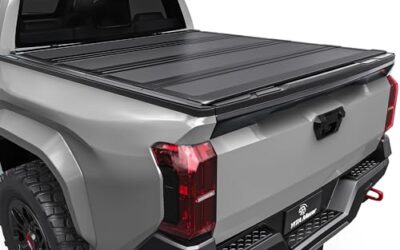
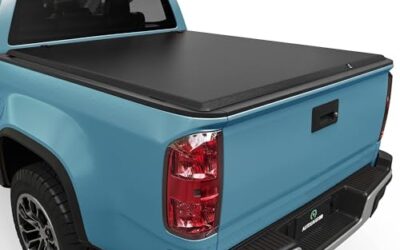
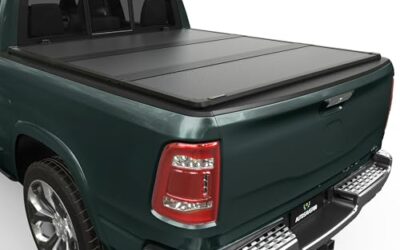
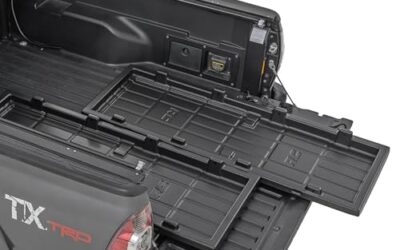
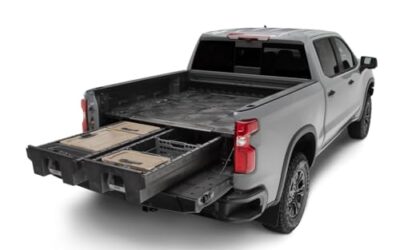
How to carry tall cargo with a folding tonneau cover depends on the cover’s fold positions, the cargo’s size, and your truck’s tie-down points. Open or remove panels only as the cover maker allows, secure cargo to approved truck-bed anchors, and never use the cover itself as a cargo support.
- Check the cover and truck manuals for approved open positions, removal steps, and load limits.
- Measure cargo and truck bed before loading. Include room for straps and any tailgate or cover hardware.
- Keep cargo from blocking the driver’s view, lights, or license plate.
- Use a bed rack or another support system if cargo needs support above the bed rails.
Can you carry tall cargo with a folding tonneau cover?
Often, yes, if the cover can open or come off without interfering with the load and the cargo can be secured to the truck. A folding cover protects cargo when closed; it is not a rack, cargo bar, or tie-down anchor. Do not rest heavy items on folded panels unless the cover maker explicitly allows that use.
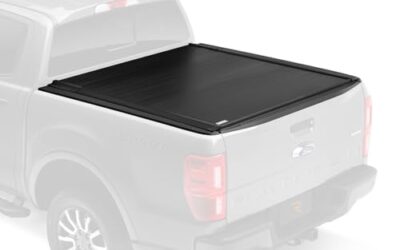
“Folding” covers differ. Some fold in sections and stow at the cab. Others can be removed, while some may have limits on driving with panels folded or stacked. A position that works while parked may not be approved for travel. Cover design, model year, bed length, rail hardware, and cab configuration can affect fit and operation.
Start with the cover manual for your exact model. Then check the truck owner’s manual for bed-anchor locations and cargo limits. If either manual does not allow the intended setup, do not assume another folding cover follows the same rules.
- Measure cargo and available bed space. Measure the item’s height, length, and width. Compare those dimensions with the open bed and the space left after folding or removing cover panels. Allow room for straps, padding, and safe loading. If an item must lean against a panel or force it out of position, choose another setup.
- Check truck and cover instructions. Find the cover’s approved travel positions and instructions for folding, removal, and panel storage. Check the truck manual for cargo restrictions, bed anchors, and any limits that apply to the truck’s configuration. Do not assume a cover can travel folded just because it can fold.
- Choose a support plan. Cargo that sits fully on the bed may need only suitable bed anchors and restraints. Tall, long, or fragile cargo may need a rack or purpose-built support attached to approved mounting points. The cover and its clamps are not substitutes for those supports.
- Open or remove the cover as instructed. Follow the maker’s sequence. Secure folded sections using the supplied latches or straps if the instructions call for them. If removing panels, store them where they cannot slide, fall, or obstruct the driver. Do not leave loose hardware in the bed.
- Load and protect cargo. Place the load on the bed floor or on a support made for that cargo. Keep sharp edges away from the cover, cab, and painted surfaces. Use padding where contact could damage the truck or item. Keep cargo clear of the rear window if it blocks visibility.
- Attach restraints to approved anchors. Use truck tie-down points or rack anchors rated for the intended use. Route straps around the cargo, not through cover panels or moving cover hardware. Tighten straps enough to control movement without crushing fragile items. Follow strap and anchor instructions.
- Check the full setup before driving. Push the load by hand from several directions. It should not shift, roll, or lift from its supports. Check that straps do not rub on sharp edges, cover sections are secured, and rear lights and the plate remain visible. Stop if any part of the setup moves or blocks your view.
- Recheck during the trip. Stop somewhere safe after starting out and inspect the load and restraints. Recheck after stops, rough roads, or changes in weather. Retighten or reload only while parked safely.
Choose setup by cargo and cover position
| Situation | Possible approach | Key limit |
|---|---|---|
| Item fits below bed rails | Keep cover closed if item does not press on it, or open cover as needed. | Do not let cargo bear against panels or latches. |
| Item sits above bed rails | Open or remove cover if permitted, then secure item to bed anchors. | Bed anchors and restraints must suit the load; cover does not support it. |
| Long item needs support above bed | Use a compatible rack or support attached to approved mounting points. | Check truck, rack, and cover fit together. Some combinations may not work. |
| Cover folds toward cab | Use that position only if maker permits driving that way. | Folded panels may affect visibility, access, or cab clearance. |
| Cover must come off | Remove and store it according to its instructions. | Protect panels and hardware from movement or damage during transport. |
What to check before choosing a rack or support
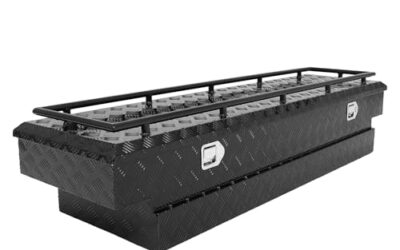
A rack can create clearance for tall cargo, but compatibility is specific to the truck and cover. Check truck model year, bed length, cab style, bed-rail system, and cover model. A rack may use the same bed rails or mounting area as the cover. If so, both may not fit together without approved hardware.
Check how the rack attaches and where its load sits. Do not infer a safe capacity from appearance or from another truck’s setup. Follow the truck and rack limits, including any separate limit for a dynamic load while driving. If instructions conflict, stop and ask the vehicle or equipment maker which limit applies.
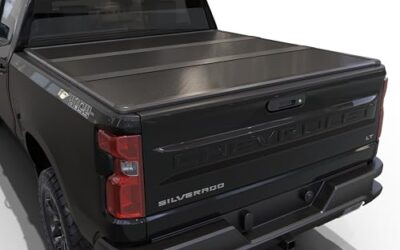
For fitment considerations on a specific truck, see our guide to the F-150 tonneau cover and toolbox fit. It addresses how bed equipment can affect cover access and fit. For other truck models, start with the tonneau covers and truck bed accessories section.
Keep cargo secure and visible
Use restraints suited to the cargo, anchor, and journey. A single strap may not control an item from every direction. Long boards, ladders, or tubing can shift, rotate, or catch wind. Use a support and restraint layout that controls movement without relying on the cover, tailgate, or a loose tarp.
Check the load from the driver’s seat. Cargo must not block mirrors, the rear window, rear lamps, or the plate. If cargo extends beyond the bed, follow applicable state and local requirements for marking or lighting it. Rules vary by location and load. Do not rely on a general online rule for every trip.
Weather can change the load. Wind can pull on broad or lightweight items, and rain can affect some cargo or straps. Covering cargo with a tarp does not secure it. Keep the tarp restrained so it cannot flap loose or cover lights and visibility.
Common mistakes
- Driving with folded panels without checking instructions. A fold position may be intended for access, not travel.
- Using cover panels as a shelf. Panels can be damaged by cargo weight or movement unless the maker expressly permits the load.
- Strapping cargo to cover hardware. Hinges, clamps, and latches are not necessarily rated as cargo anchors.
- Assuming every rack fits every cover. Shared rail space and mounting hardware can create conflicts.
- Leaving straps loose or relying on a tarp. Cargo can shift even on a short trip. A tarp only covers; it does not hold the load.
- Ignoring visibility and lights. A load can be secure yet still create an unsafe or unlawful setup.
- Guessing load capacity. Appearance, another vehicle’s setup, and a cover’s panel strength do not establish a safe cargo limit.
When to get professional help
Ask the cover or vehicle maker, a qualified truck-accessory installer, or another relevant professional if manuals conflict, rack and cover hardware compete for the same mounting points, or you cannot identify approved tie-down anchors. Get help before driving if a panel will not latch, a rack shifts, an anchor appears damaged, or the load cannot be restrained without blocking visibility.
Do not drive with cargo resting on an unsecured cover or with folded panels that can move. Unload or change the setup first. If cargo weight or support limits remain unclear, do not guess.
Gear that can help
If you need tonneau covers for this job, these picks already appear in our tonneau covers guides. Check the full guide for fit and who should skip each one.

Pros
- Broad listed compatibility across select Ram 1500, 2500, and 3500 models
- FRP and PP honeycomb construction
- Stated load-bearing capacity of up to 400 lb
- No-drill installation is not claimed, but the listing states installation does not damage the vehicle
Cons
- Compatibility is limited to listed 6.4- or 6.5-foot beds without Ram Box
- The listed fitment information does not cover every Ram configuration
Specifications
| Color | black |
|---|---|
| Size | 6.4ft Bed |
| Dimensions | 70.07 x 30.31 x 6.1 inches |
| Product Group | Automotive Parts and Accessories |
| Binding | Automotive |
Best For / Avoid If
Best for buyers prioritizing
- Broad listed compatibility across select Ram 1500, 2500, and 3500 models
- FRP and PP honeycomb construction
- Stated load-bearing capacity of up to 400 lb
Consider another option if
- Compatibility is limited to listed 6.4- or 6.5-foot beds without Ram Box
- The listed fitment information does not cover every Ram configuration

Pros
- Broad stated compatibility across specified Dodge Ram 1500 model years and body configurations
- FRP and PP honeycomb construction is listed for resistance to scratches and wear
- No-drill installation design
- Provides a locking function when the tailgate is closed
Cons
- Fitment is limited to specified Dodge Ram 1500 configurations with a 5.7-foot bed
- Installation relies on six clamps rather than a drilled mounting method
Specifications
| Color | black |
|---|---|
| Size | 5'7" |
| Dimensions | 71.65 x 26.37 x 5.7 inches |
| Product Group | Automotive Parts and Accessories |
| Binding | Automotive |
Best For / Avoid If
Best for buyers prioritizing
- Broad stated compatibility across specified Dodge Ram 1500 model years and body configurations
- FRP and PP honeycomb construction is listed for resistance to scratches and wear
- No-drill installation design
Consider another option if
- Fitment is limited to specified Dodge Ram 1500 configurations with a 5.7-foot bed
- Installation relies on six clamps rather than a drilled mounting method

Pros
- Specified compatibility with 2015-2026 Ford F150 5.5-foot beds
- Tool-free, no-drill attachment and removal
- Hard-shell panels made from EnduraShield automotive-grade polymer
- Folding design provides bed access
Cons
- Compatibility is limited to the listed Ford F150 5.5-foot, 66-inch bed application
- Full bed access requires removing the cover
Specifications
| Size | 5.5ft Bed |
|---|---|
| Product Group | Automotive Parts and Accessories |
Best For / Avoid If
Best for buyers prioritizing
- Specified compatibility with 2015-2026 Ford F150 5.5-foot beds
- Tool-free, no-drill attachment and removal
- Hard-shell panels made from EnduraShield automotive-grade polymer
Consider another option if
- Compatibility is limited to the listed Ford F150 5.5-foot, 66-inch bed application
- Full bed access requires removing the cover
Related reading: Tonneau Cover Buying Guide.
FAQ
Can I drive with a folding tonneau cover folded open?
Only if the cover maker allows that travel position and every panel is secured as instructed. Some covers require removal or a different position for driving.
Can I strap tall cargo to the tonneau cover?
No, not unless the maker specifically rates the relevant attachment point for that cargo and use. Cover panels, latches, and clamps are not general-purpose tie-downs.
Can I use a bed rack with a folding tonneau cover?
Some combinations may fit; others may compete for bed-rail space or mounting points. Check compatibility for the truck’s model year, bed, rack, and exact cover.
Should I remove the cover for tall cargo?
Remove it if the load needs the space and the cover cannot be safely stowed in an approved driving position. Follow its removal and storage instructions.